Why the gap matters
What happens if I do not replace a missing tooth?
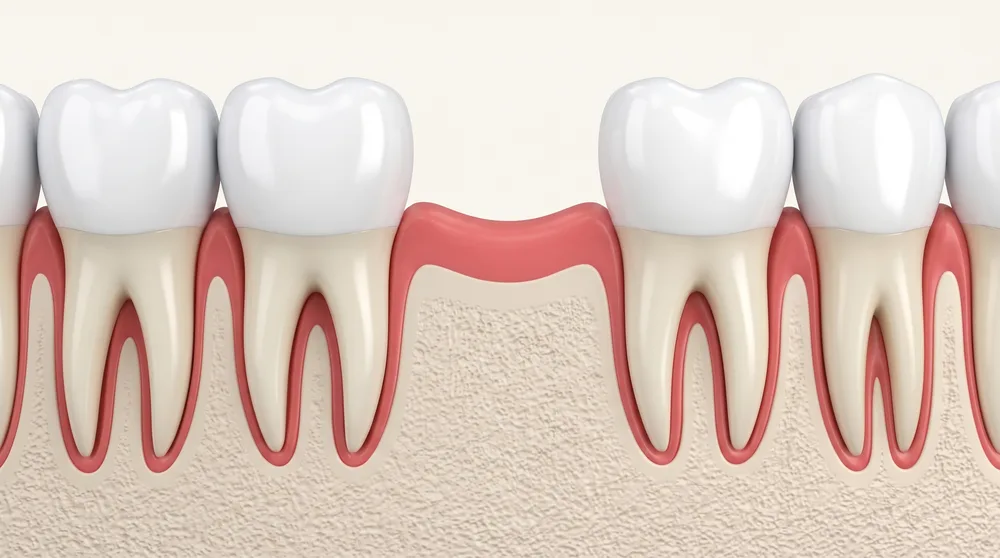
It is tempting to leave a gap alone, particularly a back tooth that nobody sees. Over months and years, though, the gap tends to cause problems of its own:
- Teeth drift. Neighbouring teeth slowly lean towards the empty space and the opposing tooth can over-erupt, altering how your teeth meet.
- Food traps. The new angles create tight corners where food and plaque collect, raising the risk of decay and gum disease in the teeth next door.
- Bone shrinks. Without a root to stimulate it, the jawbone under the gap gradually thins, which can make an implant harder to place later.
- Chewing shifts. You start favouring the other side, putting extra load on those teeth.
People are usually keen to replace a front tooth straight away. A lost molar is easier to live with, yet it is often the one that upsets the bite more over time. Either way, replacing a tooth sooner usually keeps treatment simpler.