
329 Hume Hwy, Lansvale NSW 2166
Dental emergency? (02) 9725 6241 ★★★★★ 4.8 | 57 reviews
Home / Services / Bone Grafting

Dental bone grafting in Lansvale

Bone grafting for
dental implants in Lansvale

Rebuilding the jaw so an implant has something to hold

A bone graft for dental implants adds volume where the jawbone has thinned, so an implant can be placed in solid bone and stay stable for the long term. Many people never need one. For those who do, Odontologie Dental Care in Lansvale plans the graft as part of your implant treatment from the first visit, so you know the extra step, the healing time and the fee before anything begins.

  • Restores bone height or width for an implant
  • Planned into your implant treatment from the start
Odontologie Dental Care clinic

Your next step

Book a free implant consultation

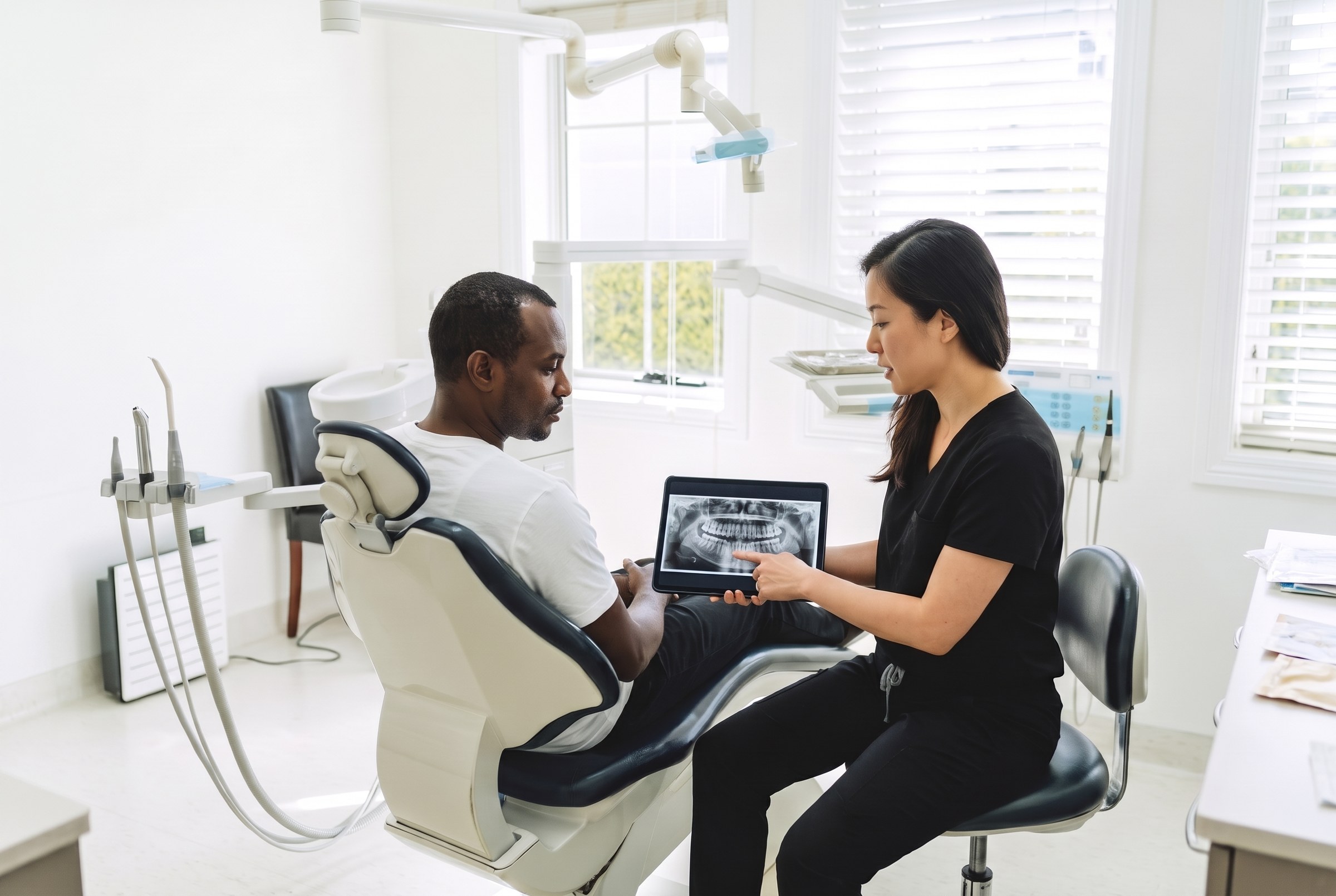
Wondering if your jaw has enough bone for an implant? At our Lansvale practice we take photographs and an OPG X-ray, show you what your bone looks like, and give you a written treatment plan with the fees and the timeline. We explain the payment options too, at no cost. A $75 deposit holds your free consultation, and it is refunded when you attend or if you give us 48 hours' notice to cancel.

  • Photographs and OPG X-ray included
  • Your bone levels explained
  • A written plan with fees and timeline
  • Payment options explained

Transparent pricing

Bone grafting and assessment costs

TreatmentPrice
Implant consultation, bone check and treatment planFree
3D cone-beam CT (CBCT) scan$220

What a graft costs turns on the material, how much bone is rebuilt, and which appointment it is combined with, so the fee is itemised in your written treatment plan after the assessment. See our guide to the costs for dental implants for how grafting fits into the total cost of implant treatment.

Grafting and implant treatment can be paid over time. Odontologie offers humm and Afterpay, subject to approval. See our payment options for details.

humm
Cutaway diagram of a jaw where graft material fills a thinned area of bone

Why it happens

Why is bone lost after a tooth comes out?

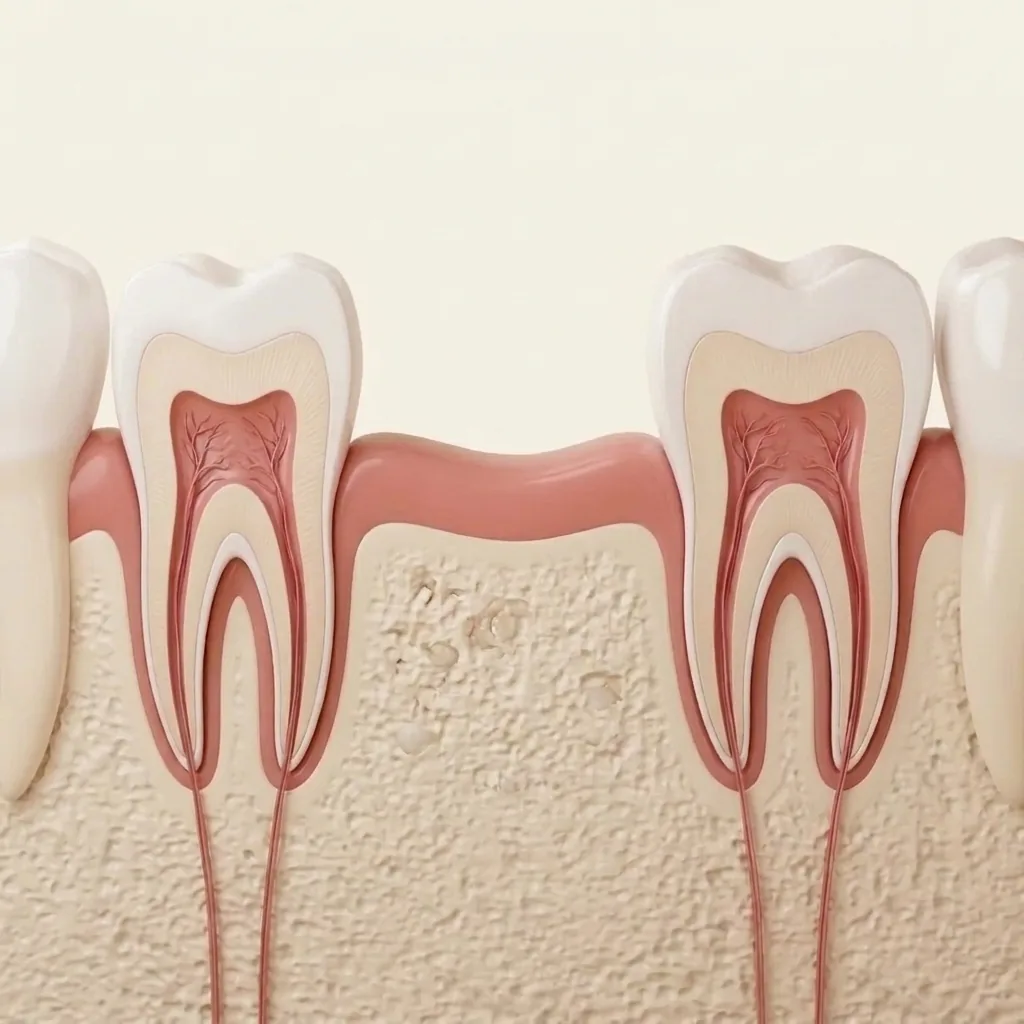
Jawbone stays strong because it is used. Every time you bite, the root of each tooth passes a small load into the bone around it, and that signal keeps the bone maintained. When a tooth is removed, the signal stops. The ridge of bone that held the root begins to narrow and lower, with much of the change happening in the first months after the extraction and slower loss continuing for years.

Gum disease, an infection around a root, an injury, or years of a denture pressing on the gums can all add to the loss. By the time someone asks about an implant, the bone may be too thin, too shallow, or too close to the sinus or a nerve for an implant to sit safely. A graft rebuilds that missing volume. If you are about to have a tooth out, our tooth extraction to implant timeline explains how grafting at the time of extraction can help preserve the site.
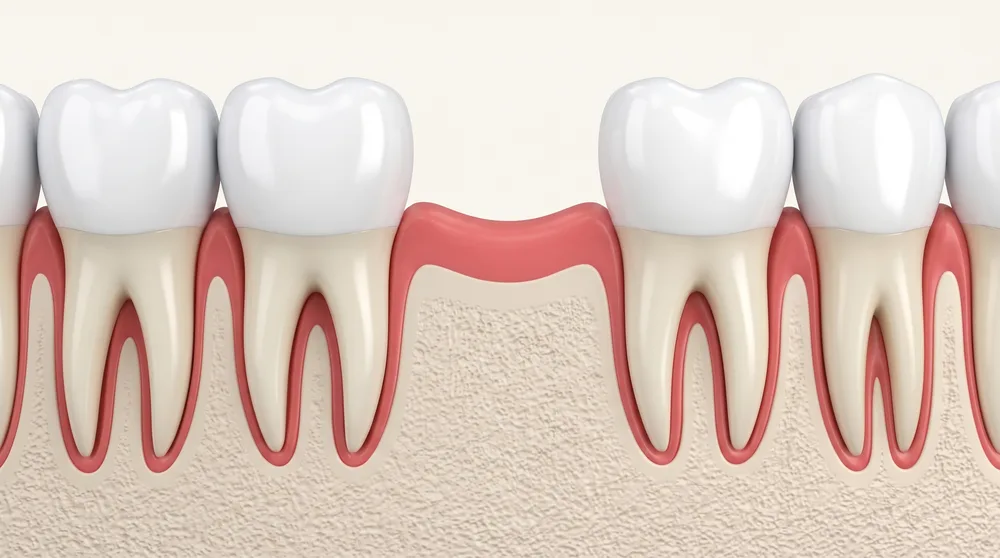
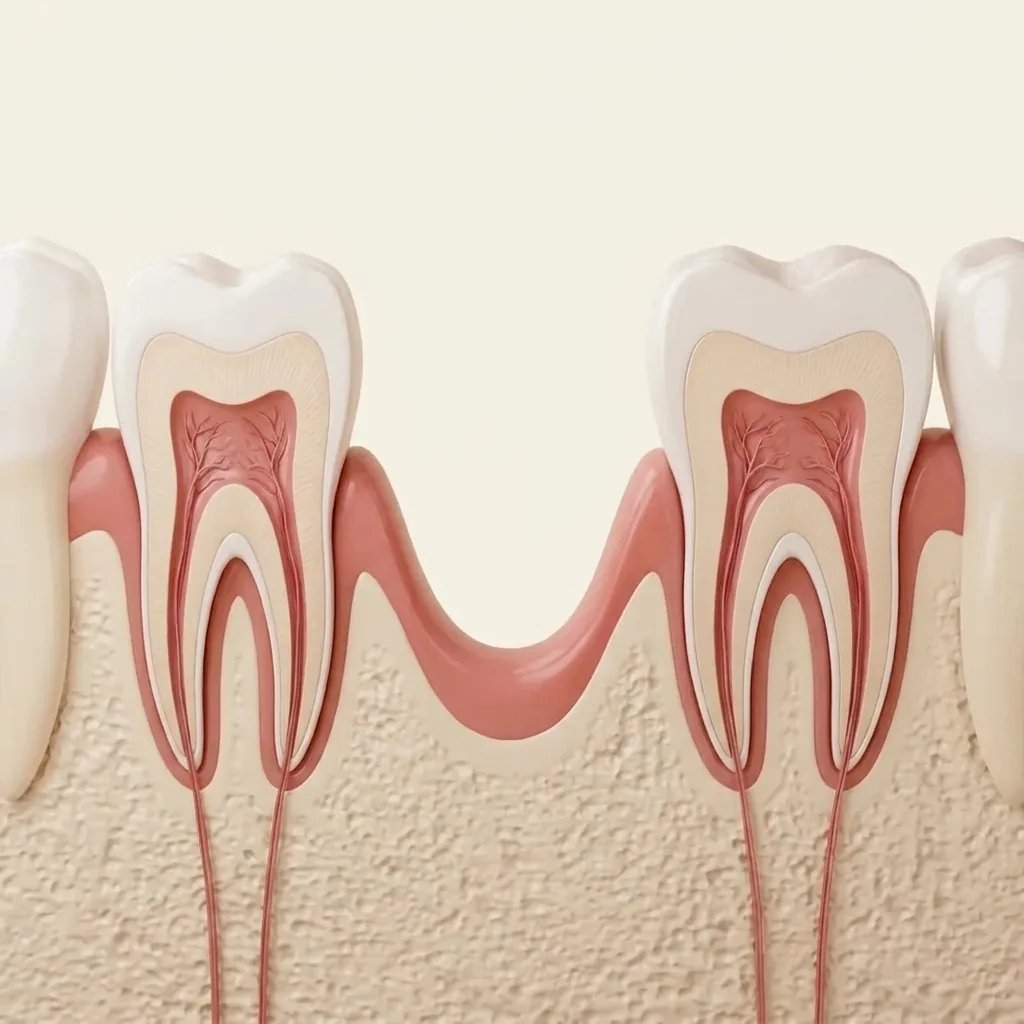
Diagram of a gap left by a missing tooth, with the bone beneath it lower than around the neighbouring teeth

Do you need one?

Why would I need a bone graft before an implant?

An implant needs bone around it on every side to bond and carry chewing forces. These are the situations where we most often find too little of it:

  • The gap is old. The longer a tooth has been missing, the more the bone has usually shrunk.
  • Gum disease has damaged the bone. Advanced periodontal disease wears away the bone that supports teeth.
  • A tooth was lost to infection or injury. Abscesses and trauma can leave a hollow in the jaw.
  • An upper back tooth is missing. The sinus can leave only a thin layer of bone above the gum.
  • You have worn a denture for many years. Pressure on the ridge speeds up its shrinkage.

Your OPG X-ray and a 3D cone-beam (CBCT) scan show whether any of these apply. Sometimes a different approach, such as the angled implants of All-On-4, avoids grafting altogether. The wider treatment is explained on our dental implants page.

How it works

How a dental bone graft is done

The details change from one mouth to the next, but most grafts move through these four stages. If a lot of bone is needed, or you are anxious, IV sedation with an anaesthetist is available.

Cross-section of a gap where the jawbone has sunk and narrowed between two back teeth
01

Free consultation and bone assessment

We examine the area and take an OPG X-ray, adding a 3D cone-beam (CBCT) scan where we need to measure the bone precisely. If a graft is needed, we explain why, which material and technique suit you, and how the graft fits into your implant plan. The written plan itemises the graft fee alongside everything else.

Book now →
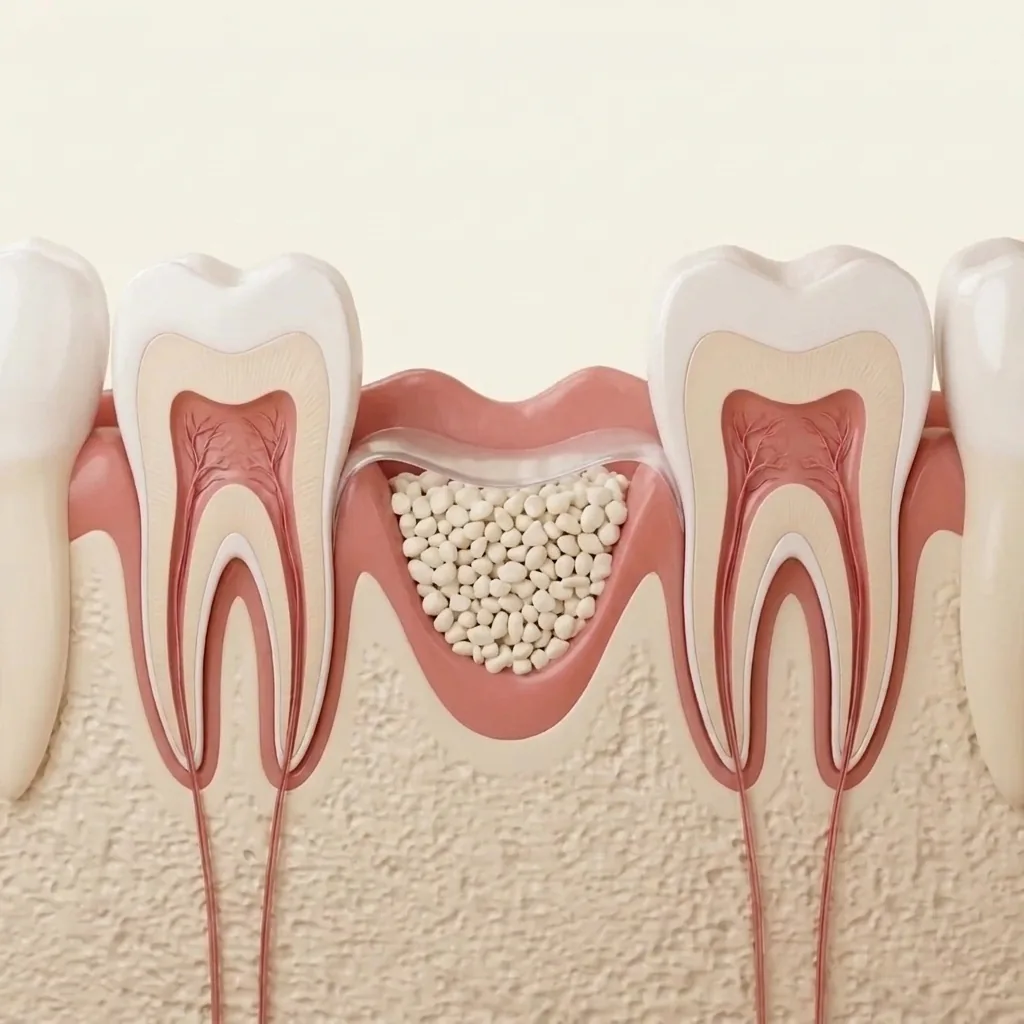
Graft granules packed into the sunken bone under the gap and covered with a thin membrane
02

Placing the graft

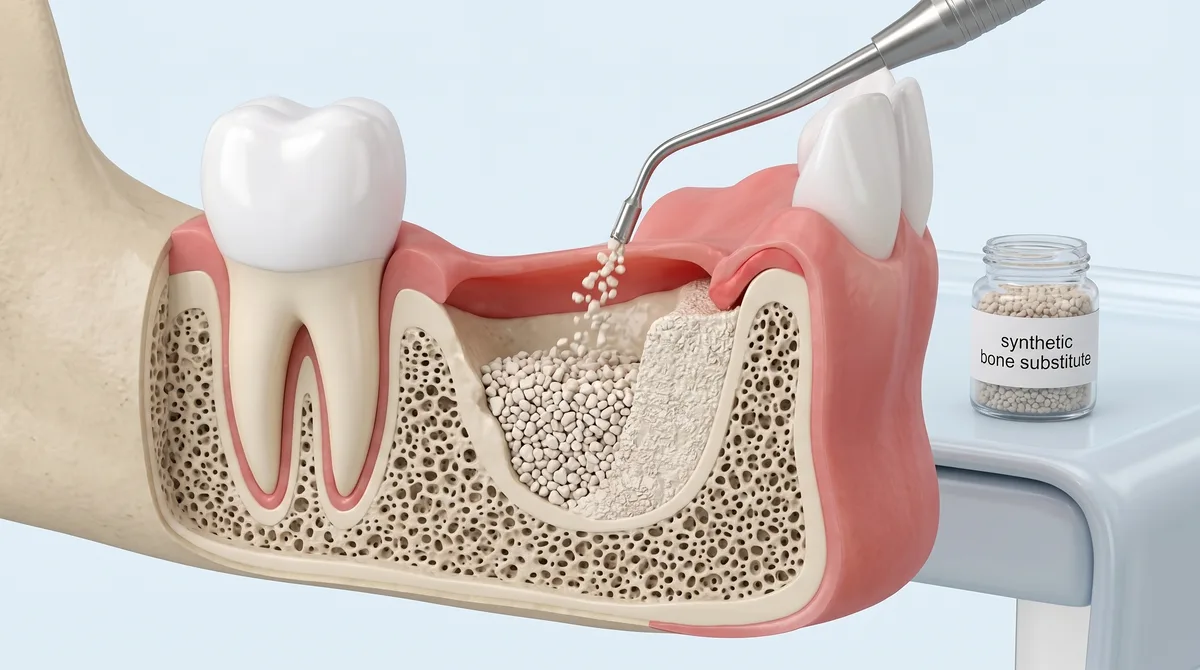
The area is numbed, a small opening is made in the gum to reach the bone, and the graft material is packed into the thin area, often under a protective membrane. The gum is then stitched closed over it. It can be combined with an extraction, or with the implant appointment, when that suits the case.

Gum healed over the gap while new bone grows in among the graft granules
03

Healing and new bone

Month by month, living bone creeps through the graft and takes its place. Stitches come out or dissolve within a couple of weeks, and you can usually wear a temporary tooth or denture during this time if the site is visible.

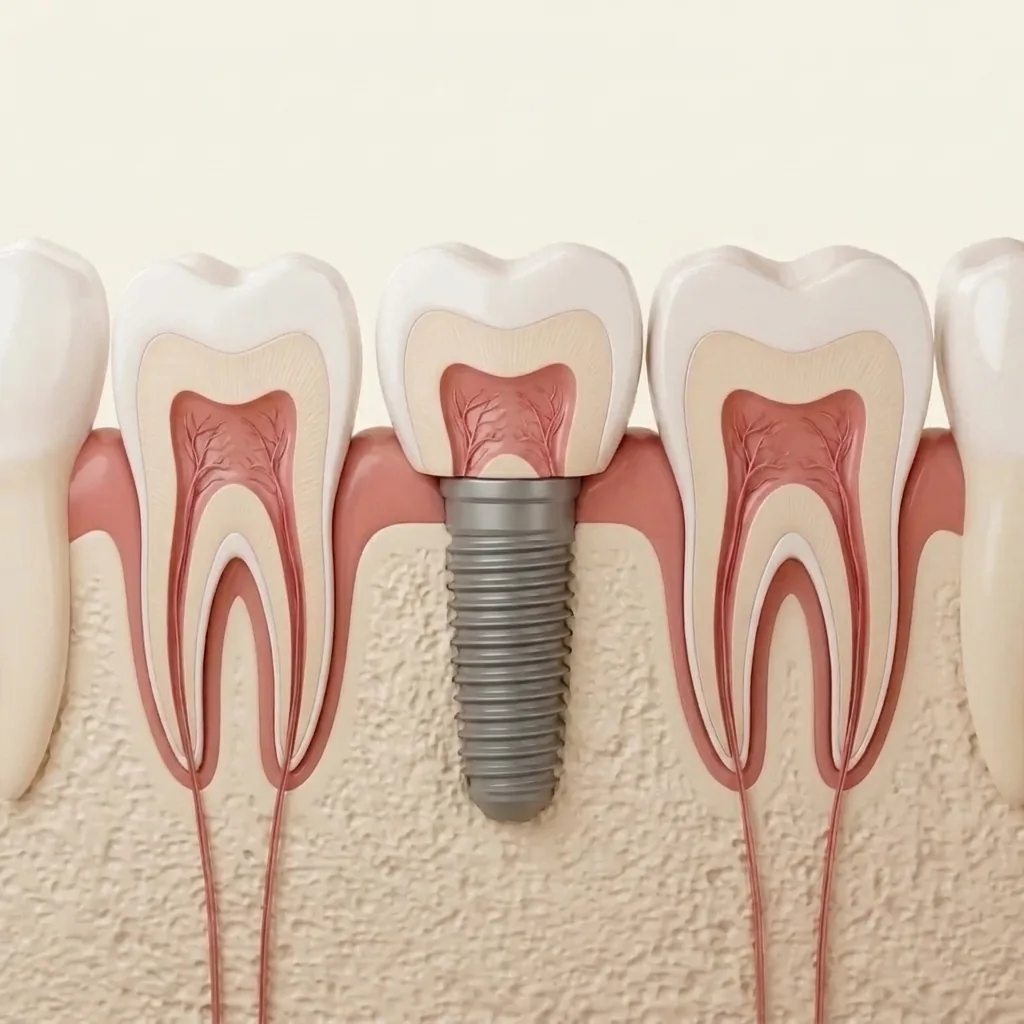
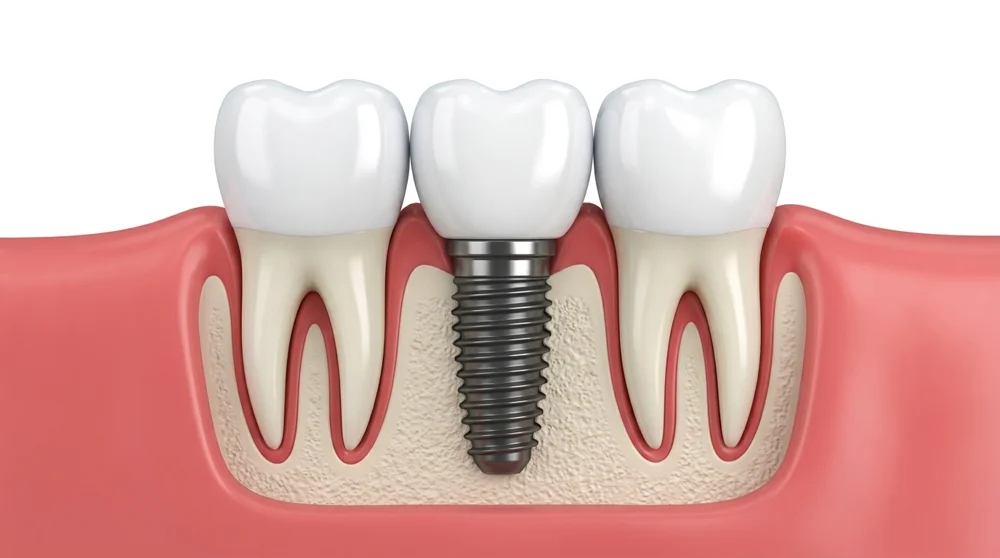
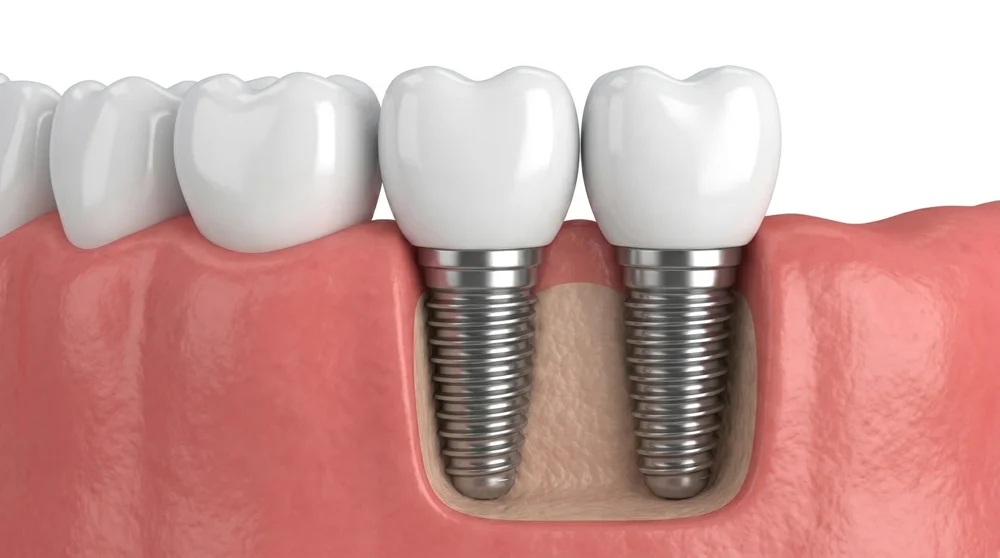
A titanium implant with a crown standing in the rebuilt jawbone between two healthy molars
04

Review and implant placement

We check the healing at follow-up visits and on X-ray. Once the bone is solid, the implant is placed and treatment moves on to the crown, bridge or denture it will carry.

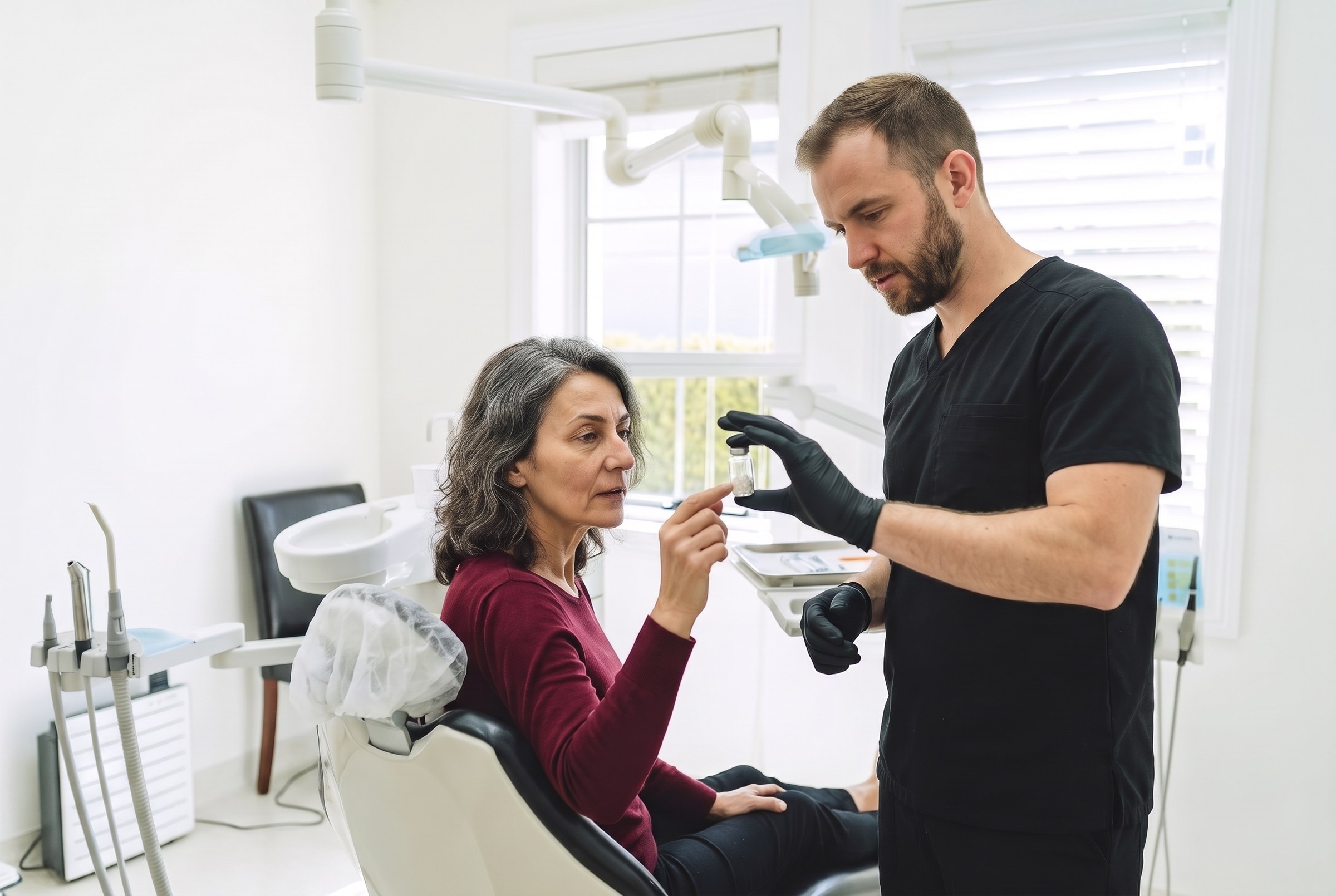
A dentist showing a patient a small sterile vial of bone graft granules

Materials

Types of dental bone graft

Graft material works as a scaffold: your body grows new bone into it and gradually replaces it with your own. The main sources are:

  • Your own bone (autograft), usually a small amount collected from nearby in the jaw
  • Donor bone (allograft), processed human bone from a tissue bank
  • Animal-derived bone (xenograft), commonly bovine, treated so only the mineral framework remains
  • Synthetic substitutes, made from bone-like minerals

The graft is often covered with a thin membrane that keeps the gum from growing into the space while bone forms. Grafts are also described by where they go: a socket graft fills the hole straight after an extraction, a ridge graft rebuilds the width or height of a thinned jaw, and a sinus lift adds bone in the upper back jaw. Your dentist explains which material and technique suit your case, and graft products used in Australia must meet Therapeutic Goods Administration requirements.

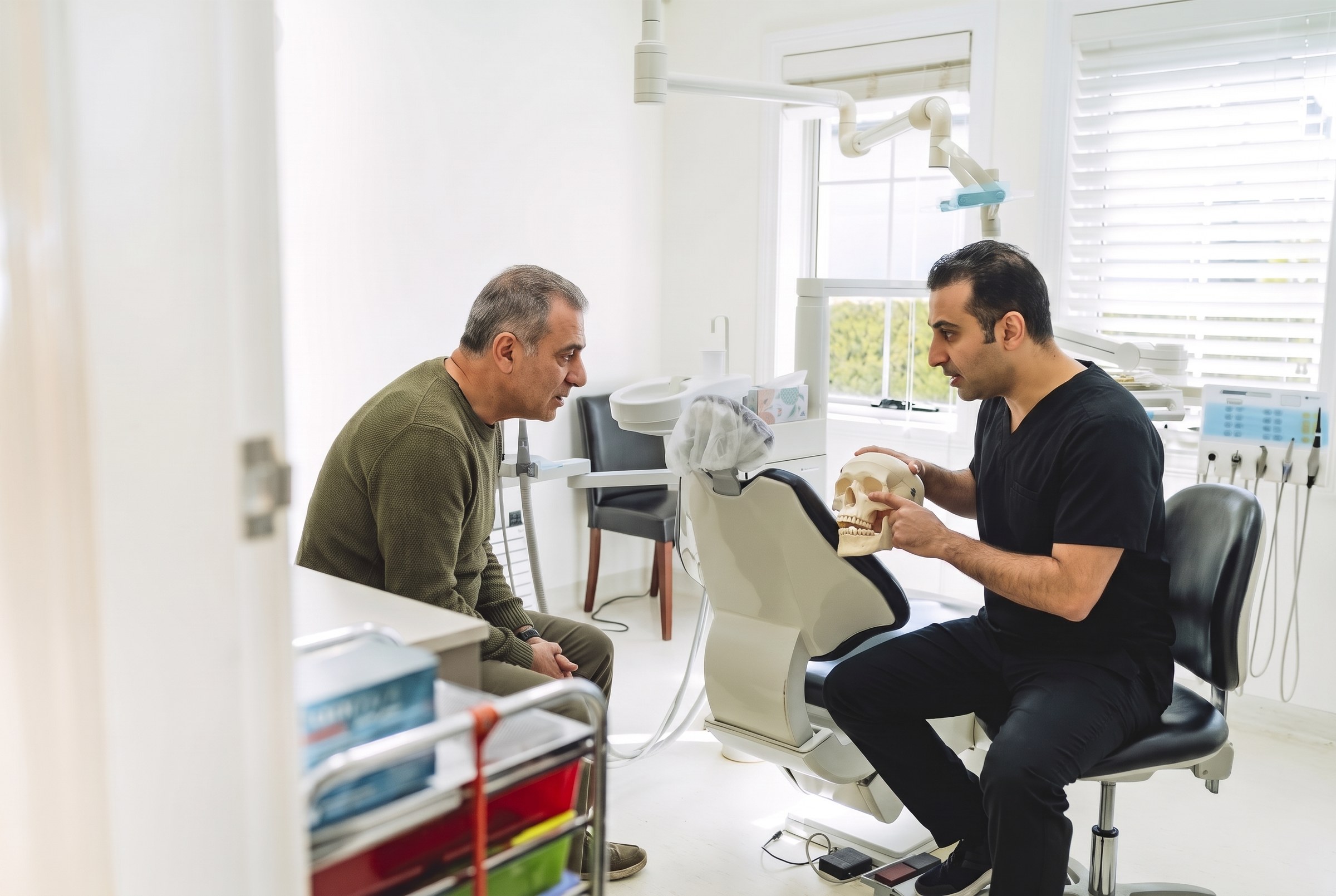
A dentist pointing to the area above the upper back teeth on a skull model to explain a sinus lift

Upper jaw

What is a sinus lift?

Above the upper back teeth sit the maxillary sinuses, air spaces behind the cheekbones. After an upper molar is lost, the bone below the sinus thins, and the sinus floor can drop into the space. That can leave only a few millimetres of bone where an implant would need much more.

A sinus lift gently raises the membrane that lines the floor of the sinus and places graft material underneath. Once that material matures, the extra height gives an upper implant something substantial to anchor in. Where some bone remains, the lift can be done through the implant site at the same appointment; where very little is left, the lift is done first and the implant follows after healing. For a few days afterwards you are asked not to blow your nose hard and to sneeze with your mouth open, so the area is not disturbed.

A woman resting at home on the sofa with a bowl of soft soup and a cup of tea while she heals

Healing

How long after a bone graft can I get an implant?

It depends on the size and site of the graft. A small graft placed at the same time as the implant may add little or no extra time. A larger ridge graft or a sinus lift done ahead of the implant generally needs a few months, sometimes more, before the new bone is firm enough to drill into.

Expect a puffy, tender few days, with some bruising possible; pain relief, cold packs and soft meals are usually enough. A clean mouth and no cigarettes help the graft take hold. Your follow-up visits include an X-ray of the site, and we wait until it shows solid bone before scheduling the implant. Healing times vary from person to person.

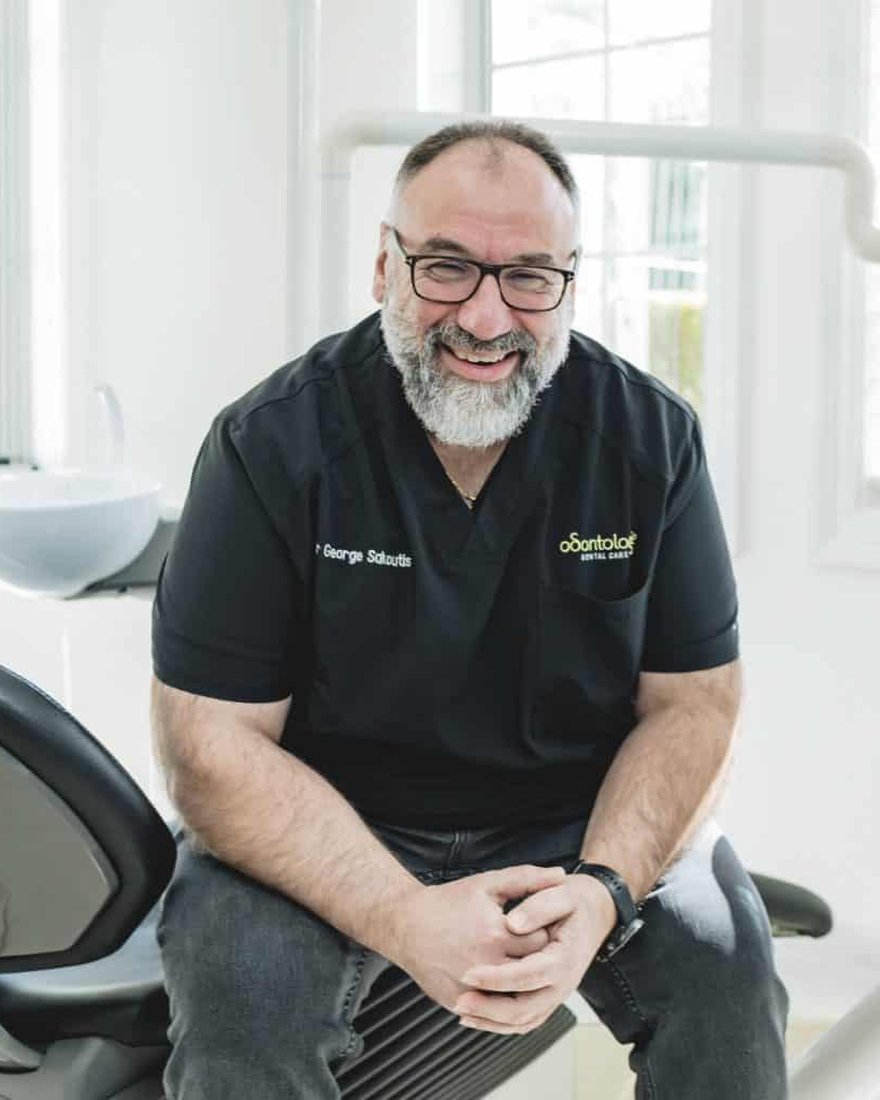
Dr George Sakoutis, Odontologie Dental Care

Meet your implant dentist

Dr George Sakoutis

Principal Dentist · BDS (Syd)

Dr George Sakoutis earned his Bachelor of Dental Science at the University of Sydney and has practised in Lansvale since 1988, with a focus on family, cosmetic and implant dentistry.

Book a Free Consultation

Related care

What a bone graft can lead to

A graft is a means to an end. Once the bone is rebuilt, these are the treatments that usually follow.

Good to know

Bone Grafting - frequently asked

Why might a bone graft come before my implant?

An implant needs enough bone around it to bond firmly and carry chewing forces. If the jaw has thinned after an extraction, gum disease, infection, injury or years of denture wear, a graft rebuilds the missing volume first. Many people have enough bone and skip grafting altogether; the free consultation X-ray answers that question for you.

How much does a dental bone graft cost?

The material used, how large an area needs rebuilding, and whether the graft is combined with another procedure all change the figure. For that reason the graft fee is itemised in your written treatment plan after your free consultation. Payment plans are available, subject to approval.

How long after a bone graft can I get an implant?

A minor graft often goes in alongside the implant on one day. Bigger grafts and most sinus lifts need a few months of healing first. We check your healing with follow-up visits and X-rays, and place the implant once the site is ready.

Is a bone graft painful?

The area is numbed, so you should not feel pain during the procedure, and IV sedation is available if you are anxious. Afterwards a few days of puffiness, tenderness and perhaps bruising is normal, usually managed with pain relief, cold packs and soft food.

What is a sinus lift?

It is a graft for the upper back jaw: the sinus lining is eased upwards and graft material is placed in the space created. It is needed when missing upper molars have left too shallow a layer of bone for an implant. Depending on how much bone remains, the lift happens on the same day as the implant or some months ahead of it.

Where does graft material come from?

It can be your own bone, processed donor bone, animal-derived bone mineral or a synthetic substitute. Each acts as a scaffold that your own bone grows into. Your dentist explains which suits your case and why.

Can an implant be placed without a graft?

Often, yes. If there is enough bone, no graft is needed, and for a full jaw, the angled implants of All-On-4 sometimes make grafting unnecessary. Your scans show what is possible.

Are there risks with bone grafting?

As with any surgery, grafting can involve swelling, bruising, infection, the graft not taking fully, and occasionally effects on nearby structures such as the sinus or a nerve. Not smoking and keeping the area clean support healing. We give every patient the same advice: "Any surgical or invasive procedure carries risks. Before proceeding, you should seek a second opinion from an appropriately qualified health practitioner." Your written plan is yours to take to another practitioner for exactly that purpose.

Can a graft be done when a tooth is taken out?

Yes. A socket graft placed at the time of tooth extraction helps limit the shrinkage that follows, which can make a later implant simpler. Ask about it if you are having a tooth removed and are thinking about an implant.

Still have questions?

Ready to take the next step?

Booking online takes under a minute, or give our friendly team a call - new patients are always welcome.

  • Photographs and OPG X-ray included
  • Your bone levels explained
  • A written plan with fees and timeline
  • Payment options explained
We accept all major health funds
MedibankBupaHCF
Odontologie Dental Care is part of the My Implant Dentist Group