329 Hume Hwy, Lansvale NSW 2166
Dental emergency? (02) 9725 6241 ★★★★★ 4.8 | 57 reviews
Home / Services / Tooth Fillings

Tooth filling services in Lansvale, NSW

Tooth Filling
Services

Repairing decayed, chipped and worn teeth

A dental filling seals a tooth that has been damaged by decay, a crack or wear, so the damage stops spreading and you can chew comfortably again. At Odontologie Dental Care in Lansvale we mostly place tooth-coloured composite fillings that are shaded to match your own enamel, and a single filling is usually finished in one appointment.

  • White composite fillings matched to the colour of your teeth
  • Old silver fillings can be checked and replaced when they fail
Odontologie Dental Care clinic

New patients welcome

New to Odontologie?

Book our new patient offer today to receive:

  • Comprehensive Dental Examination
  • Scale, Clean and Polish
  • 2x Bitewing X-rays (if required)
  • Fluoride Treatment

*Must be quoted at the time of phone booking. If not quoted, the full fee may apply. Offer is only available with selected dentists. If booked with a non-selected dentist, a member of staff will contact you.

$249 Check-Up and Clean Select “New Patient Offer” when booking.
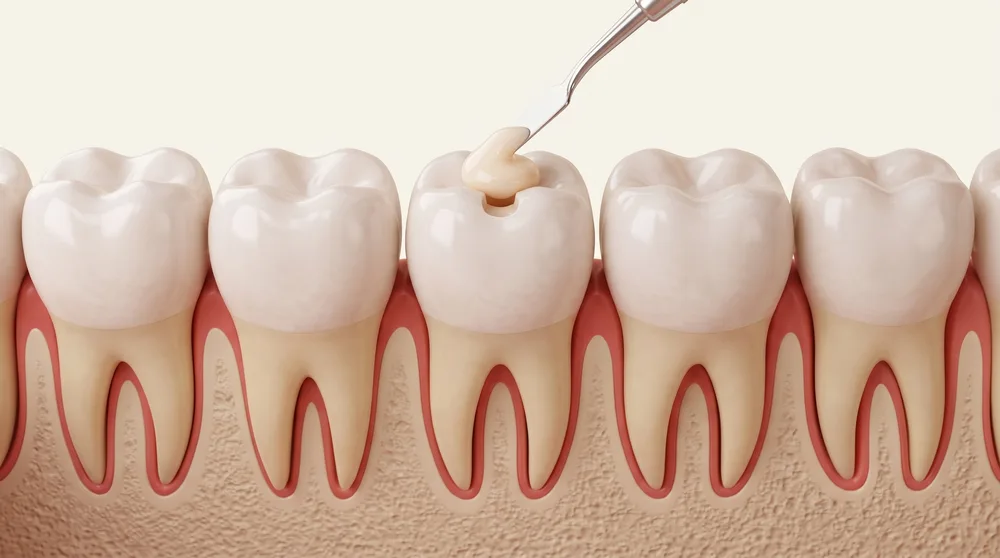
A cut-away render of a back tooth restored with a tooth-coloured composite filling

The basics

What is a dental filling, and how does it treat a cavity?

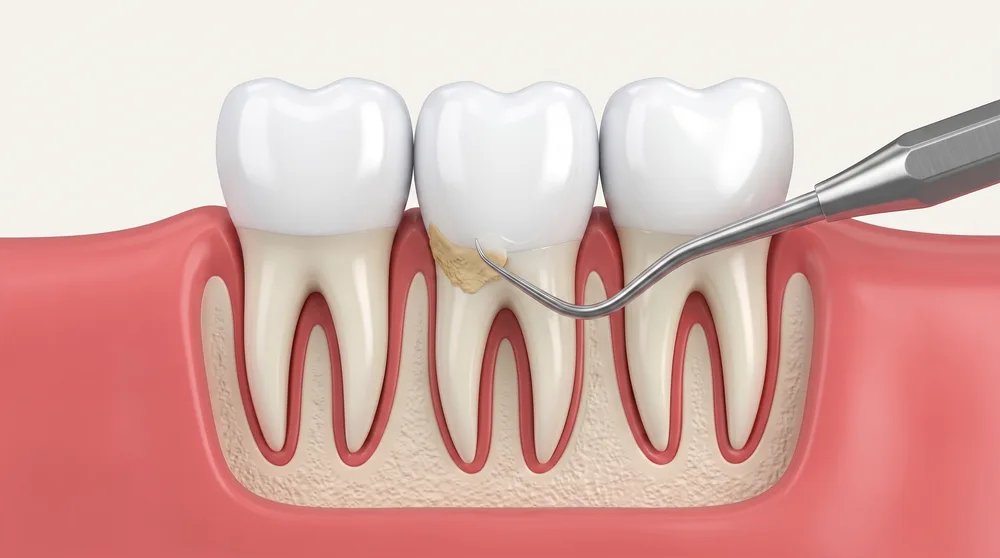
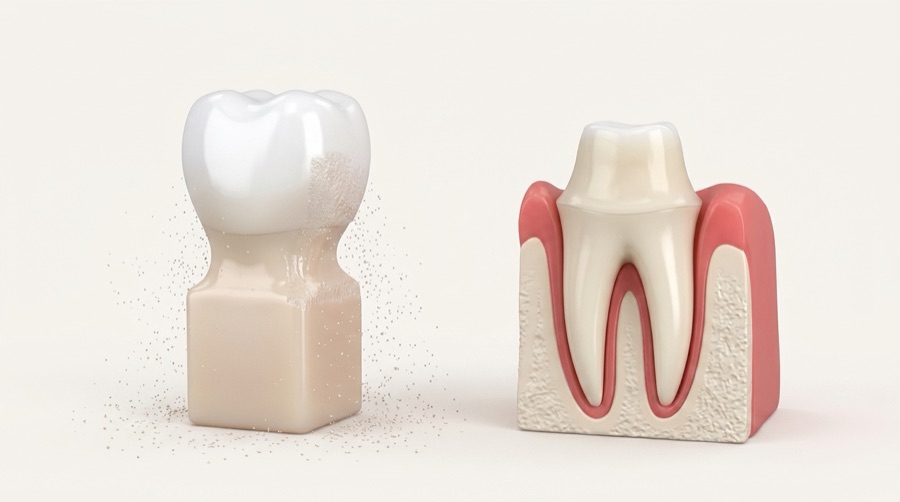
Plaque bacteria feed on sugars and produce acid, and over time that acid dissolves enamel and opens up a hole, or cavity. Once decay breaks through the hard outer enamel it moves faster through the softer dentine underneath, heading towards the nerve. Left alone, a small cavity can become a toothache, an infection or a tooth that cannot be saved.

A filling stops that process. Your dentist removes the softened, decayed part of the tooth, cleans the space and seals it with a durable material that restores the tooth's shape and bite. The same approach repairs a chipped edge, a worn spot near the gum line or a small crack. Compared with a crown or root canal treatment, a filling is a quick and affordable repair, which is why finding decay early pays off.

A teenage girl winces and holds her cheek after biting into an ice cream in the park

Signs to look for

How do you know you need a filling?

Many cavities have no symptoms at all, which is why a check-up with X-rays finds most of them. Others announce themselves. Book an appointment if you notice:

  • A twinge or ache when you have something sweet, hot or cold
  • A hole, dark spot or rough edge you can feel with your tongue
  • Food catching between two teeth where it never used to
  • A chipped or broken corner after biting something hard
  • An old filling that feels cracked, sharp or has fallen out

Sensitivity is not always decay. It can also come from exposed root surfaces or grinding, and the answer may be a desensitising toothpaste or a night guard rather than a filling. Your dentist will tell you which it is before suggesting any treatment.

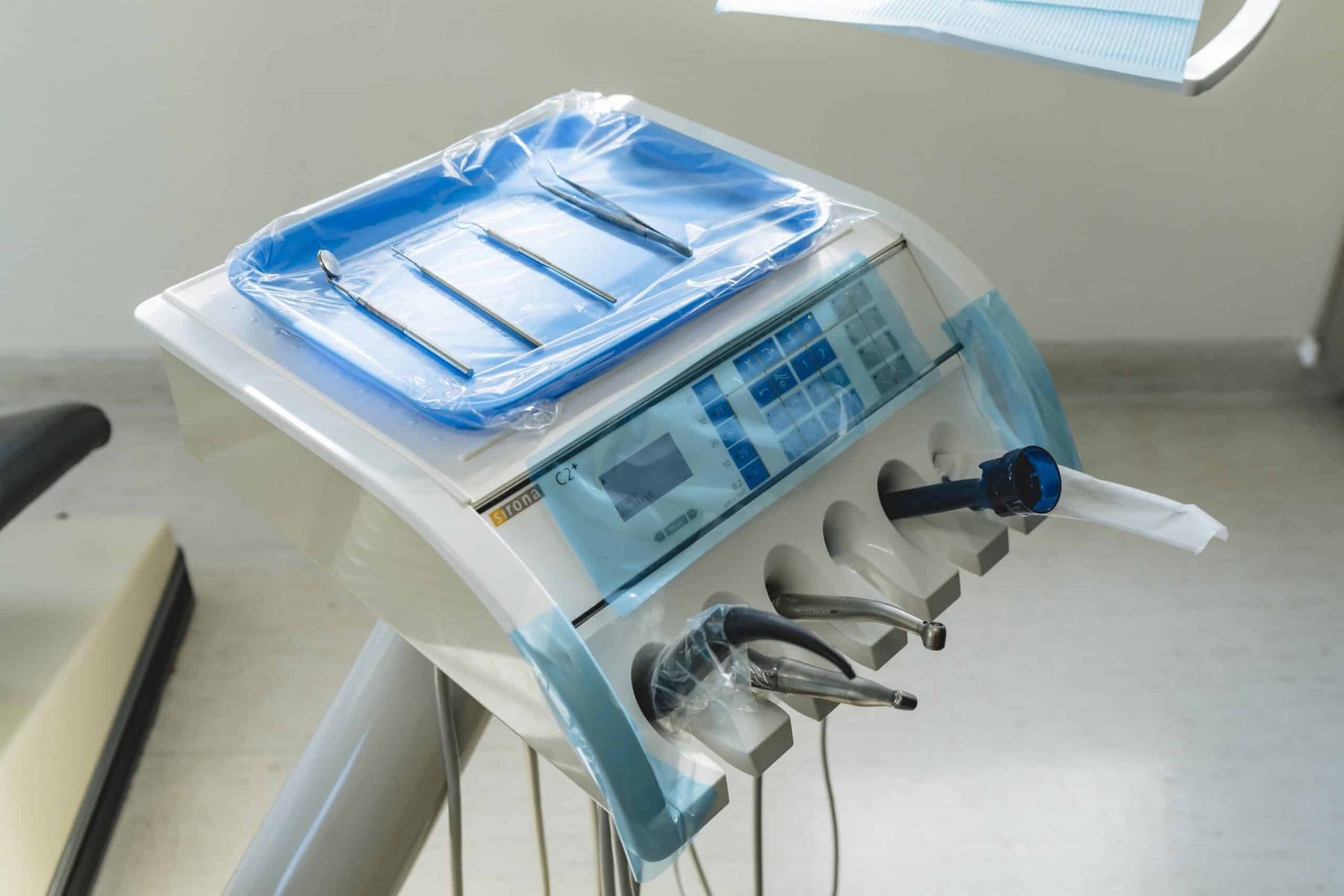
A dental instrument unit wrapped in fresh barrier film in a treatment room at Odontologie Dental Care

Materials

Types of tooth fillings: white, silver, gold and porcelain

There is more than one way to fill a tooth, and the right choice depends on the size of the cavity, where it sits in the mouth and what matters most to you.

  • Composite resin (tooth-coloured): a blend of resin and fine glass particles, bonded to the tooth and shaded to match. It suits front and back teeth, keeps more of your natural tooth and is the filling we place most often.
  • Amalgam (silver): a metal alloy that is strong under heavy chewing. It is placed far less often now, but many adults still have them, and sound amalgam fillings do not need replacing just because of their colour.
  • Gold: made in a dental laboratory and fitted over two visits. Gold is very hard-wearing on molars and kind to the gums.
  • Porcelain (ceramic): also custom-made in a laboratory, colour-matched and resistant to staining. Larger ceramic inlays and onlays can sometimes be made in one visit with our same-day crown technology.
A dentist uses a tooth model to explain to an older patient when a crown is better than a filling

Filling or crown?

When a crown is the better choice

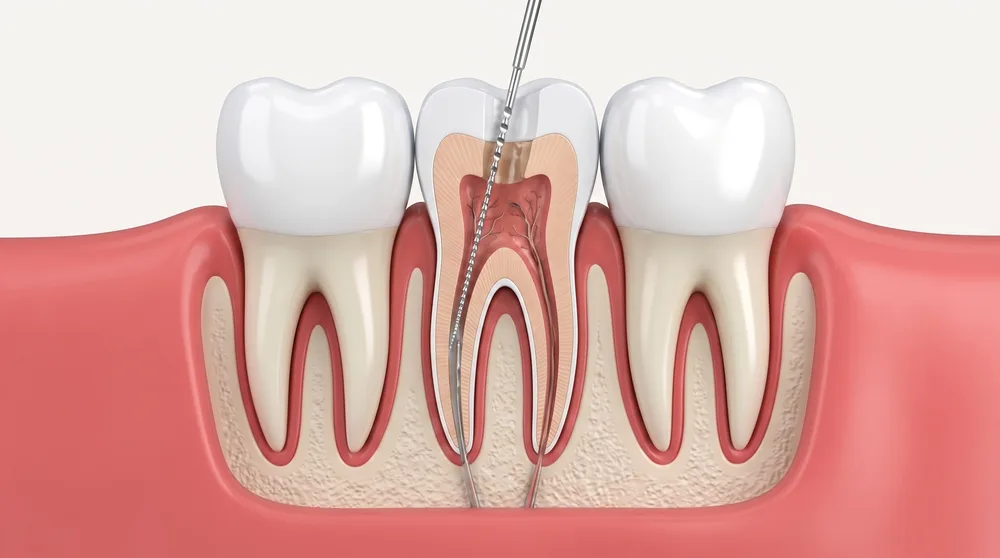
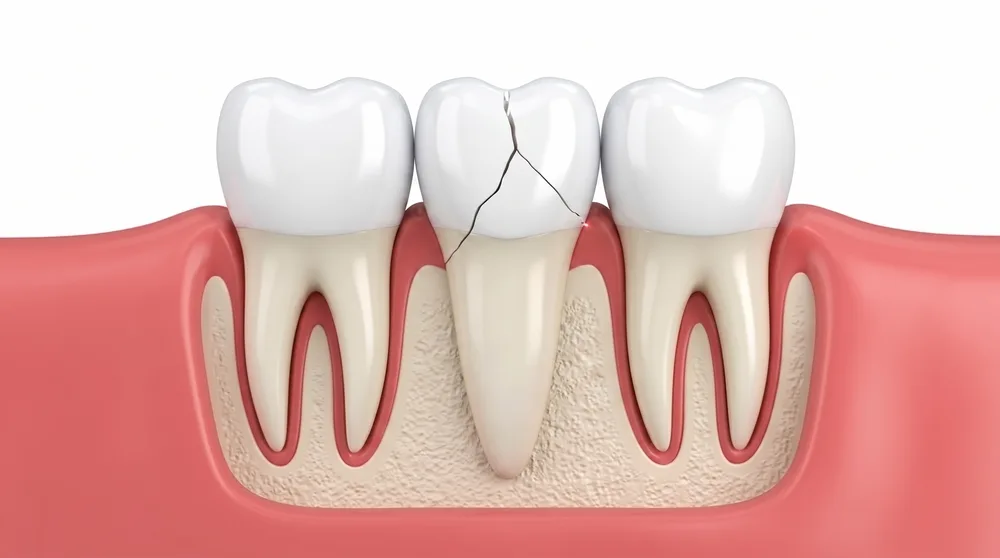
A filling relies on healthy tooth around it for support. When decay or an old filling has taken out a large part of the tooth, or a cusp has cracked off, a big filling can flex and break. In that case a dental crown that covers and protects the whole tooth is often the longer-lasting repair. Teeth that have had root canal treatment also tend to need a crown.

We explain the trade-offs honestly, including cost, and you choose. Our article on when a crown versus a filling is needed goes into more detail.

How it works

How is a tooth filling done?

Most fillings take between 30 minutes and an hour, depending on the size and position of the cavity. This is what happens in the chair.

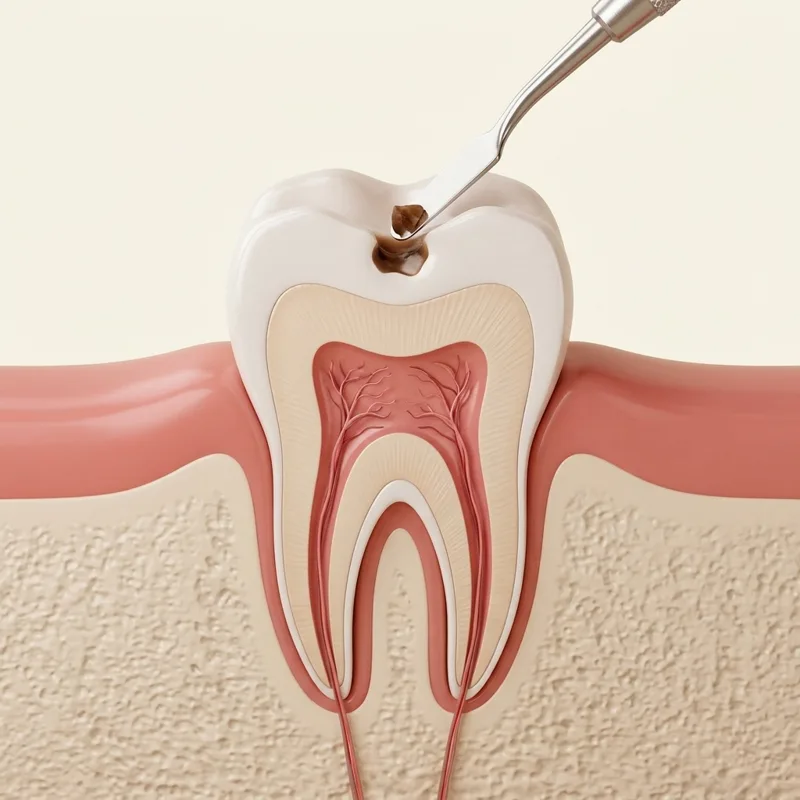
Cross-section render of decay being removed from a back tooth
01

Numbing and removing decay

After checking the tooth and any X-rays, your dentist numbs the area with a local anaesthetic. Once you are comfortable, the soft, decayed part of the tooth is removed and the area is cleaned of bacteria.

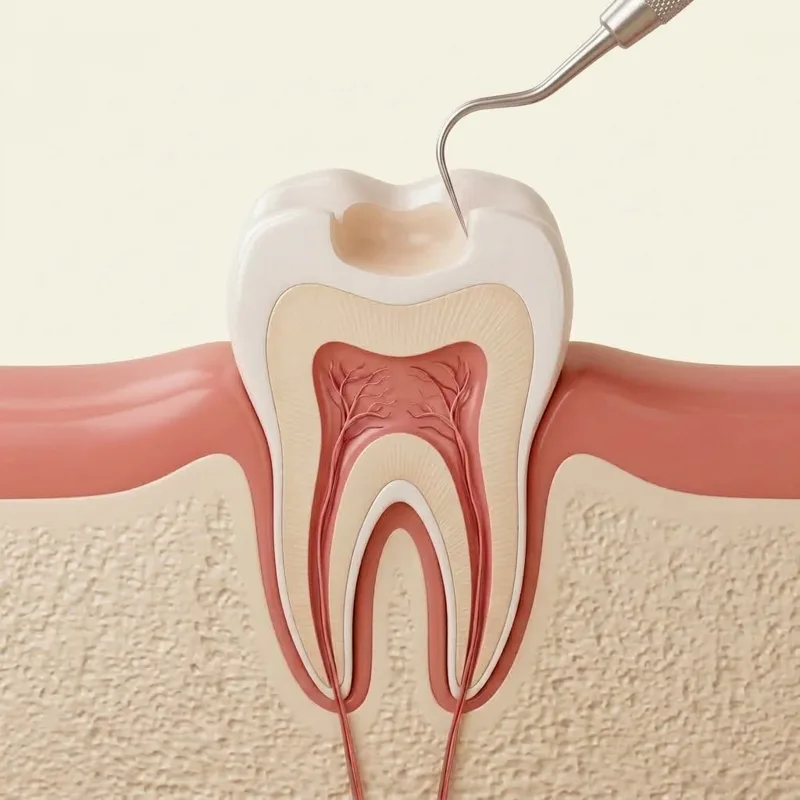
Cross-section render of a clean, prepared cavity in a molar
02

Shaping the cavity

The cavity is shaped so the filling will hold securely. For a composite filling the walls are gently conditioned so the material bonds firmly to the tooth, which lets us keep as much healthy tooth as possible.

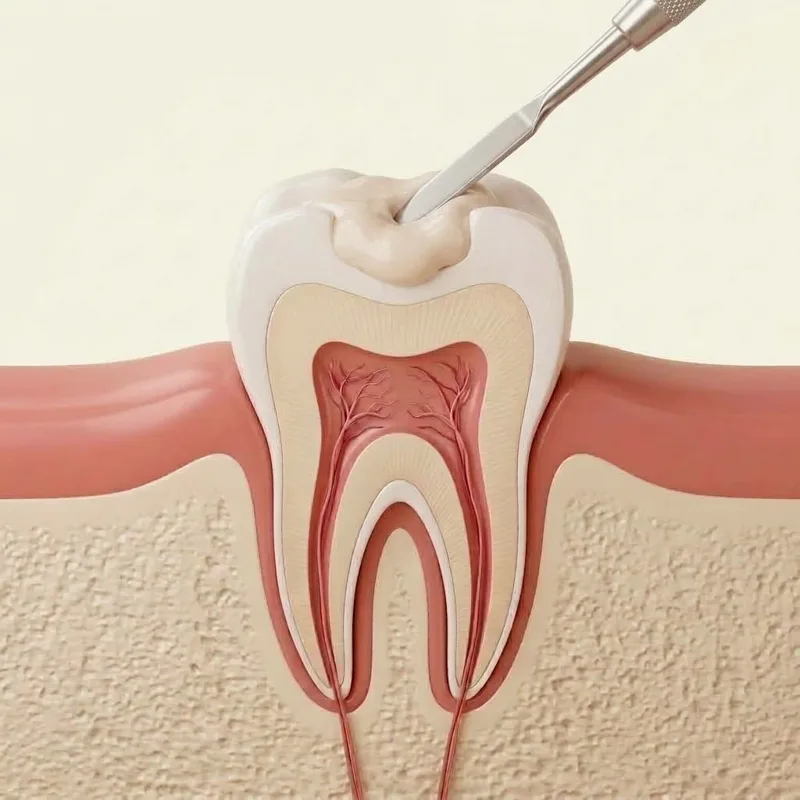
Cross-section render of tooth-coloured filling material filling the cavity
03

Placing the filling

Tooth-coloured composite is chosen to match your shade and placed in thin layers, each hardened with a blue curing light. Laboratory-made gold or porcelain fillings are fitted at a second visit instead.

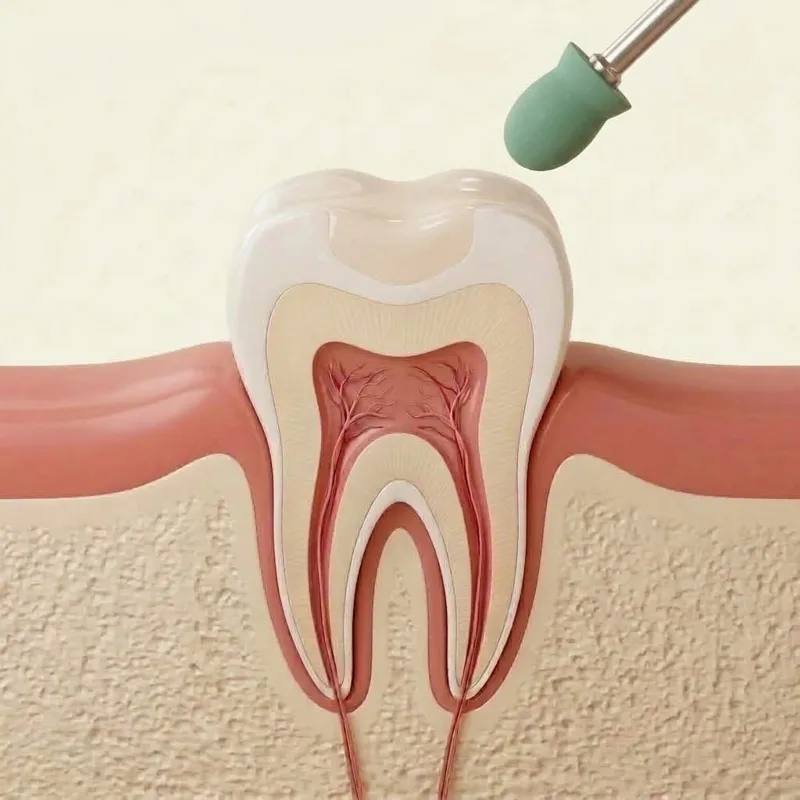
Cross-section render of the finished filling polished level with the tooth
04

Shaping, polishing and bite check

The filling is carved to follow the natural grooves of the tooth, then polished smooth. We check your bite with marking paper and adjust any high spots so the tooth feels right before you go.

A man at home sips cool water while his cheek is still numb, waiting before he eats

Aftercare

Looking after your new filling

Composite fillings set hard under a curing light before you leave, so they can be used straight away. The numbness from the anaesthetic is what to be careful of. In the first day:

  • Wait until the numbness has worn off before eating, so you do not bite your cheek or burn your mouth
  • Chew on the other side for the rest of the day, and avoid very hard foods such as ice or nuts on the new filling
  • Expect some mild sensitivity to hot and cold for a few days, which usually settles; a desensitising toothpaste can help
  • Keep brushing and flossing as normal, gently around the treated tooth
  • Call us if your bite feels high, or if pain gets worse rather than better after a few days

If you wake with a sore jaw or ears, you may be grinding at night, which wears fillings quickly. A custom night guard protects them. Regular check-ups let us keep an eye on the edges of every filling so small leaks are caught early.

A dentist talks through the risks of a filling with a patient at the desk in the surgery

Risks

Are there risks with fillings?

Fillings are a routine, low-risk treatment, but no dental procedure is without some risk. Temporary sensitivity is the most common effect. Less often, a deep cavity close to the nerve can leave the tooth inflamed, and it may later need root canal treatment. Rarely, people react to a filling material, so tell us about any allergies. Over the years every filling wears, and its edges can leak and let decay back in, which is why check-ups matter.

If you have questions about your own tooth, ask. We would rather spend a few minutes explaining than have you worried. Patients see us for fillings from Lansvale, Cabramatta and Canley Heights, and from Fairfield, Wetherill Park and Liverpool.

Related care

Related treatments for damaged teeth

A filling is one of several ways to restore a tooth. Depending on how much tooth is left, one of these may suit you better, and your dentist will explain why.

Good to know

Tooth Fillings - frequently asked

How much does a filling cost?

The cost of a filling depends on the size of the cavity, how many surfaces of the tooth it covers and the material used. A small composite filling on one surface costs less than a large one rebuilding a corner of a molar. Your dentist gives you the fee after examining the tooth and before starting, and most extras policies pay a rebate on fillings.

Do fillings hurt?

The tooth is numbed with a local anaesthetic first, so most people feel pressure and vibration rather than pain. The injection itself is a brief sting. Afterwards the tooth may be sensitive to hot and cold for a few days. If you are anxious, tell us and we will go at your pace.

How long do white fillings last?

A well-placed composite filling commonly lasts many years, often seven to ten or longer. Size, position, grinding, diet and how well the area is cleaned all play a part. Larger fillings on back teeth carry the most load and tend to need attention sooner, which we monitor at each check-up.

Can old silver fillings be replaced?

Yes, if they are cracked, leaking or have decay under them. Sound amalgam fillings do not need to be removed just for appearance or out of concern about the metal, since removal also takes away some healthy tooth. If you would like yours replaced for cosmetic reasons, we can talk through the pros and cons.

Do I need a filling or a crown?

It depends on how much healthy tooth is left. Small to medium cavities are usually repaired with a filling. When a large part of the tooth is missing, a cusp has broken or the tooth has had root canal treatment, a crown usually protects it better. Your dentist will show you the X-ray and explain which suits your tooth.

What is a temporary filling?

A temporary filling is a soft, short-term material placed to seal a tooth between appointments, for example during root canal treatment, while a laboratory crown is being made, or as first aid for a broken tooth. It is not designed to last, so keep the follow-up appointment. If a temporary filling falls out, call us to have it replaced.

Can I eat after a filling?

With a composite filling you can eat once the numbness wears off, usually within two to three hours. Waiting avoids biting your lip or cheek. Stick to softer food on the other side for the rest of the day, and avoid very hot or cold drinks if the tooth feels sensitive.

We accept all major health funds
MedibankBupaHCF
Odontologie Dental Care is part of the My Implant Dentist Group