
329 Hume Hwy, Lansvale NSW 2166
Dental emergency? (02) 9725 6241 ★★★★★ 4.8 | 57 reviews
Home / Services / Porcelain Veneers

Porcelain veneers in Lansvale, south-west Sydney

Porcelain Veneers
Lansvale, Sydney

Porcelain veneers for teeth that whitening and bonding cannot fix

Some front teeth stay grey, chipped, worn short or oddly shaped no matter how carefully you look after them. Porcelain veneers cover the visible surface of those teeth with thin ceramic facings, shaped to suit your face and shaded to sit comfortably beside the rest of your smile. At Odontologie Dental Care in Lansvale we fit porcelain veneers for people across south-west Sydney, from Cabramatta and Canley Heights to Fairfield, and for many who start out searching for veneers in Liverpool. Porcelain veneers are $1,900 per tooth, and our veneers cost guide explains every fee in detail.

  • Covers deep stains, chips, worn edges, small gaps and uneven shapes on the teeth you show
  • See a trial version of the new shape in your own mouth before the porcelain is made
Odontologie Dental Care clinic

Your next step

Thinking about porcelain veneers?

Come and see us in Lansvale for a free smile consultation. We look over your teeth, gums and bite, explain how porcelain, composite and whitening would each work for you, and set out a plan priced to suit you, with no obligation to proceed. A $75 deposit holds your free consultation, and it is refunded when you attend or if you give us 48 hours' notice to cancel.

  • Free smile consultation and assessment ($75 refundable deposit)
  • Porcelain, composite and whitening weighed up for your teeth
  • Written plan with the number of visits and every fee
  • humm and Afterpay, subject to approval

Transparent pricing

Porcelain veneers at a glance

TreatmentFee
One porcelain veneer$1,900
Set of six porcelain veneers$11,400
Composite veneer, in-chair alternative (per tooth)$800

Your total depends on how many teeth are included and whether a filling, gum care or whitening is needed first, and you receive a written estimate before any treatment. For a full breakdown of fees and what affects them, read our full veneers cost guide.

Veneers can be paid over time. Odontologie offers humm and Afterpay, subject to approval. See our payment options.

humm
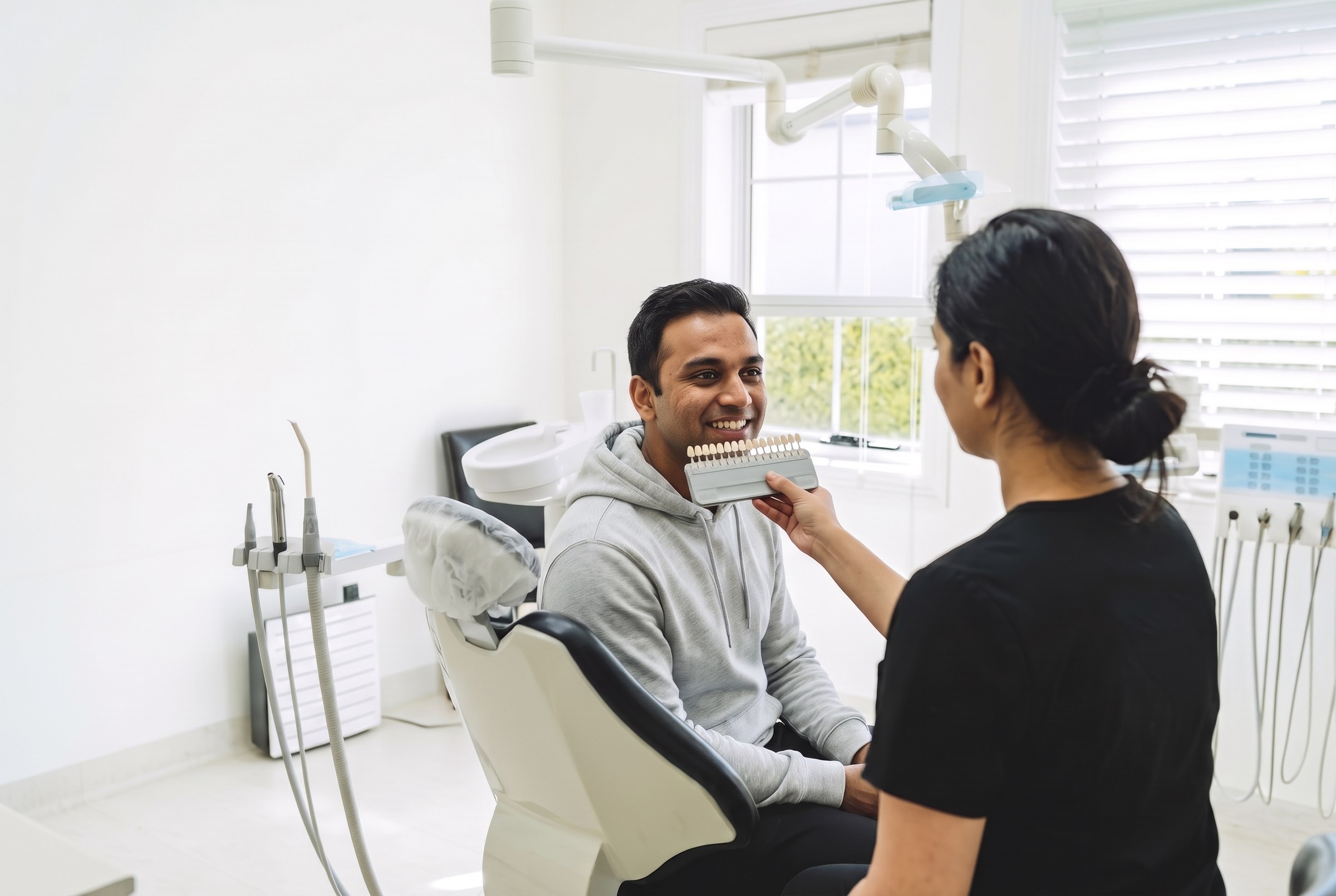
A dentist holding a shade guide near a smiling man's front teeth during a veneer consultation

Is it for you?

Are veneers right for me?

Porcelain veneers are a cosmetic treatment for natural front teeth that are basically healthy but look wrong to you. They are worth asking about if you have:

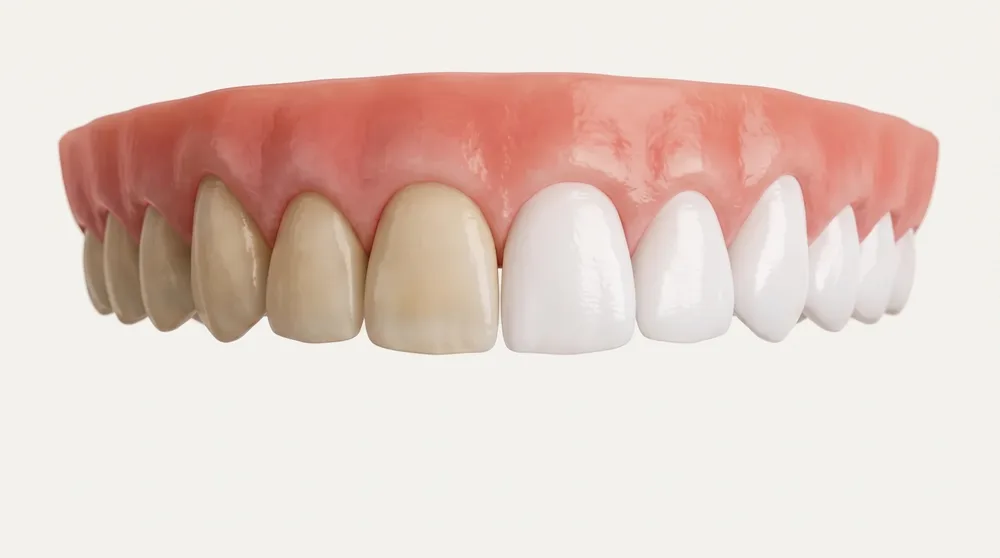
  • Staining from within the tooth that has not shifted with professional whitening, such as grey or banded colour
  • Chipped, cracked or worn edges from old knocks, grinding or acid erosion
  • Small gaps between front teeth that you would like closed
  • Teeth that are slightly crooked, narrow or short compared with the ones beside them
  • Healthy gums and no active decay, or problems that can be treated first

Veneers are not the answer to every concern. A tooth that is heavily filled or badly broken often needs a crown for strength, and teeth that are significantly crowded are usually better straightened with clear aligners before anything is bonded. We will tell you honestly which route suits your teeth.
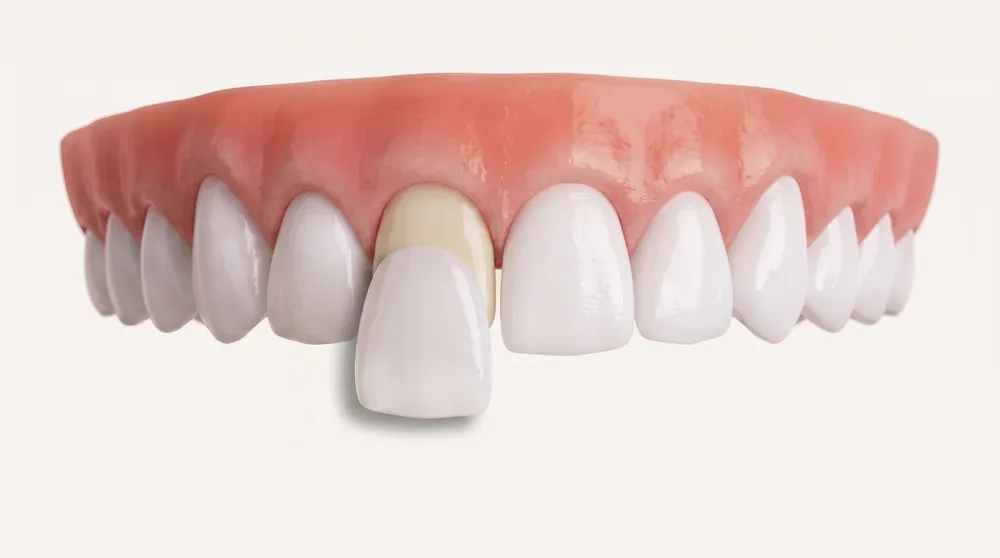
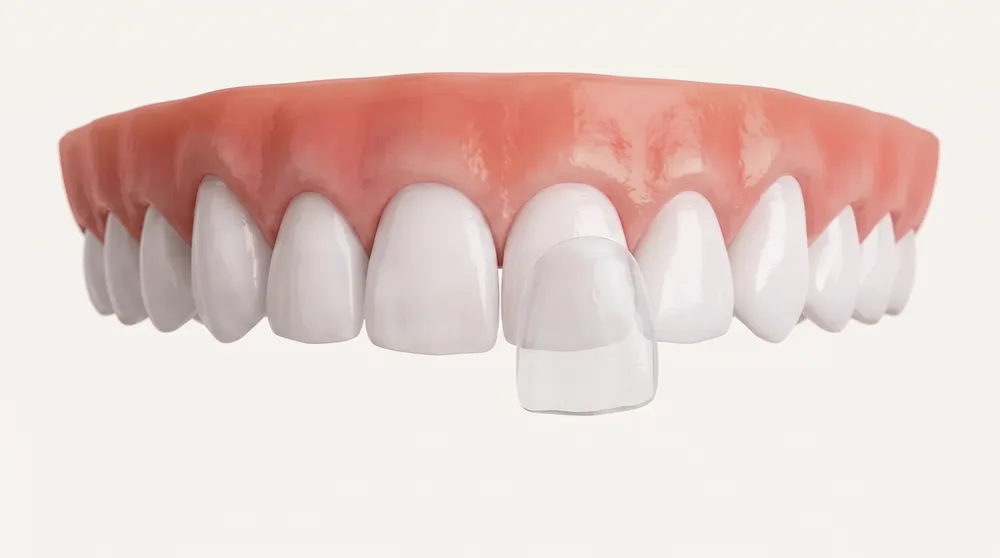
Thin porcelain veneer shell positioned in front of an upper front tooth before bonding

The basics

What are porcelain veneers and how do they work?

A porcelain veneer is a wafer-thin shell of dental ceramic, made to fit one tooth and bonded firmly to its front surface. Once it is in place, the veneer becomes the part of the tooth that people see. Its colour, length, outline and surface texture are all decided during planning, so a set of veneers can change the look of your smile while the tooth underneath stays your own.

Porcelain works well for this because it lets light pass into it and bounce back, much as natural enamel does, so a well-made veneer reads as a tooth rather than a coating. It is also glazed and non-porous, which means coffee, tea and red wine stain it far less than resin or natural enamel. Each veneer is made by a dental laboratory to the shape and shade agreed with you.

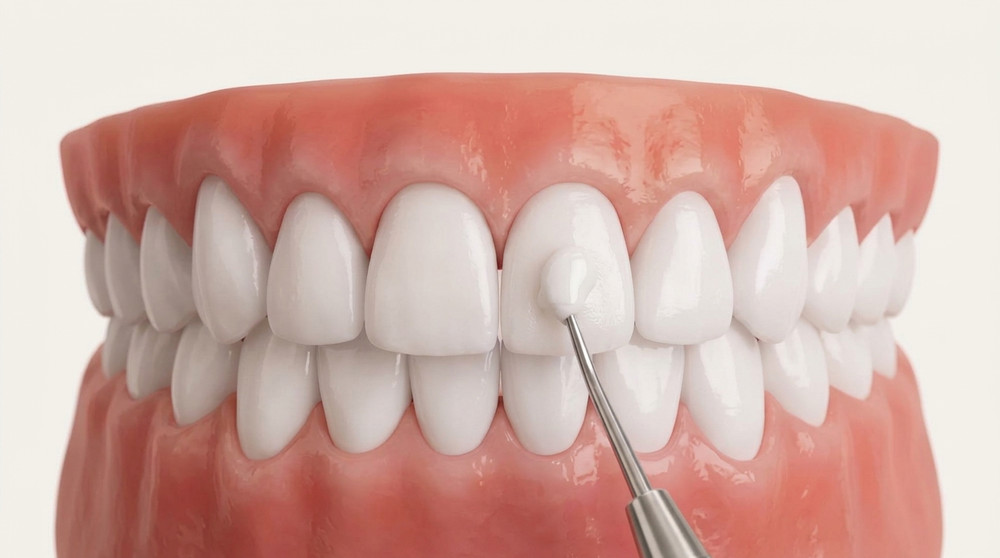
The bond itself is what makes veneers strong. Once cemented and set with a curing light, porcelain and tooth act together, and a veneer can help protect an edge that has been wearing down. If you would like a lower-fee option finished in one visit, composite veneers are sculpted from resin directly onto the tooth.

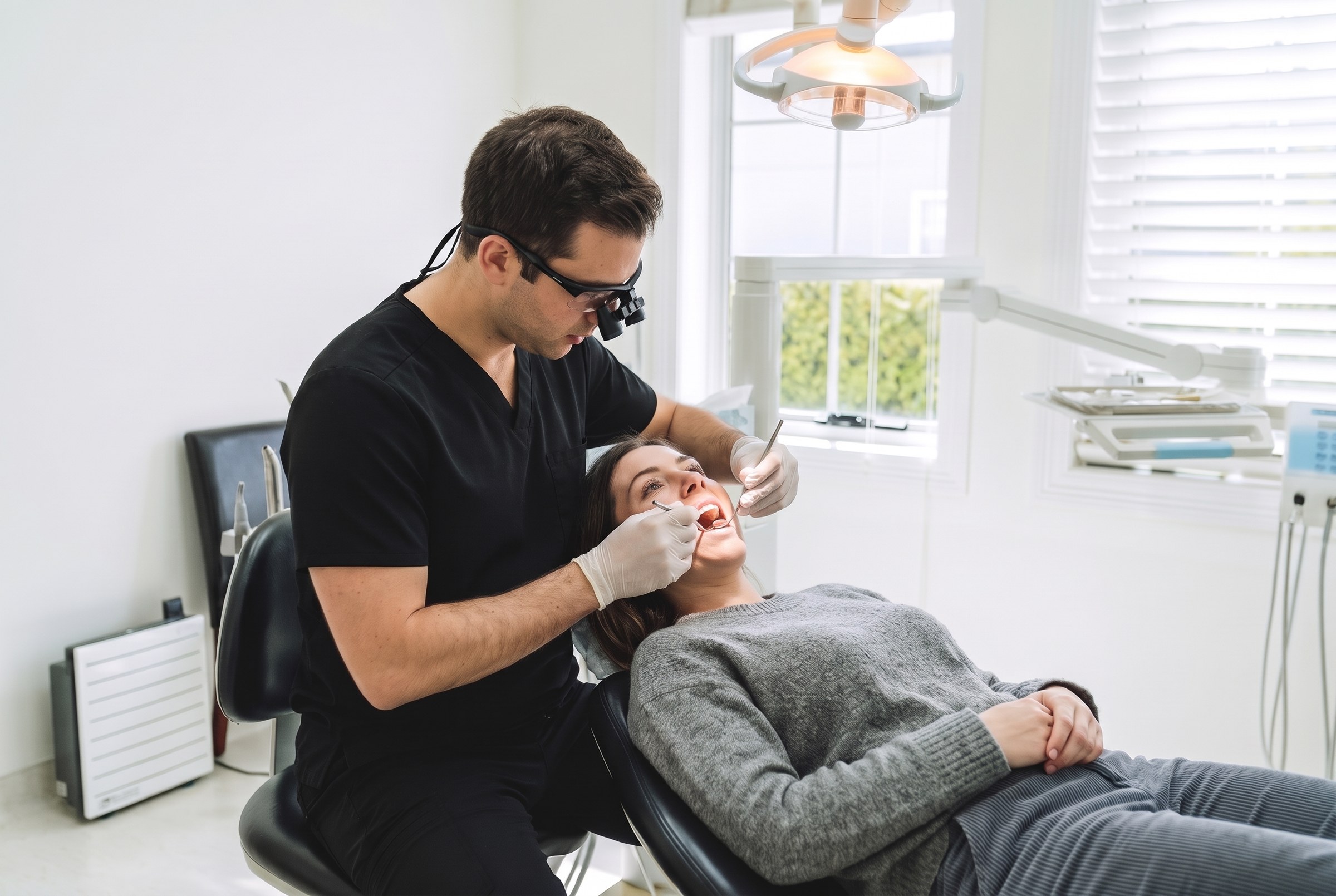
A dentist wearing loupes examining a woman's front teeth with a small mirror

Under the veneer

What happens to the teeth under veneers?

To let a veneer sit flush instead of looking bulky, a fine layer of enamel is usually smoothed from the front of each tooth, often well under a millimetre. Enamel does not grow back, so porcelain veneers are treated as a permanent decision: if one is ever removed, the tooth will need another veneer or a different covering. Our article on why teeth are filed for veneers explains the reasoning in more depth.

The tooth underneath stays alive and keeps its root, nerve and most of its structure. It can still decay at the edges where veneer meets tooth, which is why brushing along the gum line, flossing and regular check-ups remain important for life. Many people notice mild sensitivity to cold for a few days after the teeth are prepared or the veneers are bonded, and it normally settles on its own.

Your options

Porcelain veneers compared with other options

Porcelain is only one route to better-looking front teeth. When you come in, we weigh these against your teeth, your budget and how long you want the result to last.

How it works

How do porcelain veneers work? The four steps

Porcelain veneers usually take two or three appointments spread over a few weeks while the laboratory makes them. You see and approve the shape before the final porcelain is made.

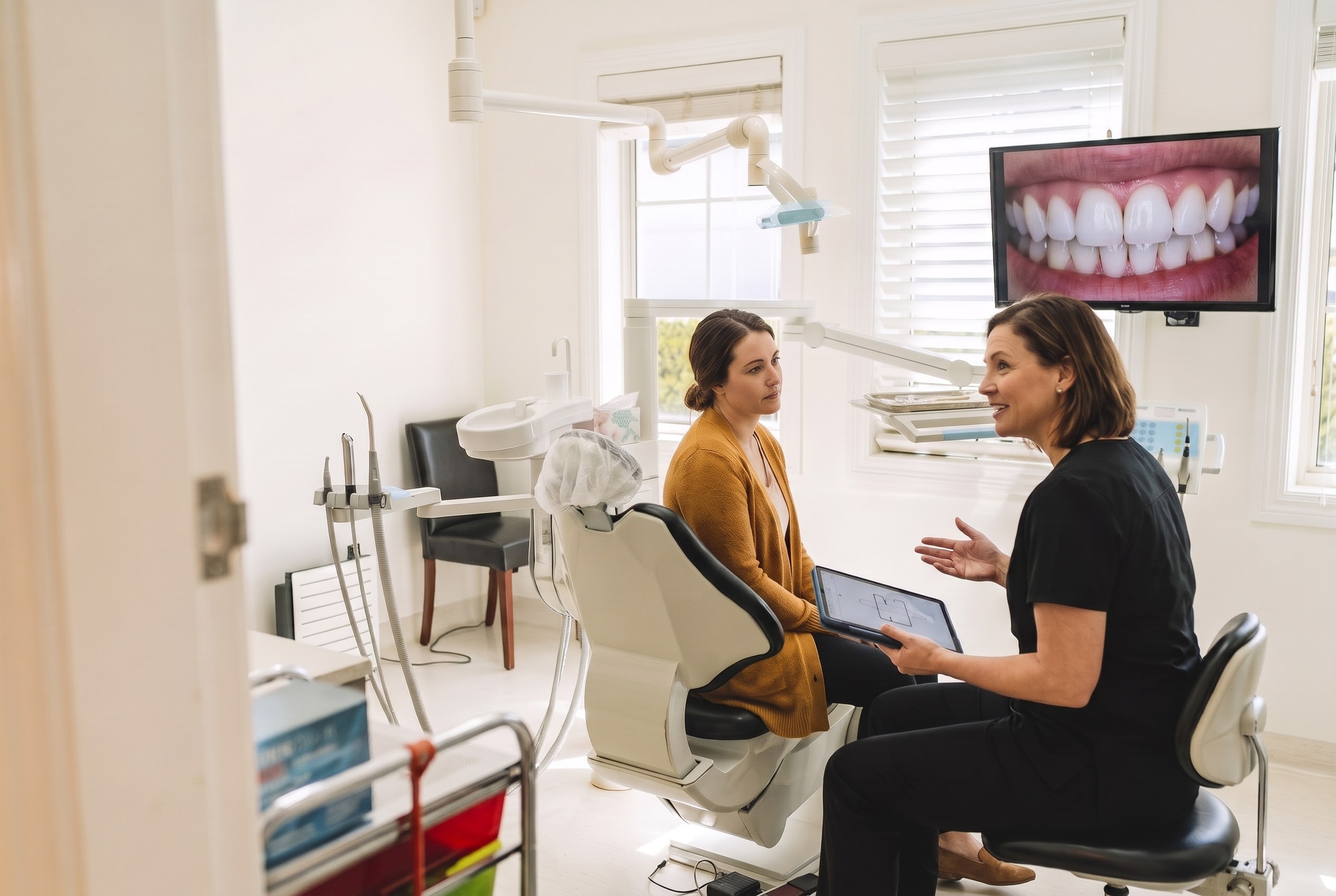
A dentist and a woman in a mustard cardigan talking through a close-up photo of her smile on the surgery screen at her veneer consultation
01

Smile consultation and design

We talk about what you want to change, examine your teeth, gums and bite, and take photographs and scans. Together we agree on how many teeth to include, the length, the outline and the shade.

Book now →
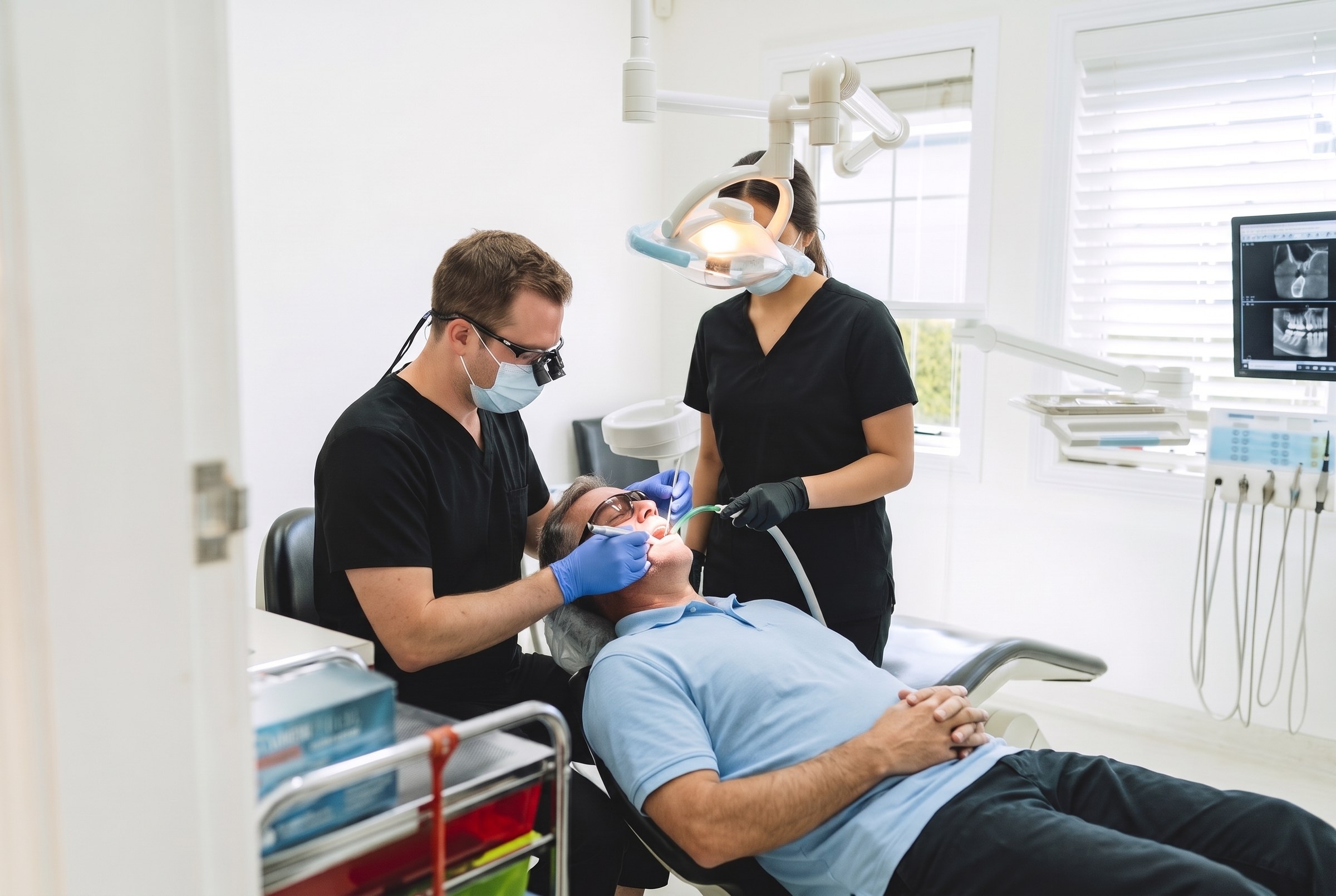
A relaxed man reclined in the dental chair while a dentist wearing loupes gently prepares his upper front teeth, an assistant beside him
02

Gentle tooth preparation

With local anaesthetic if you want it, a thin layer of enamel is smoothed from the front of each tooth so the veneer will sit flush. Only what the agreed design needs is removed.

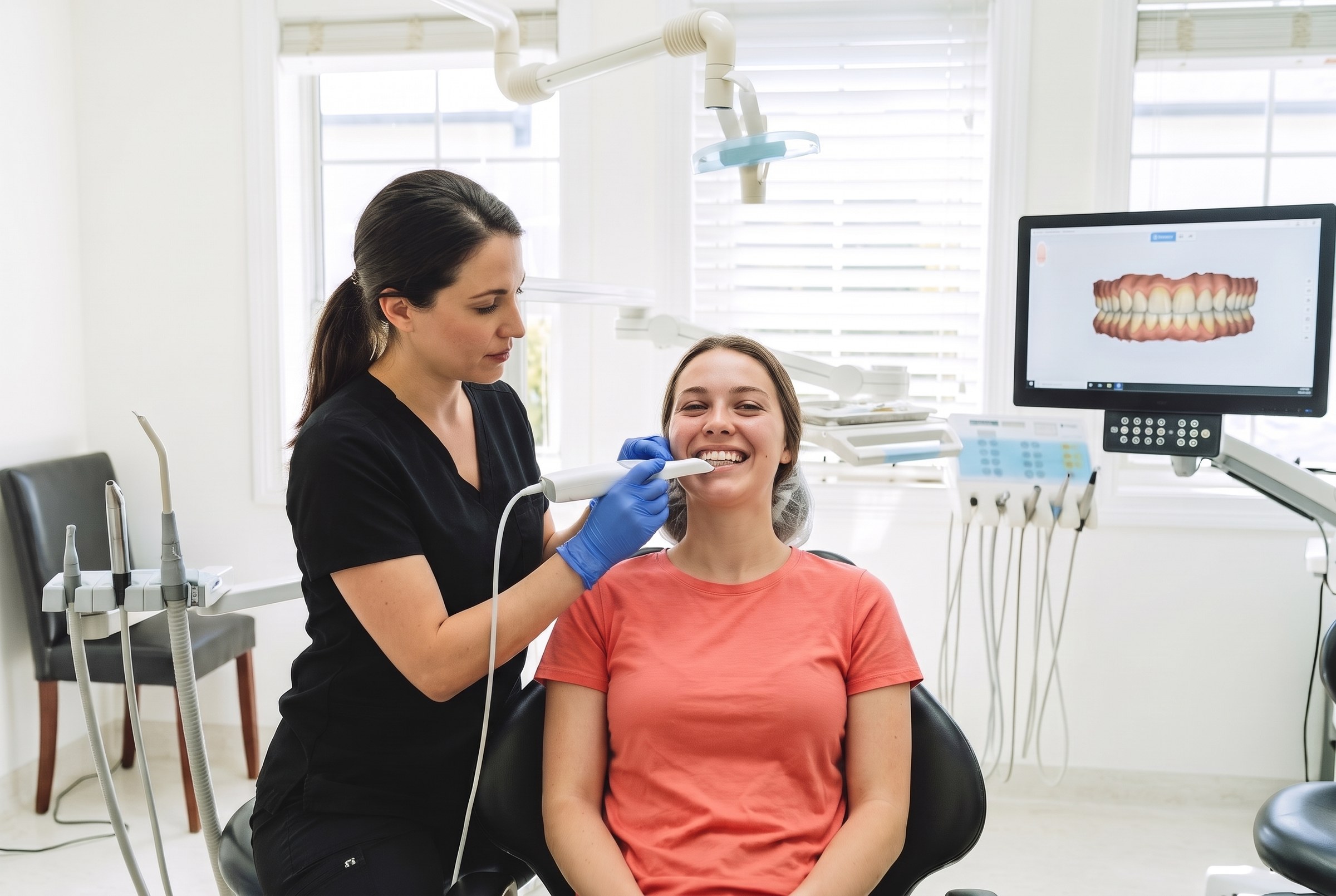
A smiling young woman having her front teeth digitally scanned, the 3D model of her teeth showing on the screen behind
03

Scans, temporaries and trial

Digital scans are sent to the laboratory, and temporary veneers protect your teeth in the meantime. Wearing them is your chance to live with the new shape and tell us about any change you would like.

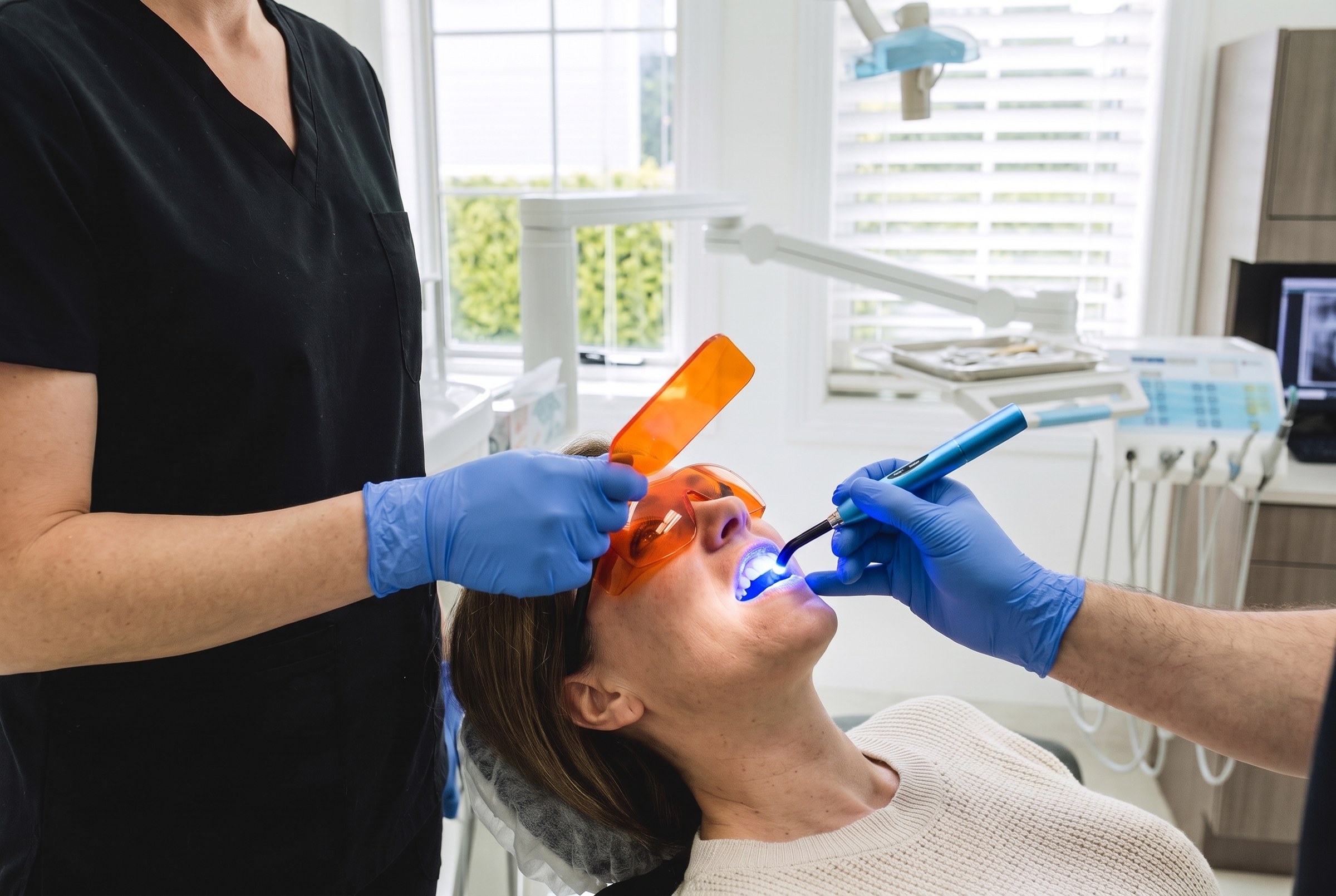
A blue curing light setting a porcelain veneer on a woman's front teeth while the assistant holds an orange light shield
04

Bonding and review

The porcelain veneers are tried in so you can check fit and colour, then bonded and set with a curing light. We adjust your bite, polish the margins and see you again a couple of weeks later for a check.

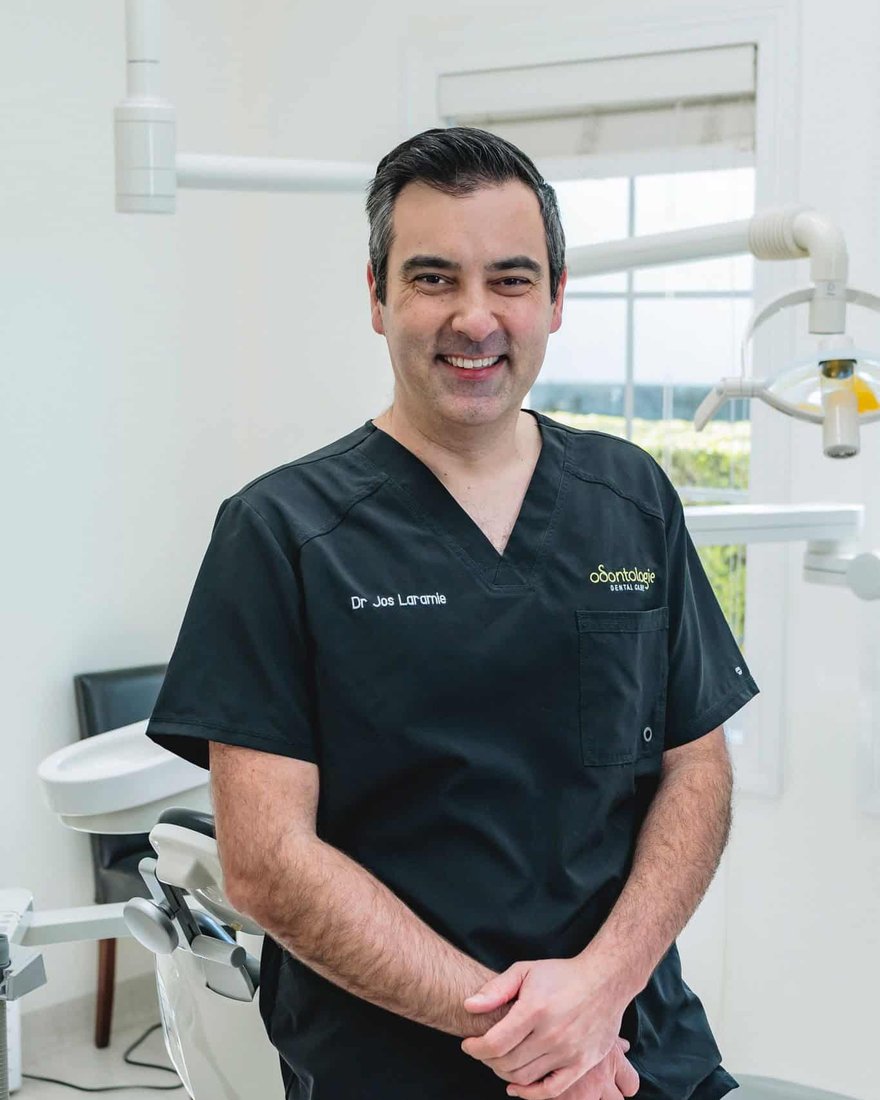
Dr Jos Laramie, Odontologie Dental Care

Meet your implant dentist

Dr Jos Laramie

Dental Surgeon · BDent (Hons) (Syd), BSc

Dr Jos Laramie graduated with honours in dentistry from the University of Sydney in 2011. Originally from northern Canada, he first saw dentistry up close in his mother's clinic, where she worked as a dental hygienist, and a backpacking trip to Australia after his science degree led him to study here.

Book a Free Smile Consultation

Good to know

Porcelain Veneers - frequently asked

How long do porcelain veneers last?

Ten to fifteen years is a common lifespan for porcelain veneers that are cleaned well and checked regularly, and plenty go on well beyond that. Grinding, biting hard objects and missed hygiene visits shorten their life, so if you grind at night we may suggest a protective night guard. Like any dental work, veneers may eventually need replacing as the teeth and gums age. Individual results vary.

Are porcelain veneers permanent?

The decision is permanent, because the enamel smoothed away during preparation does not return. The veneers themselves are long-term rather than lifelong, so plan on replacing them at some point. Read about why teeth are filed for veneers if you would like to understand the preparation step.

Can porcelain veneers be whitened?

No. Whitening gel does not change the colour of porcelain. If you want brighter teeth overall, we usually whiten your natural teeth first and then match the veneers to the new shade, so everything sits together.

Do veneers damage your teeth?

Preparing a tooth for porcelain removes a thin layer of enamel, which is why the treatment is considered irreversible. The tooth underneath stays alive and healthy as long as you keep cleaning it well. If you would rather keep your enamel untouched, ask us about composite veneers or bonding.

Porcelain or composite veneers, which should I choose?

Porcelain resists staining and usually outlasts resin, but it takes two or three visits and more preparation. Composite is placed in the chair, often in one appointment, with less enamel removed, and it can be repaired easily, though it needs refreshing sooner. Our composite veneers page goes into the detail.

Will porcelain veneers look natural?

That is what the planning is for. We choose the shade, the outline and how much light passes through the tips to match your face and your other teeth, and the temporary veneers let you check the look and feel before the final set is made. You can ask for changes at that stage.

Does getting veneers hurt?

The preparation visit is done with the teeth numbed, so most people feel pressure rather than pain. Teeth can feel a little sensitive to cold for several days after, which normally fades without treatment. If you feel anxious about dental treatment, tell us when you book so we can plan extra time.

What are temporary veneers?

Temporary veneers are tooth-coloured coverings placed after your teeth are prepared, while the laboratory makes the porcelain. They protect the prepared teeth and give you a preview of the new shape, so you can tell us about anything you would like adjusted before the final veneers are made.

Can veneers straighten my teeth?

By changing the outline you see, veneers can hide a slight twist, a tooth that sits a little back or a narrow gap. The roots stay exactly where they are and the bite is unchanged, so real crowding is normally straightened with clear aligners first.

How do I look after porcelain veneers?

Use a soft toothbrush and fluoride paste morning and night, angling the bristles along the gum line, and clean between your teeth daily. Avoid biting ice, pens or fingernails and opening packets with your teeth, and wear a mouthguard for contact sport. Regular check-ups let us spot any wear or gum change early.

I am missing a front tooth. Can I still have veneers?

Veneers are bonded onto existing teeth, so on their own they cannot fill the space left by a lost tooth. That space is usually restored with a dental implant or a bridge, and veneers on the neighbouring teeth can then be matched to it.

Still have questions?

Ready to take the next step?

Booking online takes under a minute, or give our friendly team a call - new patients are always welcome.

  • Free smile consultation and assessment ($75 refundable deposit)
  • Porcelain, composite and whitening weighed up for your teeth
  • Written plan with the number of visits and every fee
  • humm and Afterpay, subject to approval
We accept all major health funds
MedibankBupaHCF
Odontologie Dental Care is part of the My Implant Dentist Group