329 Hume Hwy, Lansvale NSW 2166
Dental emergency? (02) 9725 6241 ★★★★★ 4.8 | 57 reviews
Home / Services / TMJ Treatment

Jaw pain and TMJ care in Lansvale

TMJ Treatment Near Me

Help for a sore, clicking or tight jaw

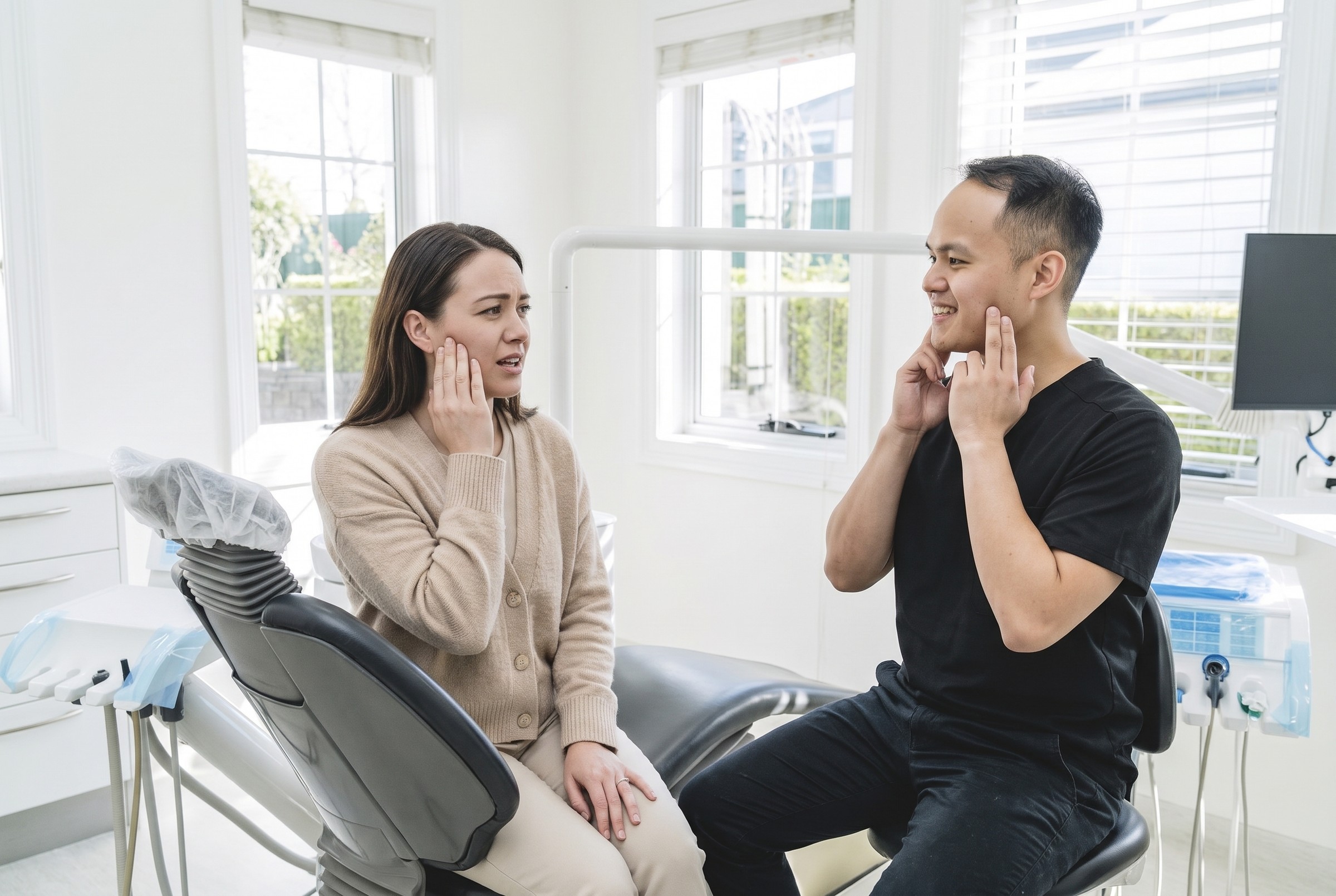
A jaw that aches when you chew, clicks when you yawn or feels locked first thing in the morning is hard to ignore. These are common signs of a problem with the temporomandibular joint (TMJ), the hinge just in front of each ear, and the muscles that work it. At Odontologie Dental Care on the Hume Highway in Lansvale, our dentists look at your jaw joints, chewing muscles, teeth and bite together, explain what is likely driving your symptoms, and put together a TMJ treatment plan that suits your day-to-day life. Patients come to us from Cabramatta, Canley Vale, Chipping Norton, Liverpool and right across south-west Sydney.

  • Jaw, muscle and bite assessment with X-rays where needed
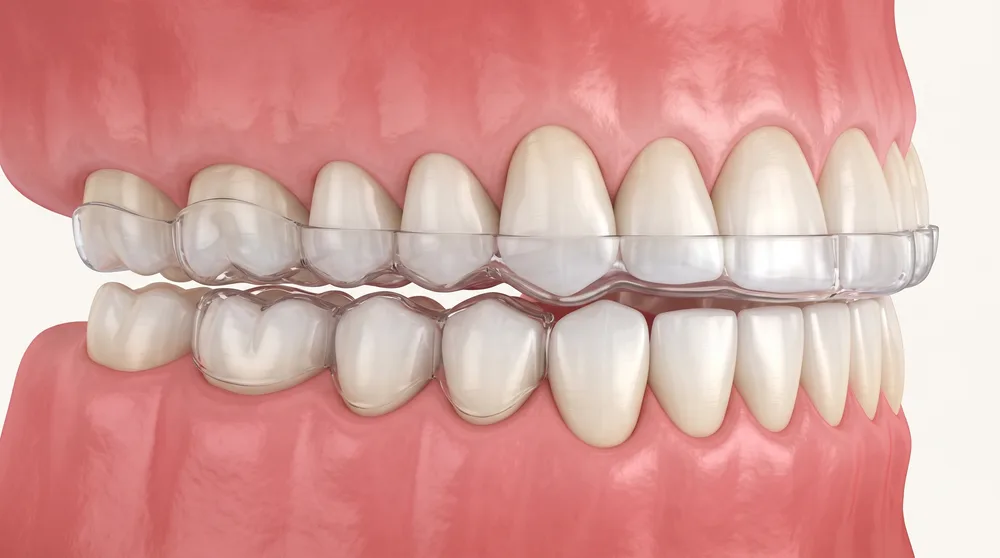
  • Custom splints and night guards made for your teeth
Odontologie Dental Care clinic

Your next step

Jaw pain, clicking or morning headaches?

Book a TMJ assessment at Odontologie Dental Care in Lansvale. We check your jaw joints, chewing muscles, teeth and bite, explain what is most likely causing your symptoms and give you a written plan and fee estimate before anything is made.

  • Jaw joint, muscle and bite check
  • Custom splints and night guards
  • Wear and chipped teeth repaired
  • Referral when you need more than dental care
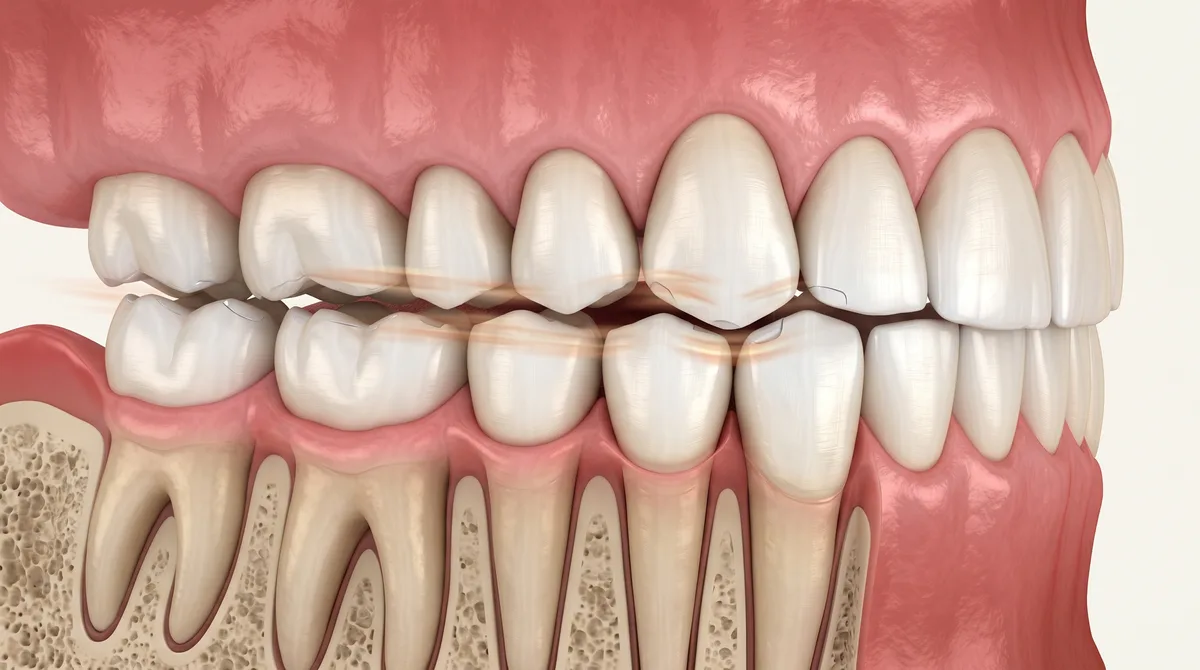
Diagram of the jaw joint and chewing muscles under strain from clenching and grinding

Know the signs

What are the symptoms of TMJ disorder?

Temporomandibular disorder, often shortened to TMD or simply called TMJ, is a group of conditions affecting the jaw joint, the disc that cushions it and the muscles around it. TMJ symptoms vary a lot from person to person. The ones we hear about most are:

  • Aching or tenderness in the jaw, cheeks or temples, often worse in the morning or after a long day
  • Clicking, popping or a grating feeling when you open wide, chew or yawn
  • A jaw that catches, locks or will not open as far as it used to
  • Pain around or in front of the ear, sometimes mistaken for an ear infection
  • Tension headaches, a stiff neck or sore shoulders
  • Teeth that feel tender, worn, chipped or suddenly do not meet the way they did

Jaw problems are common in Australian adults and often show up between the mid-twenties and mid-forties, more often in women. A click with no pain is usually not a worry on its own. Pain, locking or changes in how your teeth meet are worth getting checked.
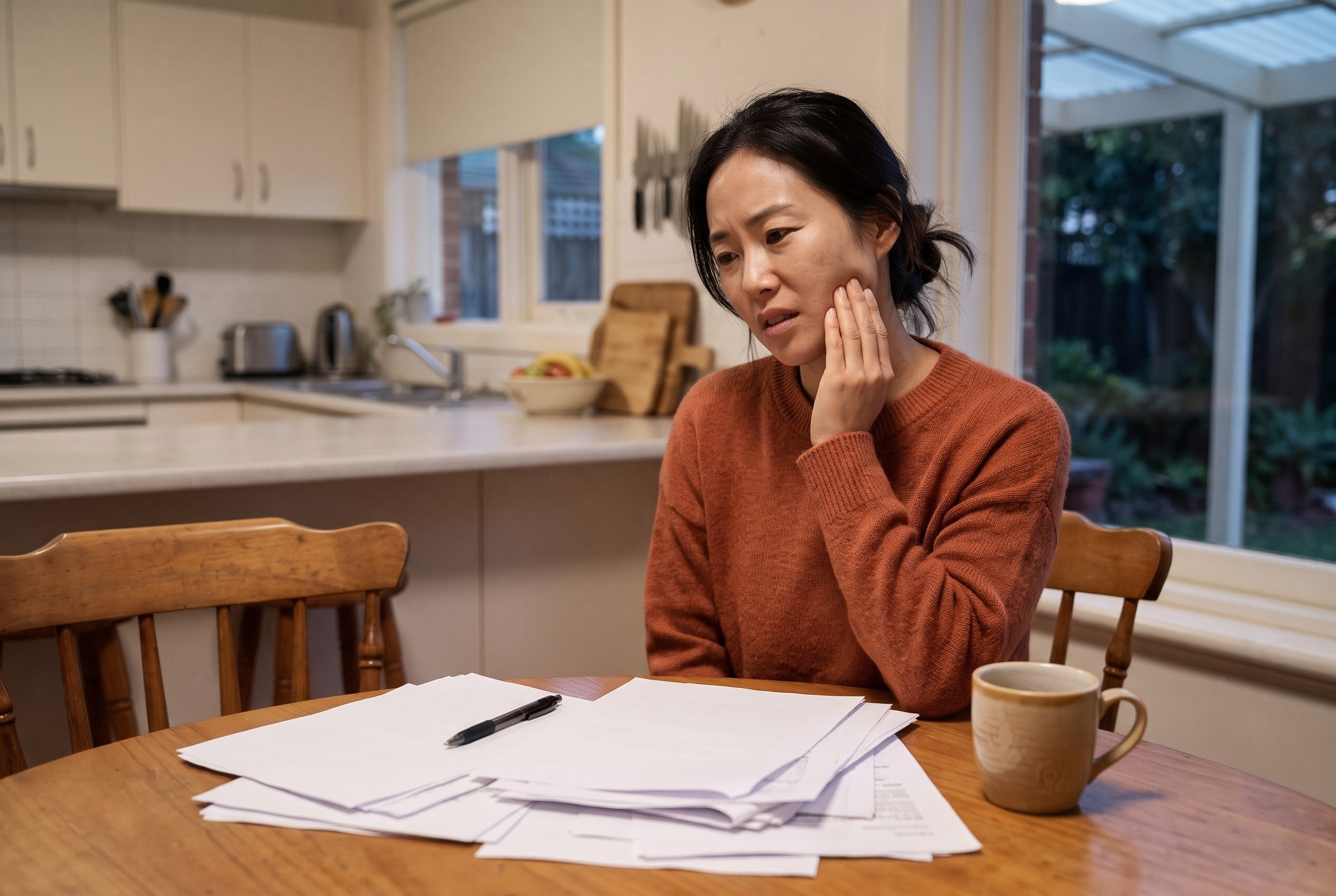
A woman at her desk rubbing a tense, aching jaw

Why it happens

What causes TMJ pain?

There is rarely one single cause. More often a few things add up and the jaw muscles and joint run out of room to cope:

  • Clenching and grinding (bruxism). Many people grind or clench in their sleep, or clench during the day when concentrating, driving or lifting. The muscles tire and the joint takes the load.
  • Stress. Tension tends to sit in the jaw. Busy, stressful periods are a common trigger for flare-ups.
  • Bite and dental changes. A high filling, a lost back tooth or teeth that have drifted can change how the jaw closes.
  • Injury. A knock to the chin or face, a sporting hit or even a long, wide-open dental appointment.
  • Joint changes. Arthritis and some general health conditions can affect the TMJ like any other joint.
  • Habits. Chewing gum for hours, biting nails or pens, resting your chin on your hand and slumped posture at a desk or phone.

Part of our job is working out which of these apply to you, because the right treatment depends on the cause.

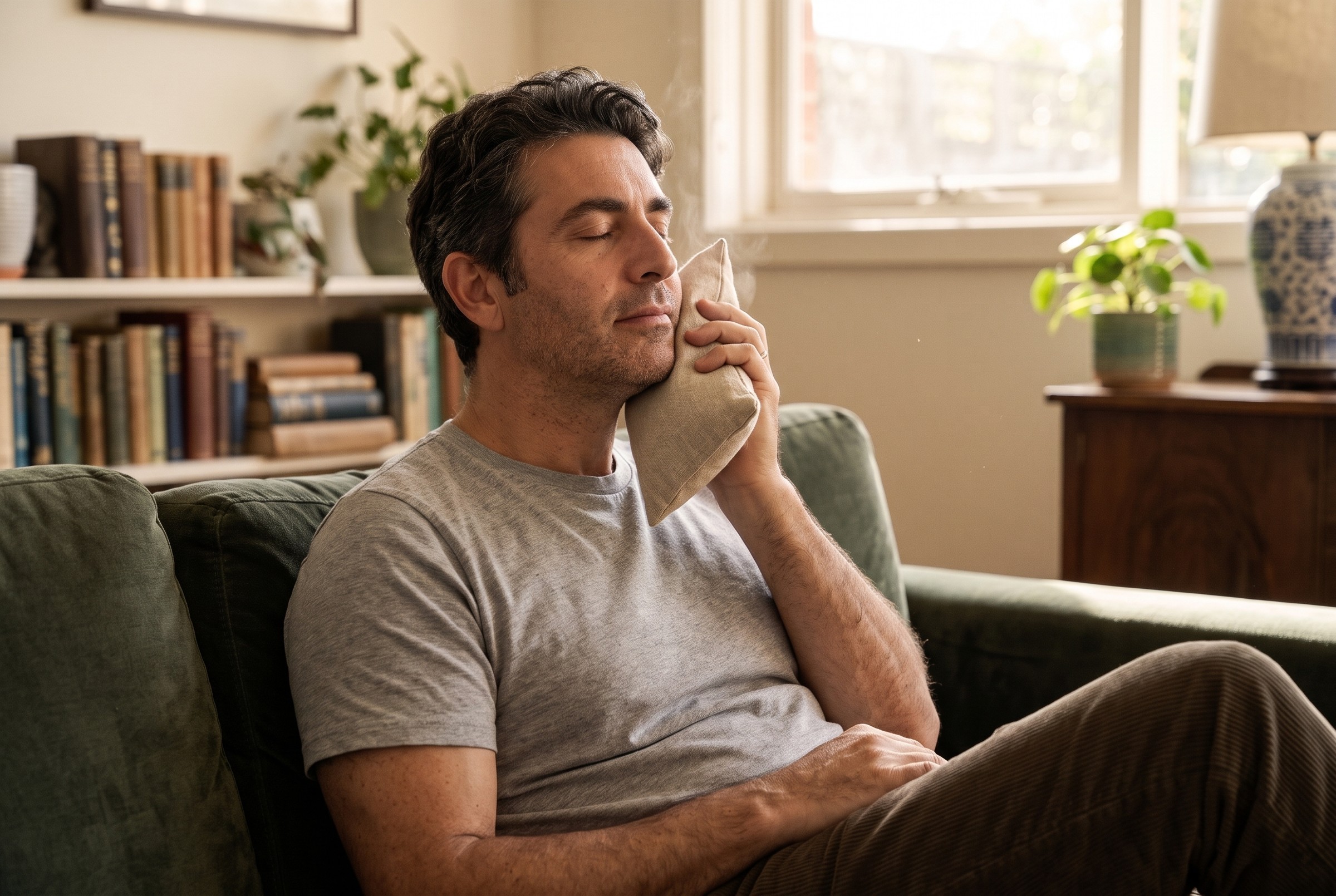
A man holding a warm wheat bag to his jaw for relief at home

Home care

TMJ symptoms relief you can start at home

Self-care makes a real difference for many people and works well alongside a splint. While you wait for your appointment, or between reviews, try these:

  • Warmth or cold. A warm wheat bag or a cold pack wrapped in a cloth on the sore side for 15 to 20 minutes, a few times a day.
  • Soft food for a while. Cut food into small pieces and give crusty bread, tough meat, whole apples and chewing gum a rest during a flare-up.
  • Small openings. Support your chin when you yawn and avoid opening very wide.
  • Lips together, teeth apart. At rest your teeth should not touch. Notice when you clench during the day and let the jaw hang loose.
  • Posture and stress. Set up your screen at eye height, take breaks, and try slow breathing or a short walk when tension builds.
  • Gentle stretches. Only the exercises your dentist or physiotherapist shows you, and never through sharp pain.

Over-the-counter pain relief taken as the packet directs may help for a short time. Check with your pharmacist or GP first if you have a health condition or take other medicines.

Your options

TMJ treatment options at Odontologie

Most people do well with simple, reversible treatment first. These are the options our Lansvale dentists use most often for jaw pain and grinding.

How it works

How a TMJ visit works at Odontologie

Jaw pain usually has more than one cause, so the first appointment is about listening and looking carefully before anything is made or adjusted.

01

Tell us how your jaw behaves

We ask when the pain started, when it is worse, whether your jaw clicks, grates or locks, and about headaches, earache, stress, sleep and old injuries. Your partner noticing grinding at night is useful information too.

Book now →
02

A hands-on jaw and bite check

Your dentist feels the jaw joints and chewing muscles as you open and close, measures how far you can open, checks for wear on your teeth and looks at how your bite meets. X-rays are taken if the joint or a tooth needs a closer look.

03

A plan that fits the cause

We explain what we found in everyday words. Many people start with a custom splint or night guard plus simple home care. If the joint itself needs imaging or care beyond a dental practice, we refer you and tell you why.

04

Review and fine-tune

TMJ symptoms often settle gradually, so we book a review to check the fit of any splint, see how your jaw is responding and adjust the plan. Long-standing problems may need ongoing management rather than a one-off fix.

A dentist writing a referral to a specialist for a patient with jaw pain

Beyond the dental chair

When should I see a specialist for TMJ?

Many jaw problems can be managed by a general dentist, a splint and good home care. Some cannot, and we would rather tell you early. We may suggest seeing a physiotherapist with an interest in the jaw, your GP, or a TMJ specialist in Sydney such as an oral and maxillofacial surgeon or an oral medicine specialist if:

  • Your jaw locks open or closed, or your opening keeps getting smaller
  • Pain continues despite a splint and home care
  • Imaging shows changes inside the joint
  • The pain may be coming from somewhere other than the jaw

Our dentists are general dentists, not registered TMJ specialists. What we can do is examine you properly, start the treatments that sit within a dental practice, and arrange the right referral with a clear summary of what we found, so you are not starting from scratch.

Good to know

TMJ Treatment - frequently asked

Can a dentist treat TMJ?

Yes, for many people. A dentist can examine the jaw joints and muscles, check your bite and teeth, make a custom splint or night guard, repair teeth damaged by grinding and coach you through home care. If your symptoms point to a problem inside the joint, or do not improve, we refer you on to the right practitioner.

Does a night guard help jaw pain?

For many people who clench or grind at night, a well-fitted night guard helps by spreading the biting forces and letting the jaw muscles relax. It also protects the teeth from wear. It is not a cure for every type of jaw pain, which is why we check the cause first and review how you are going after you start wearing it.

What is the difference between a chemist mouthguard and a dental splint?

Boil-and-bite guards are made for sport and are often bulky and loose for night use, which can make some people clench harder. A dental splint is made from a scan or impression of your teeth, is thinner and harder, and is adjusted so your bite meets it evenly.

How long does TMJ pain take to settle?

It varies. Muscle pain from clenching often eases over a few weeks of splint wear and home care, while long-standing or joint-related problems can take longer and may come and go with stress. We review you along the way and change the plan if it is not helping.

Is jaw clicking a sign of TMJ disorder?

Clicking is common and, if there is no pain or locking, often needs no treatment. If clicking comes with pain, your jaw catches, or you cannot open as wide as before, book an assessment.

Can TMJ cause headaches and earache?

It can. The jaw muscles run up to the temples and the joint sits right in front of the ear, so tension or inflammation there is often felt as headaches, ear pain or a feeling of fullness in the ear. Your GP can rule out other causes of ear pain if needed.

How much does TMJ treatment cost?

It depends on what you need. An examination and a custom splint cost far less than rebuilding worn teeth, for example. After your assessment we give you a written estimate, and your health fund may contribute depending on your level of cover.

Still have questions?

Ready to take the next step?

Booking online takes under a minute, or give our friendly team a call - new patients are always welcome.

  • Jaw joint, muscle and bite check
  • Custom splints and night guards
  • Wear and chipped teeth repaired
  • Referral when you need more than dental care
We accept all major health funds
MedibankBupaHCF
Odontologie Dental Care is part of the My Implant Dentist Group