
329 Hume Hwy, Lansvale NSW 2166
Dental emergency? (02) 9725 6241 ★★★★★ 4.8 | 57 reviews
Home / Services / Dental Crowns

Dental crowns in Lansvale, south-west Sydney

Dental crowns
in Lansvale

A new outer shell for a tooth worth keeping

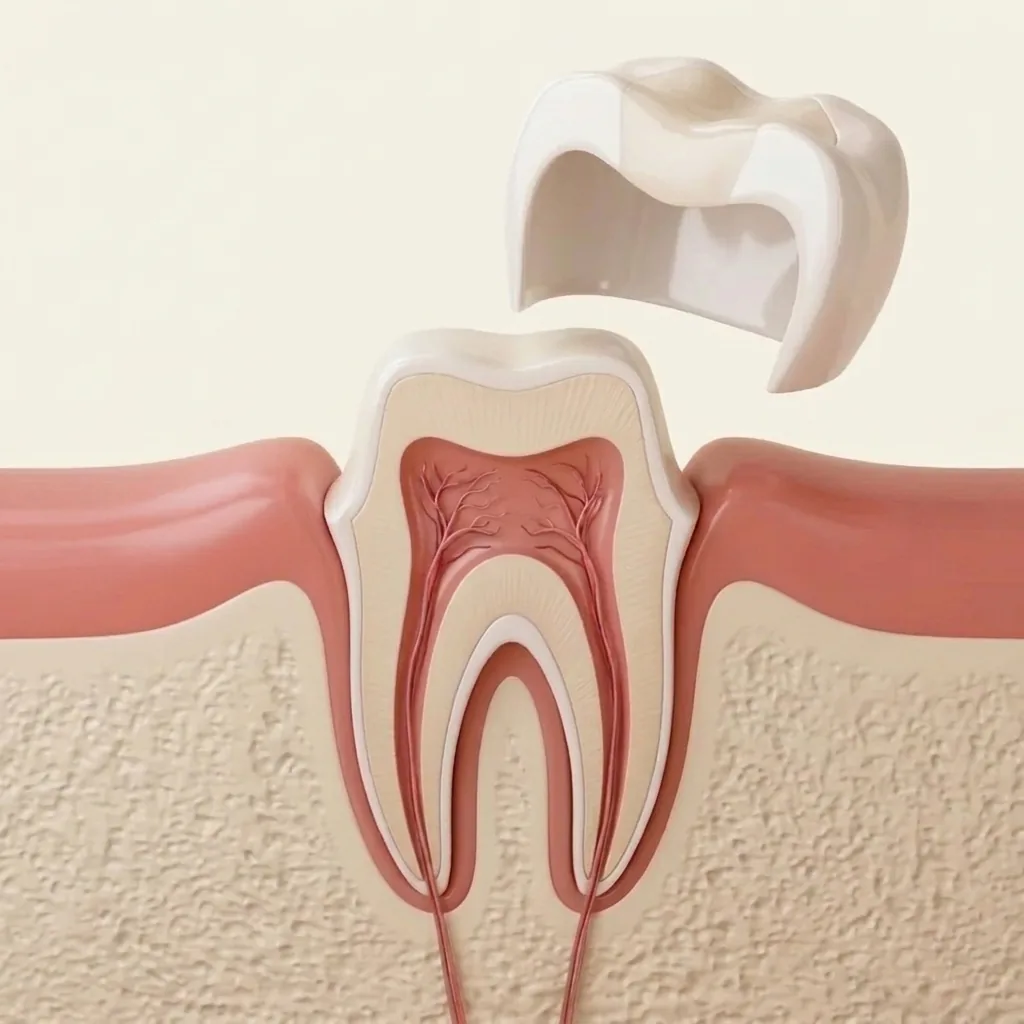
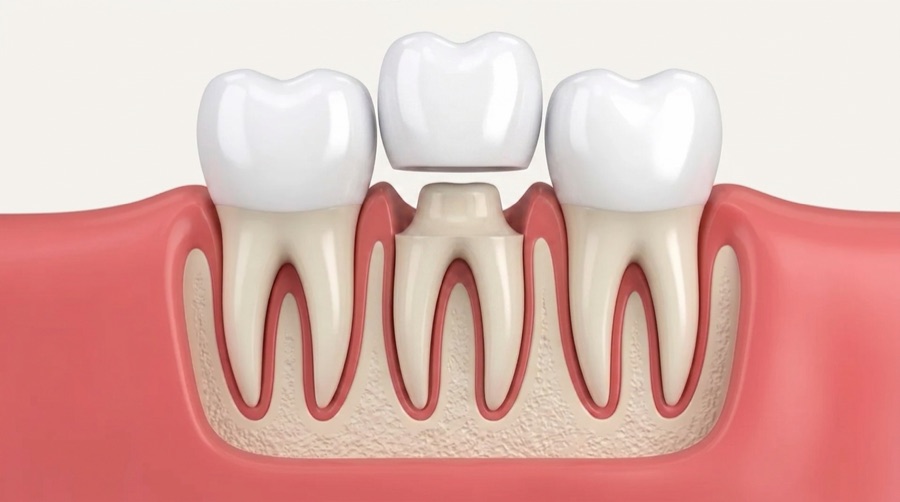
Dental crowns cover a weakened or worn tooth so it can be used and seen with confidence again. Each crown is a custom cap, made to the shape of your bite and the shade of your other teeth, and fitted over what is left of the natural tooth. Odontologie Dental Care has been looking after families on the Hume Highway in Lansvale since 1988, and our crowns start from $2,000 per tooth, with same-day CEREC crowns available for suitable teeth.

  • Porcelain, zirconia and other ceramic crowns, plus metal options
  • Same-day CEREC crowns designed and milled while you wait
Odontologie Dental Care clinic

Your next step

Book a free smile consultation

Visit our Lansvale practice on the Hume Highway, with parking at the front and back. We assess the tooth and the teeth around it, explain whether a crown or another option makes sense, and plan the treatment to your budget with a written estimate. A $75 deposit holds your free consultation, and it is refunded when you attend or if you give us 48 hours' notice to cancel.

  • Assessment of your teeth
  • Crown materials and same-day option explained
  • Plan to your budget
  • Written estimate before treatment

Transparent pricing

Dental crown prices at Odontologie

TreatmentPrice
Dental crown (per tooth)from $2,000
Same-day CEREC crown (per tooth)from $2,000

The fee for your crown depends on the material, which tooth it is, and whether the tooth first needs a core build-up, a post or root canal treatment. You receive a written estimate before treatment begins. Crowns are usually claimed under major dental on extras cover, so your rebate depends on your fund. See our health funds page.

Odontologie Dental Care offers humm and Afterpay, subject to approval, if you would like to spread the cost of a crown. See our payment options.

humm
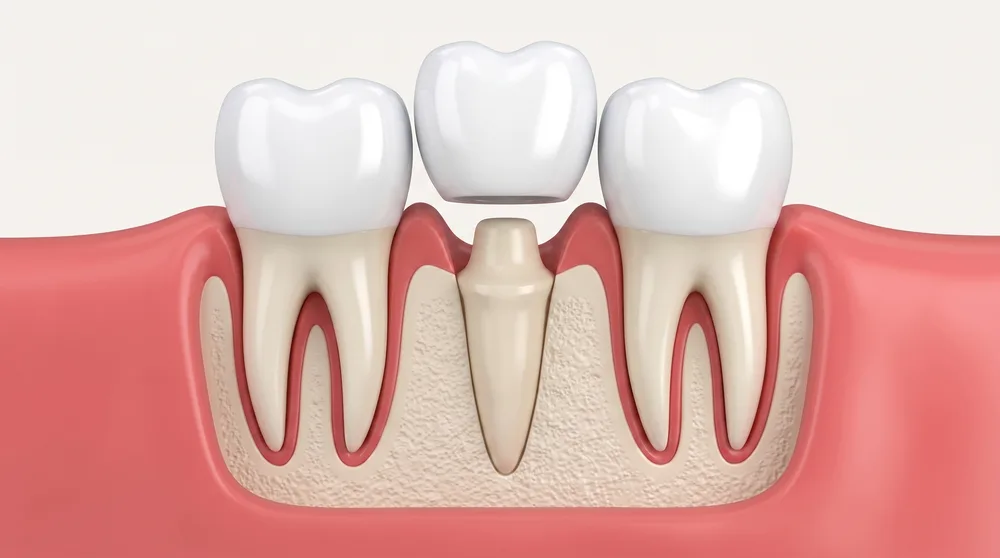
Illustration of a custom crown being lowered over a prepared tooth

When a filling is not enough

Why a tooth might need a crown

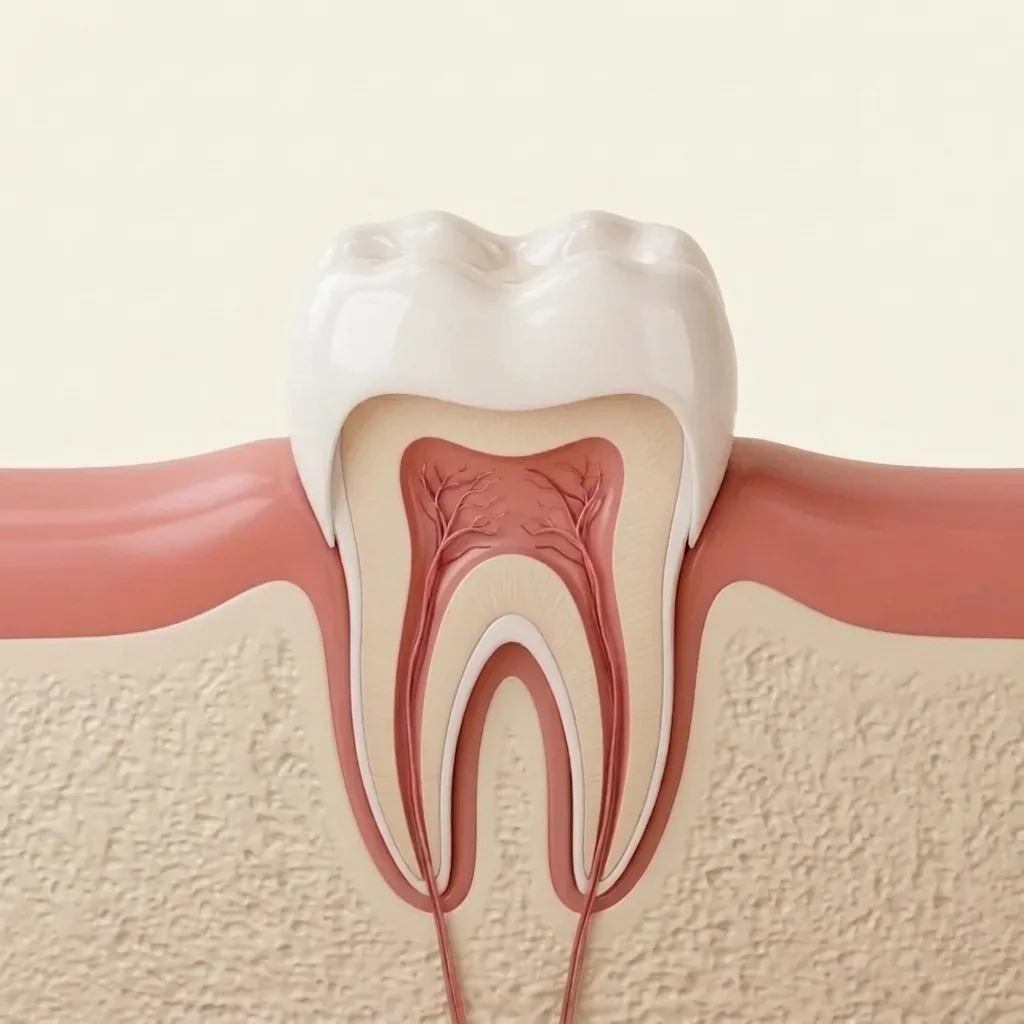
Fillings work well for small holes. When a tooth has lost a large part of its structure, a filling can leave thin walls that crack under chewing, and that is where a crown helps. It wraps the whole tooth, holding it together and spreading the biting load.

Our dentists usually recommend a crown for one of these reasons:

  • A large old filling that has started to break down or leaves little natural tooth behind
  • A cracked or chipped tooth that is sore when you bite or at risk of splitting
  • A back tooth after root canal treatment, which can become brittle over time
  • A worn or misshapen tooth, from grinding, acid wear or a tooth that never grew to full size
  • A dark or stained tooth that whitening cannot lighten
  • A dental implant, where the crown is the visible tooth on the implant post

Not sure whether your tooth needs a crown or a filling? Our article on crown versus filling sets out how dentists decide. If a tooth is missing altogether, see crowns and bridges or single tooth implants.
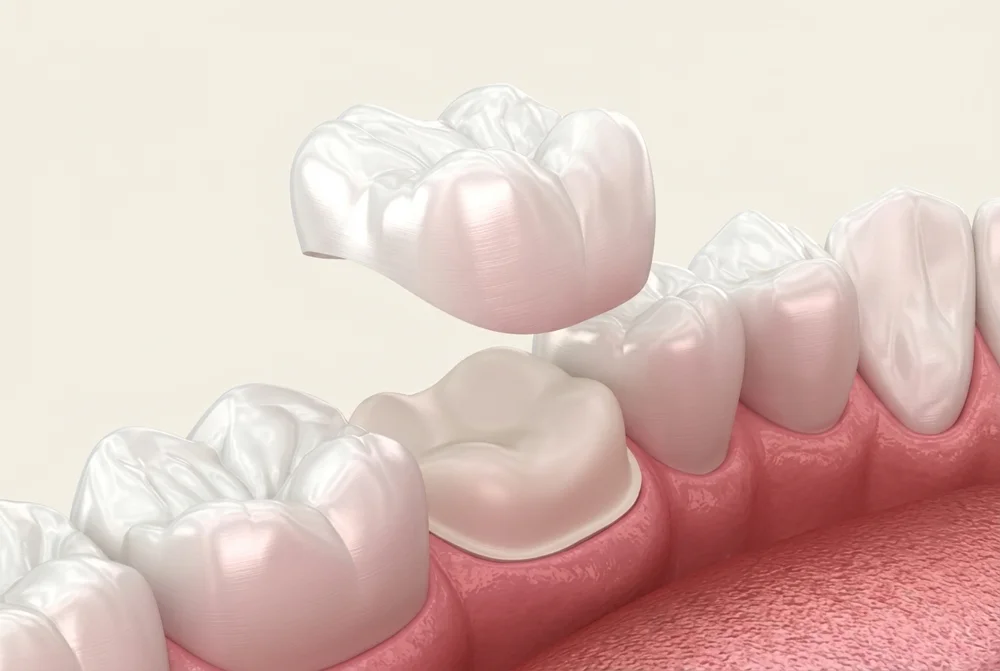

Render of tooth-coloured ceramic crowns of different types

Materials

What is a crown made of?

The material is chosen around three things: where the tooth sits, how hard you bite and how much it shows when you smile.

  • Porcelain crowns. Layered porcelain lets light through much like enamel, so it is a common choice for front teeth and anyone wanting a natural look.
  • Zirconia and other all-ceramic crowns. These metal-free ceramics are strong enough for back teeth and still tooth-coloured. Our same-day CEREC crowns are milled from a ceramic block.
  • Porcelain fused to metal. A metal inner layer with porcelain over it, used where extra strength is needed under a tooth-coloured surface.
  • Gold and metal alloys. Hard wearing and gentle on the opposing teeth, sometimes chosen for molars in people who grind, though they do not match tooth colour.

Laboratory crowns are made by a dental laboratory from a digital scan of your tooth. Your dentist explains the trade-offs between look, strength and cost for your tooth before anything is made.

A dentist holding a shade tab beside a smiling woman's upper front teeth to match a crown

Front teeth

Crowns on front teeth, or a front tooth cap

A crown on a front tooth, sometimes called a front tooth cap, has to do more than survive biting. It sits in the middle of your smile, so the shade, the shape of the edge and the way it meets the gum all matter.

For these teeth we take shade photos, and where needed the laboratory builds in subtle variation in colour from the gum to the biting edge. A single front crown can be harder to match than a whole row, so we check the shade in daylight before it is finished. If you are thinking about whitening, do it before the crown is made, because crowns do not change colour with bleaching.

Our guide to crowns on front teeth covers materials and what to expect in more depth, and before and after crowns on teeth explains how the look of a tooth can change.

Render of a ceramic crown seated on a molar

Longevity

How long do crowns last?

Many crowns last ten to fifteen years, and some go on well beyond that. How long yours lasts depends on the material, the tooth, your bite and, most of all, how clean the edge of the crown is kept. Every mouth is different, so this is a guide rather than a promise.

The crown cannot decay, but the natural tooth underneath it still can, right at the margin where the two meet. To give it the longest life:

  • Brush twice a day and floss daily, paying attention to the gum line around the crown
  • Keep up regular check-ups, so early wear or decay at the edge is caught while it is small
  • Avoid biting ice, pens or hard lollies, and do not open packets with your teeth
  • Ask about a night guard if you clench or grind
Diagram of a tooth shaped and ready to receive a crown

Further reading

More about crowns from our dentists

This page gives you the overview. If you want to go into one part of the treatment in detail, these articles from our blog cover it:

Your options

Laboratory or same-day: two ways to make a crown

Every crown is made for one tooth only. What differs is where it is made and how many visits it takes. Your dentist recommends the method that suits the tooth.

How it works

How a dental crown is fitted

A laboratory crown takes two visits at our Lansvale practice, and a same-day crown takes one. These are the four stages either way.

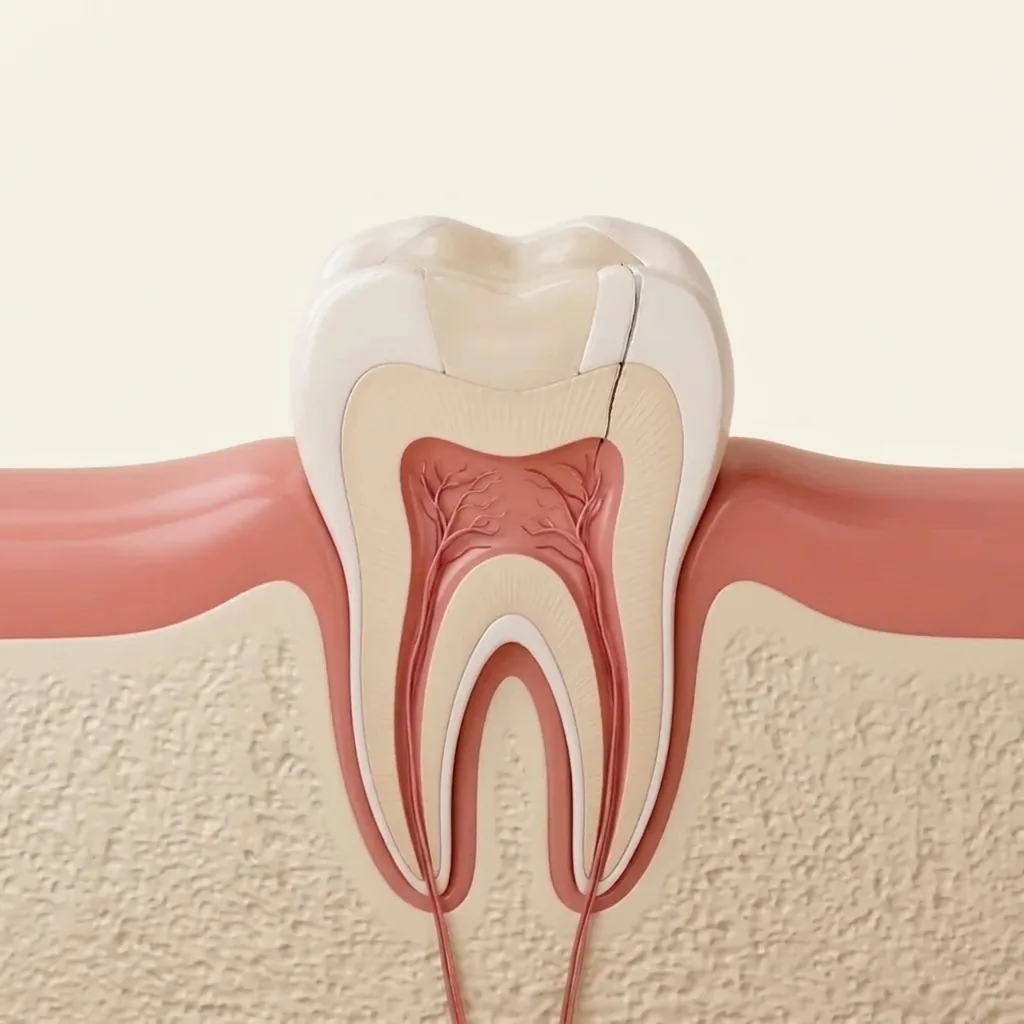
Diagram of a damaged back tooth with a large old filling before crown treatment
01

Check the tooth

We examine the tooth and take X-rays to make sure the root and nerve are healthy and that a crown is the right repair. You get a written estimate, and we talk through materials and whether a same-day crown is possible.

Book now →
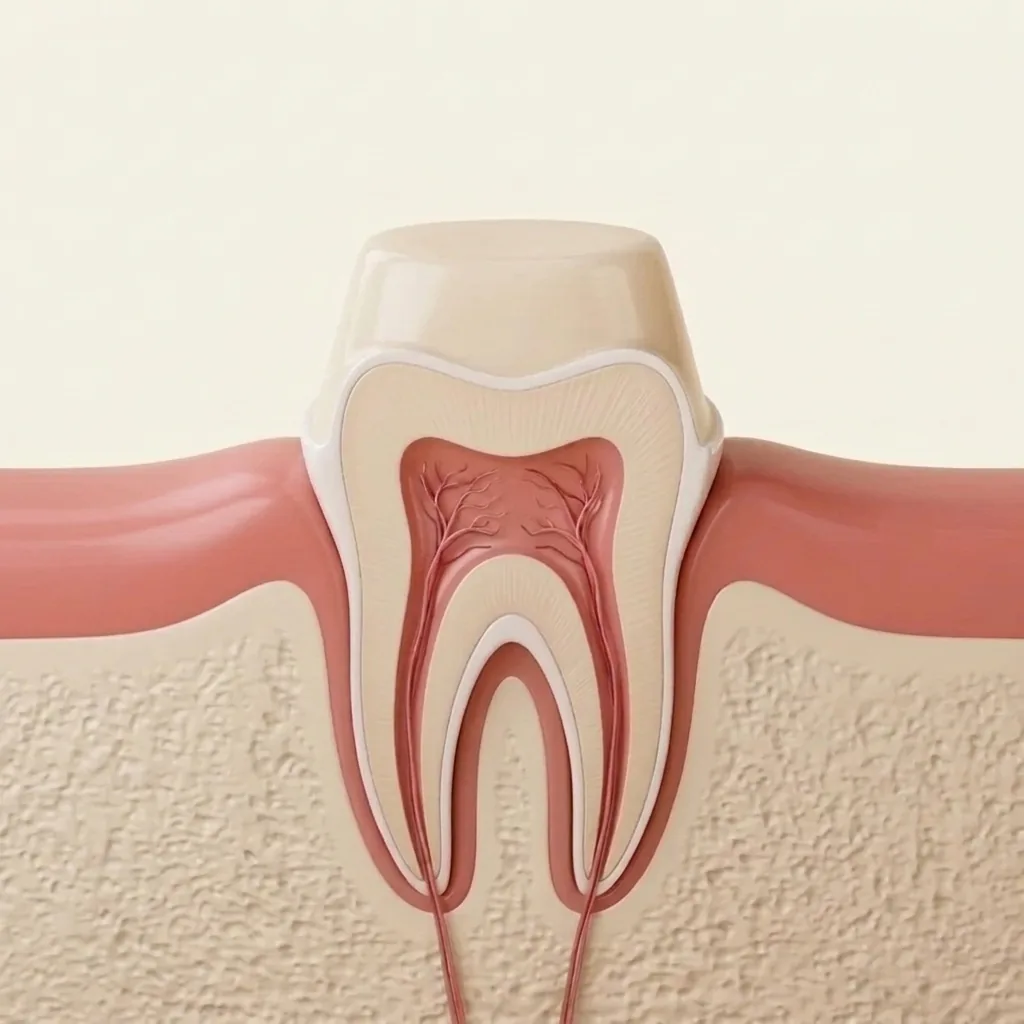
Diagram of the tooth reduced and shaped so a crown can fit over it
02

Shape the tooth

Once the area is numb, old filling and any decay are removed and the tooth is shaped so the crown has room to sit. If too little tooth is left, it is built up first, and sometimes a post is placed in a root-treated tooth.

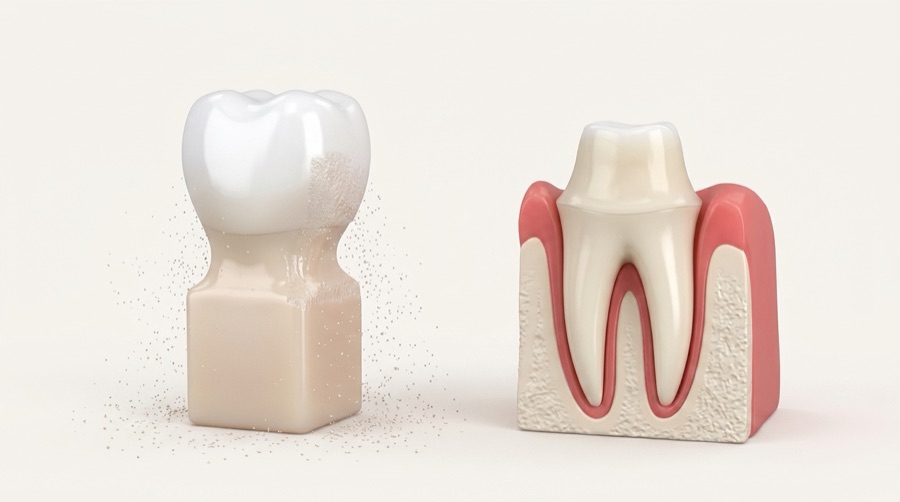
Diagram of a digital scan of the prepared tooth used to design the crown
03

Scan and make the crown

A digital scanner records the prepared tooth and your bite, and we pick a shade together. For a laboratory crown you wear a temporary for a short time; for a CEREC crown, it is designed and milled in the practice during the visit.

Diagram of the finished crown bonded onto the tooth and level with its neighbours
04

Fit and fine-tune

The crown is tried on, the fit at the gum and the contact with your other teeth are checked, and small adjustments are made so your bite feels even. It is then bonded or cemented in place.

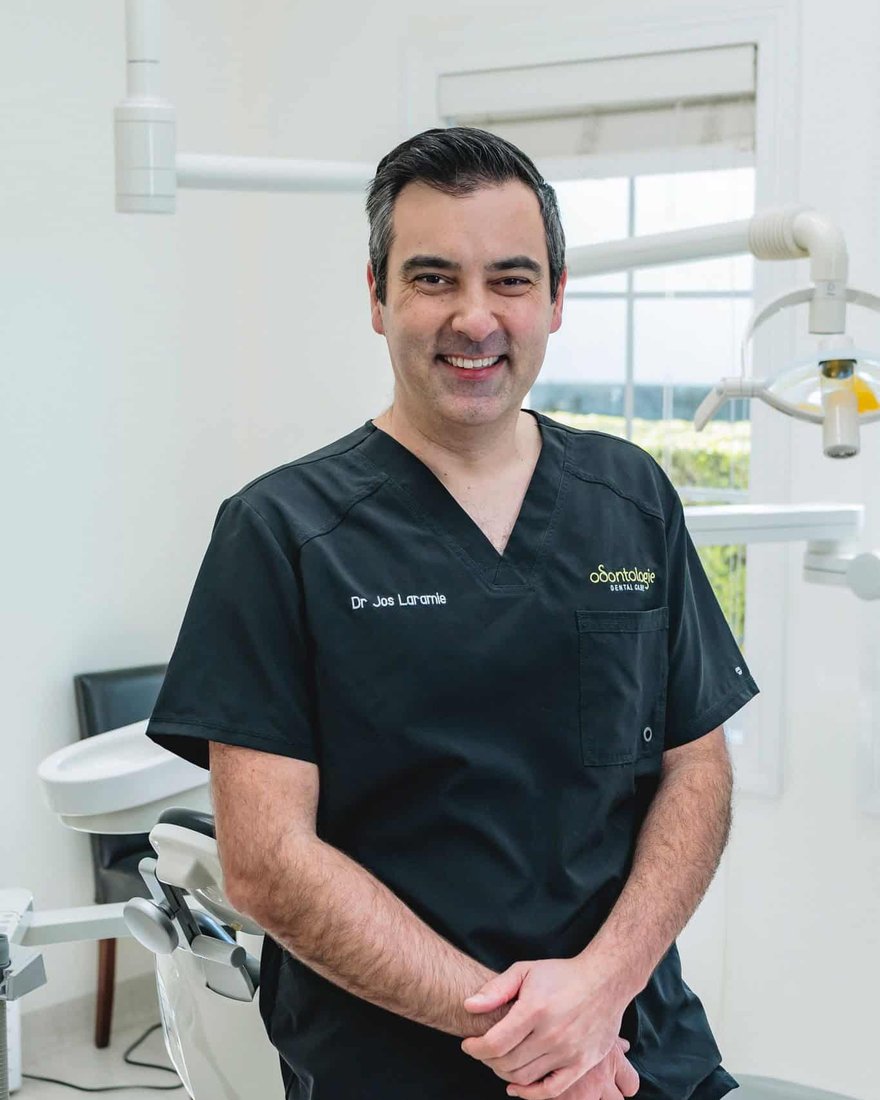
Dr Jos Laramie, Odontologie Dental Care

Meet your implant dentist

Dr Jos Laramie

Dental Surgeon · BDent (Hons) (Syd), BSc

Dr Jos Laramie graduated with honours in dentistry from the University of Sydney in 2011. Originally from northern Canada, he first saw dentistry up close in his mother's clinic, where she worked as a dental hygienist, and a backpacking trip to Australia after his science degree led him to study here.

Book a Free Smile Consultation

Good to know

Dental Crowns - frequently asked

How much does a dental crown cost?

At Odontologie Dental Care a crown starts from $2,000 per tooth, and a same-day CEREC crown also starts from $2,000. The fee depends on the material and any work the tooth needs first, such as a build-up, post or root canal treatment. Every item is listed in your written estimate.

How long do crowns last?

Many crowns last ten to fifteen years and some much longer. Good cleaning at the gum line, regular check-ups and protecting your teeth from grinding all help. Decay at the edge of the crown is the most common reason one needs replacing.

What is a crown made of?

Most crowns today are tooth-coloured: porcelain, zirconia or another ceramic. Porcelain fused to metal and gold are also options. Ceramics suit teeth that show, while zirconia and metal are often chosen for back teeth that take heavy chewing forces.

Does getting a crown hurt?

The tooth is numbed before it is shaped, so you should feel pressure and vibration rather than pain. Some tenderness of the gum or mild sensitivity for a few days afterwards is common and usually settles. If dental visits make you nervous, tell us and we will take it at your pace.

Can I get a crown in one visit?

Often, yes. With CEREC, a ceramic crown is designed and milled in the practice and fitted the same day. It suits many teeth, though some cases, such as very complex bites or certain materials, are better made by the laboratory over two visits. See our same-day crowns page.

Do I need a crown after root canal treatment?

Back teeth usually do, because a root-treated molar or premolar becomes more brittle and can split. Front teeth can sometimes be restored with a filling. Where there is little tooth left, a post may be needed to hold the crown, explained in what is a dental crown post.

Crown or filling: how do I know which I need?

It mostly comes down to how much healthy tooth is left. If a filling would have to replace a large part of the tooth, or the walls are cracked, a crown usually protects it better. Our article on crown versus filling explains more.

What if my crown comes loose or breaks?

Ring the practice on (02) 9725 6241 and bring the crown with you if it has fallen out. A loose crown can sometimes be cleaned and re-cemented, while a cracked or worn-out crown may need replacing.

Can a crown change the shape of a tooth?

Within what your bite allows, yes. A crown can make a small, worn or oddly shaped tooth look more in proportion with its neighbours, which is why crowns are sometimes part of a wider cosmetic dentistry plan.

Still have questions?

Ready to take the next step?

Booking online takes under a minute, or give our friendly team a call - new patients are always welcome.

  • Assessment of your teeth
  • Crown materials and same-day option explained
  • Plan to your budget
  • Written estimate before treatment
We accept all major health funds
MedibankBupaHCF
Odontologie Dental Care is part of the My Implant Dentist Group