329 Hume Hwy, Lansvale NSW 2166
Dental emergency? (02) 9725 6241 ★★★★★ 4.8 | 57 reviews
Home / Services / Dental Implants

Dental implants on the Hume Highway, Lansvale

Dental implants in Lansvale,
for teeth that stay fixed

Replacing missing teeth from the root up

Dental implants give a lost tooth a new root in the jawbone, so the replacement on it is anchored rather than resting on your gums or hooked onto neighbouring teeth. Odontologie Dental Care has looked after families from Lansvale and south-west Sydney since 1988, and our dentists plan implant treatment for one tooth, a run of teeth or a whole jaw. It starts with a free consultation, an OPG X-ray and a written plan you can take home.

  • Swiss-made Straumann implants, crowns from a boutique dental laboratory
  • Free consultation with photos, an OPG X-ray and a written plan
Odontologie Dental Care clinic

Your next step

Book your free dental implant consultation

Come in to our Lansvale practice and talk it through. We take photographs and an OPG X-ray, explain which implant options suit your mouth, and give you a written treatment plan with the fees and the timeline. We also explain the payment options, so you can weigh everything up at home before you decide. A $75 deposit holds your free consultation, and it is refunded when you attend or if you give us 48 hours' notice to cancel.

  • Photographs and OPG X-ray included
  • A written plan with fees and timeline
  • Payment options explained
  • No obligation to go ahead

Transparent pricing

What do dental implants cost in Lansvale?

TreatmentPrice
Implant consultation and treatment planFree
3D cone-beam CT (CBCT) scan$220
Single tooth implant (unrestored)from $1,999
Single tooth implant (implant, abutment and crown)from $3,999
Implant bridge replacing 2 teethfrom $5,000
Implant bridge replacing 3 teethfrom $9,000
Partial implant-supported denturefrom $9,000
Implant-supported dentures (per jaw)from $15,000
All-On-4 with acrylic-titanium bridge (per jaw)from $19,000
All-On-4 with zirconia bridge (per jaw)from $25,000

Your fee depends on how many teeth are replaced, what the new teeth are made of, and whether you need extractions, bone grafting or IV sedation. Every item is listed in your written plan before treatment starts. For a fuller look at what drives implant prices in Australia and how health funds treat them, read our guide to the costs for dental implants.

Implant treatment is easier to plan when the cost is spread out. Odontologie offers humm and Afterpay, subject to approval. See our payment options for how each one works.

humm

Implant care in south-west Sydney

Dental implants close to home for Lansvale, Cabramatta and Liverpool

A missing tooth changes more than your smile. Chewing moves to one side, neighbouring teeth slowly drift into the space, and the bone that once held the root starts to shrink. Dental implants deal with all three, because the implant takes the place of the root and the crown on it does the work of the tooth.

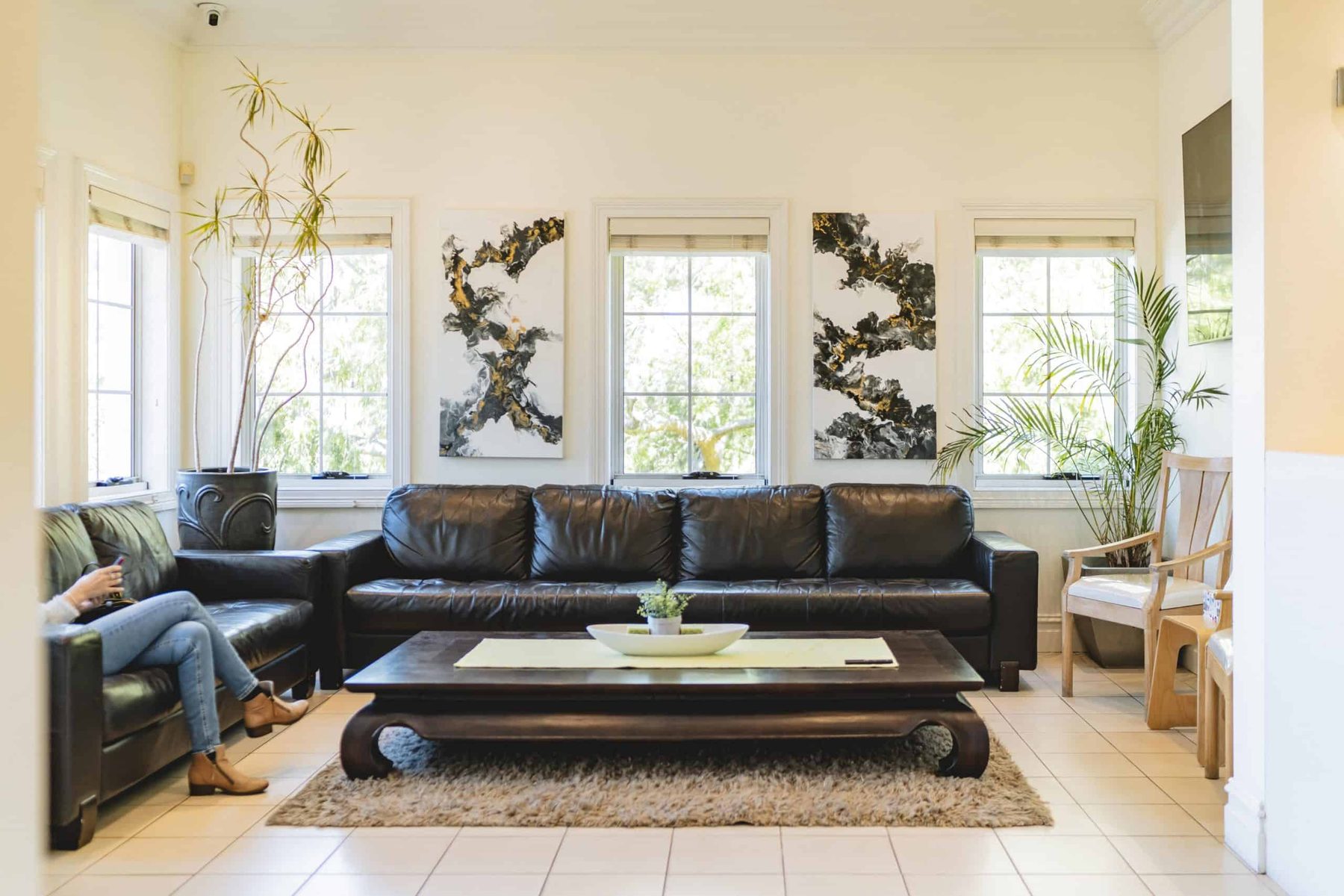
Odontologie Dental Care is at 329 Hume Highway, Lansvale, about 1 km from Cabramatta and a short drive from Liverpool, Fairfield, Chipping Norton and Canley Heights. Patients come to us for dental implants in Sydney's south-west from Wetherill Park, West Hoxton, Middleton Grange, Edensor Park and Bankstown too. There is parking at the front and the back, and the waiting lounge looks out over the garden.

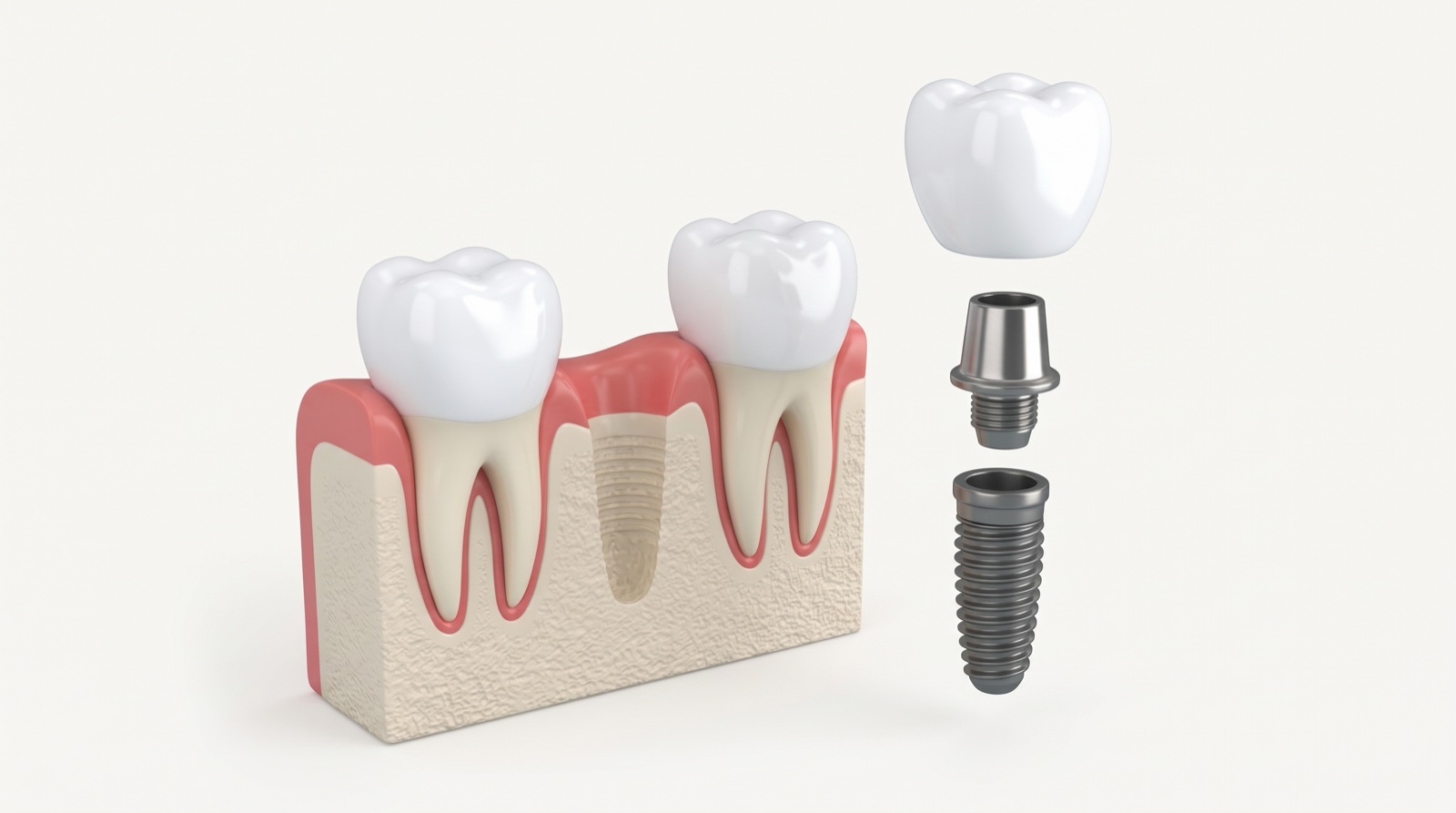
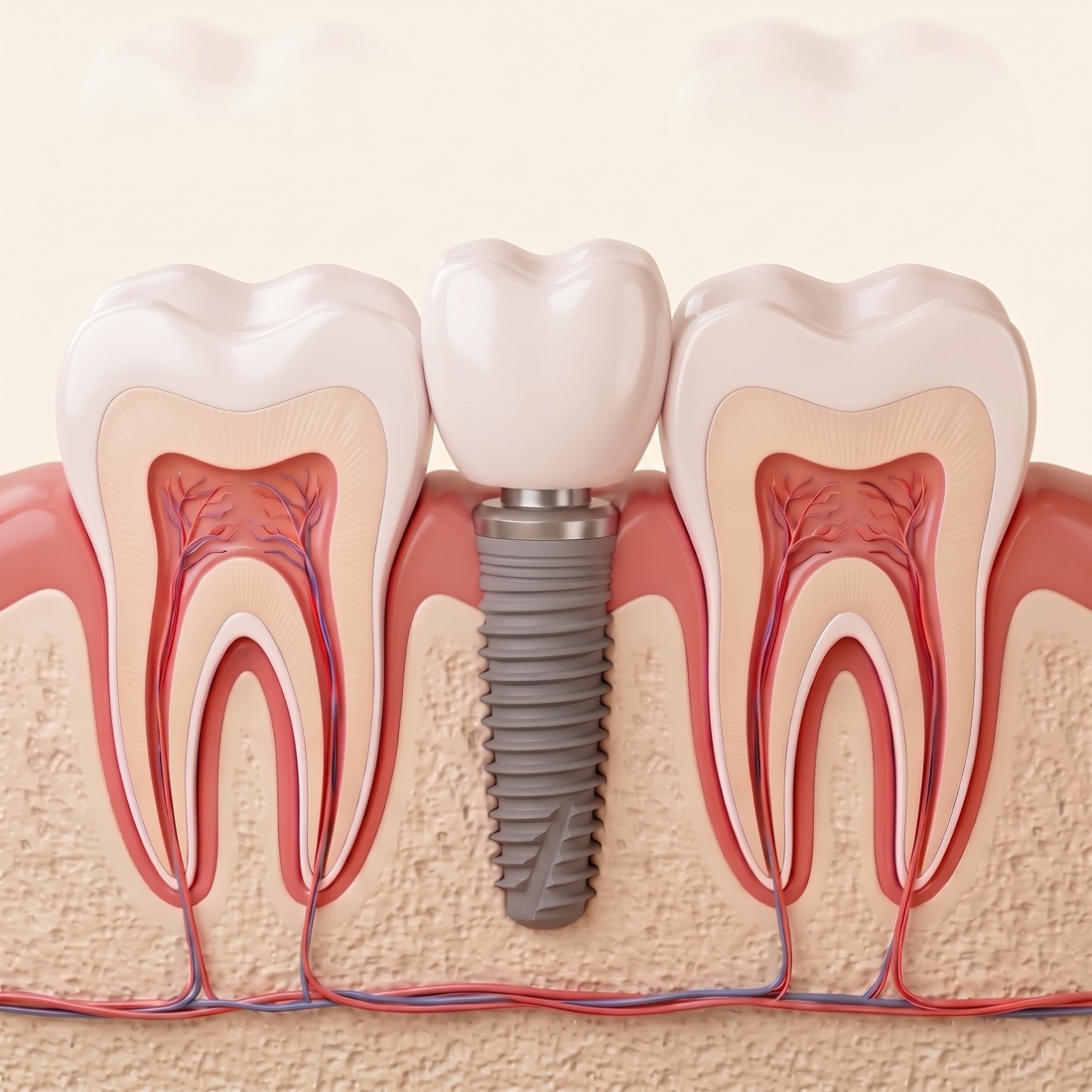
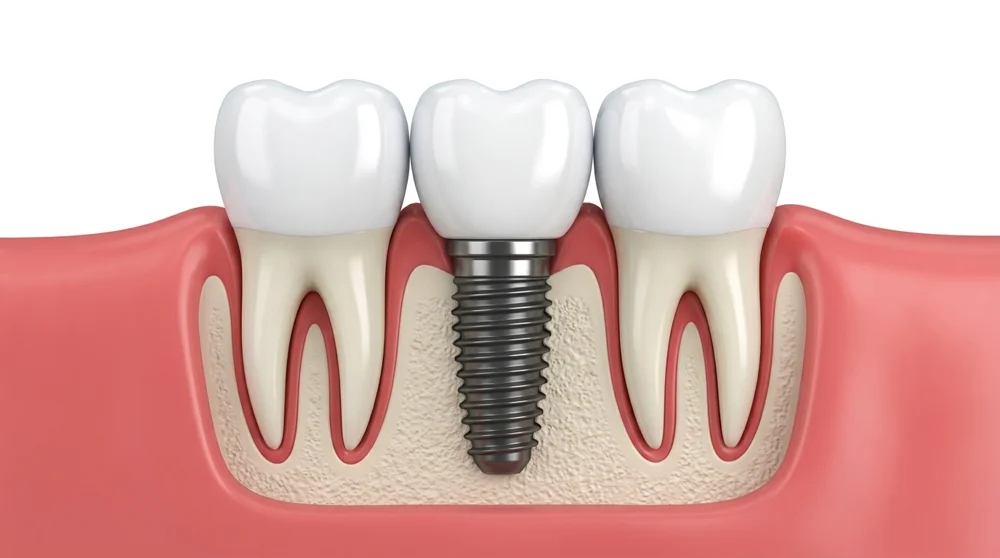
Diagram of the three parts of a dental implant: titanium post, abutment and crown

The basics

What is a dental implant?

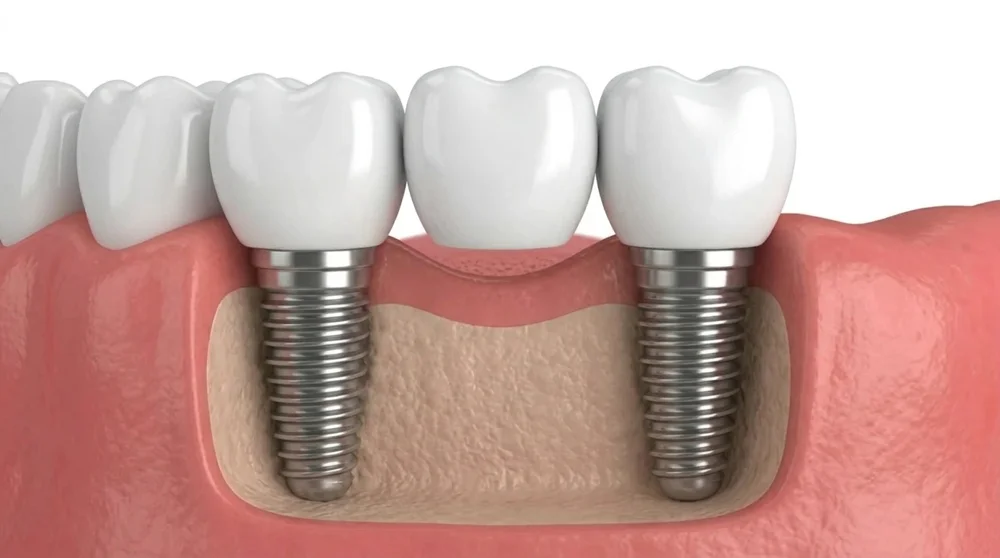
A dental implant has three parts. The implant is a small threaded post, usually titanium, set into the jawbone where the root used to be. The abutment is a short connector that joins the implant to the visible tooth. The crown is the tooth you see, made in ceramic to match its neighbours.

We use Straumann implants, made in Switzerland, and our crowns and prosthetics are made by a boutique dental laboratory. When people search for "tooth implant and crown" or "crown implants", this pairing is what they mean: the implant is the anchor and the crown is the part you bite with. The same anchor can also carry a bridge or hold a full denture.

The patient lounge at Odontologie Dental Care in Lansvale, with armchairs and a view of the garden

Our practice

Why patients choose Odontologie for implant treatment

We are a family practice first, so many implant patients are people we have known for years, and some are the parents and grandparents of children we see. That history shapes how we work: plain explanations, a written plan before anything starts, and no pressure to decide on the day.

  • Swiss-made Straumann implants
  • Crowns and bridges made by a boutique dental laboratory
  • Digital scanning instead of messy moulds wherever we can
  • IV sedation with an anaesthetist for anxious patients or longer surgery
  • Open Monday to Friday 9am to 6pm and Saturday 9am to 2pm

How it works

How dental implant treatment runs at Odontologie

The implant itself is placed in one appointment. The full treatment usually runs over two main sessions spread across several months, because the bone needs time to grow onto the implant before the new tooth goes on. For a stage-by-stage view of recovery, read about dental implant healing stages.

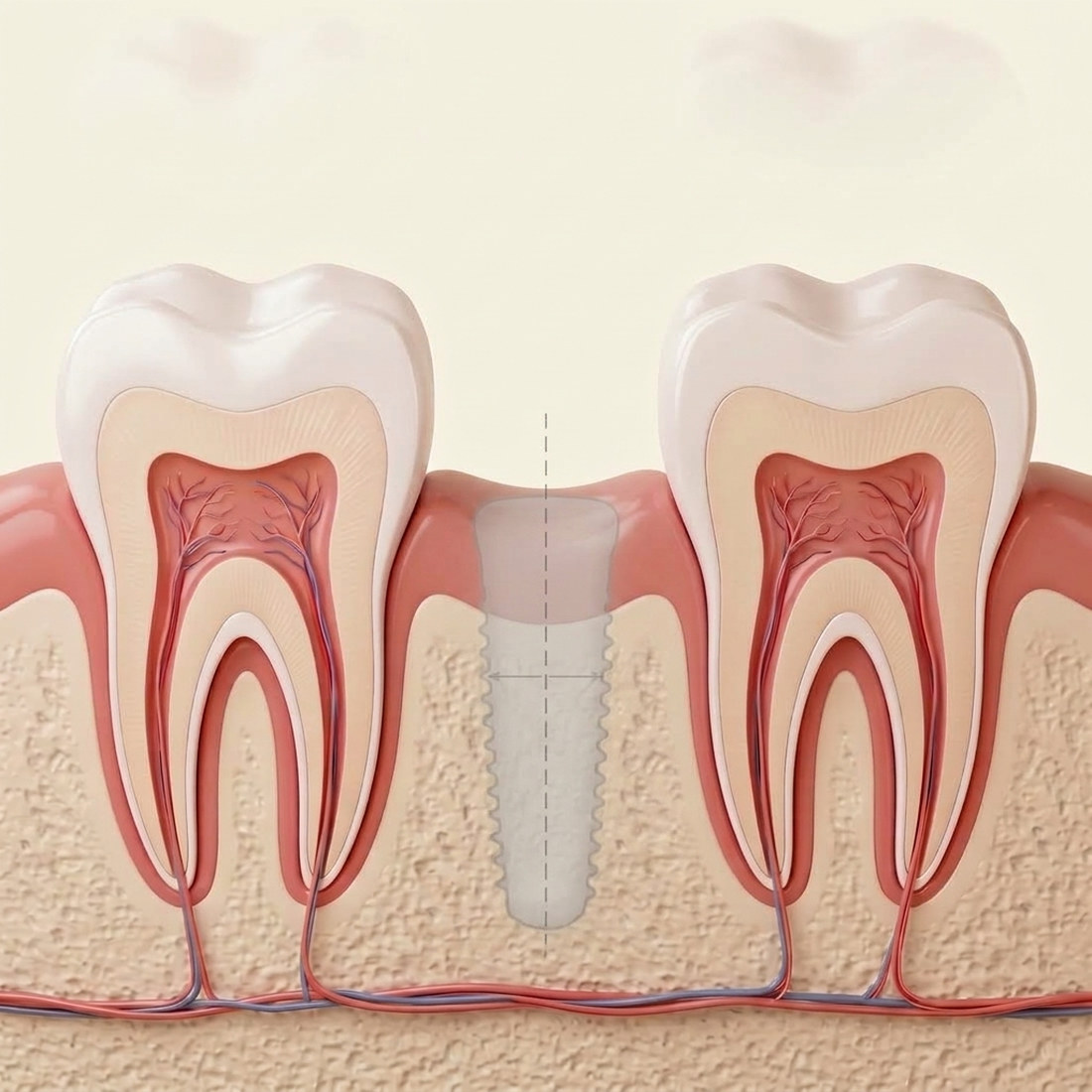
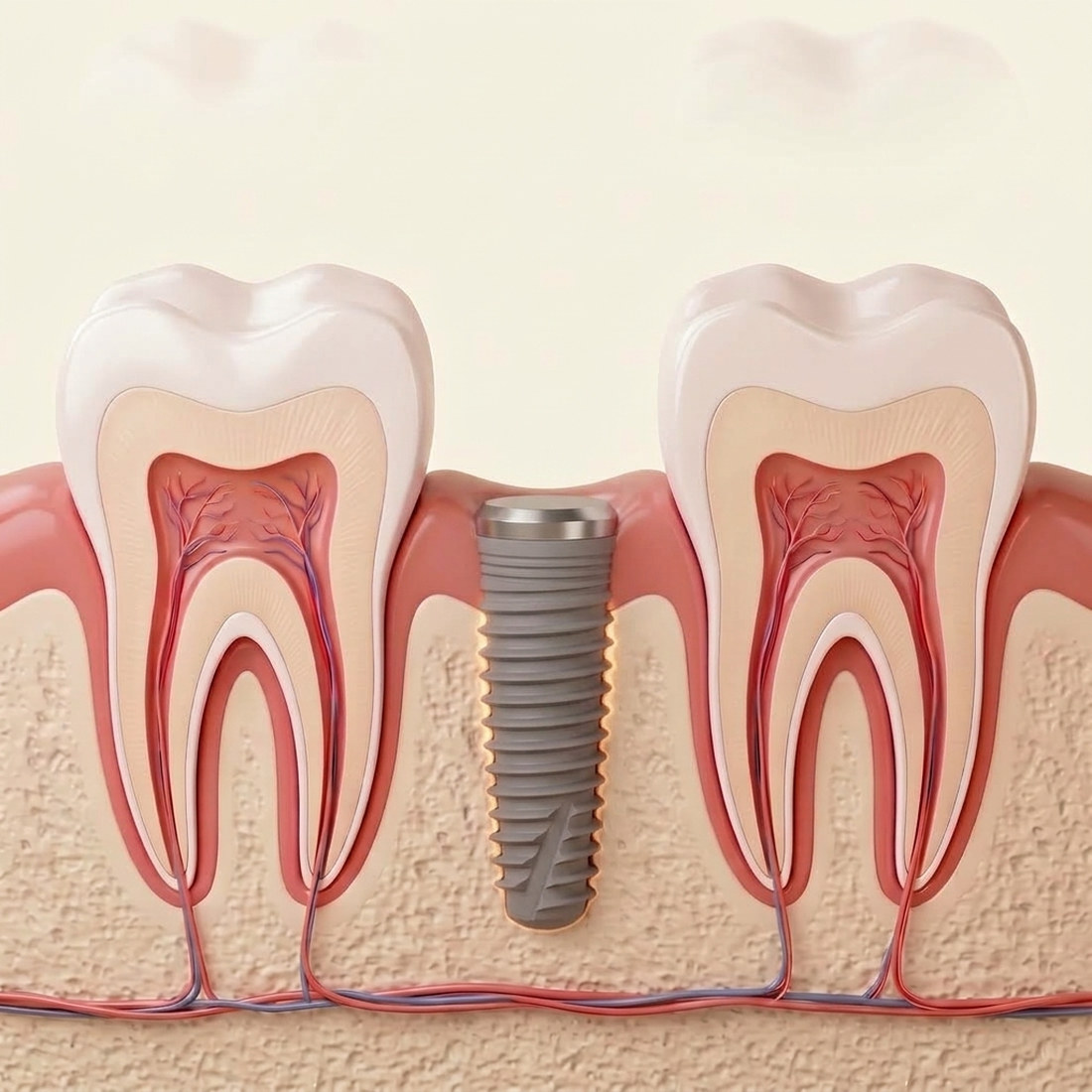
Jaw cross-section with the position of a planned implant marked in the space left by a missing tooth
01

Free consultation and written plan

We check your gums, your remaining teeth and your bite, take photographs and an OPG X-ray, and talk about what you want from treatment. Where we need a closer look at the bone, a 3D cone-beam (CBCT) scan shows its height and width. You then receive a written plan setting out the stages, the timeline, the fees and the ways to pay.

Book now →
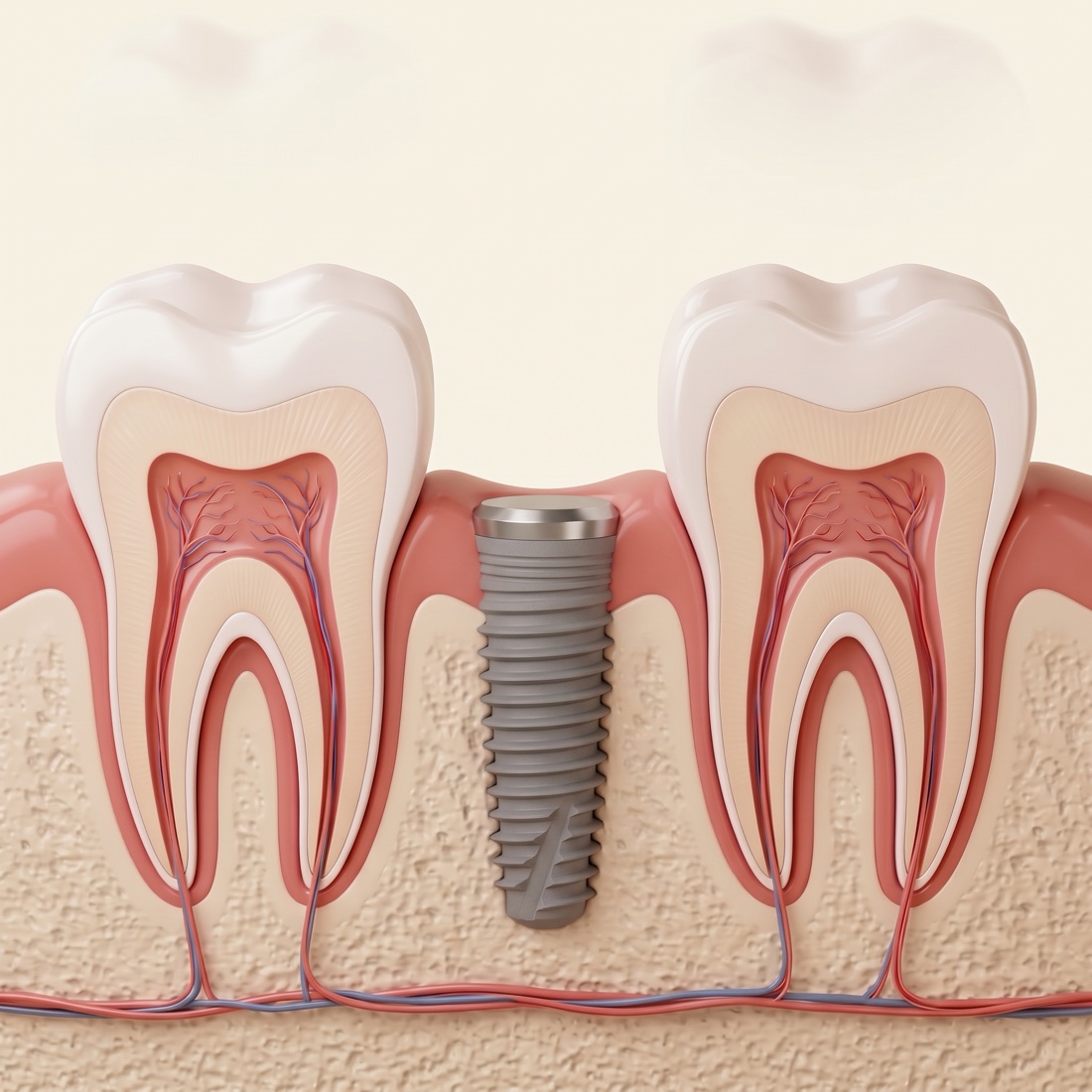
Jaw cross-section showing a titanium implant seated in the bone where the tooth used to be
02

Placing the implant

This is the first of the two main sessions. The area is numbed, a small opening is made in the gum, a space is prepared in the bone and the Straumann implant is fitted. If you would rather not be aware of the surgery, IV sedation with an anaesthetist can be arranged. Where bone is thin, bone grafting may be needed first or at the same visit.

Jaw cross-section showing bone grown firmly around the healed implant under a small healing cap
03

Healing while the bone bonds

Over the next few months the jawbone grows onto the titanium surface, a process called osseointegration. Day to day, most people get on with normal life, eating softer food on that side at first. We see you along the way to check the gum and the implant are settling.

Jaw cross-section showing a finished implant crown sitting level with the natural teeth beside it
04

Fitting your new tooth

In the second main session, a connector called an abutment is attached to the healed implant. A digital scan is sent to our boutique laboratory, where your crown or bridge is made to the shape and shade of your own teeth. We try it in, adjust the bite and fix it in place.

Illustration of an implant-supported tooth standing firmly in the jaw between natural teeth

What changes

Benefits of dental implants

  • They stay put. An implant is fixed in bone, so there is no plate to lift or click when you eat or speak.
  • Chewing gets easier. Firmer food such as crusty bread, apples and steak tends to be manageable again.
  • Your other teeth are left alone. A conventional bridge relies on crowning the teeth either side of a gap; an implant stands by itself.
  • The jawbone keeps working. Biting forces travel through the implant into the bone, which helps slow the shrinking that follows tooth loss.
  • They look like teeth. The crown is shaped and shaded to match, so a single implant usually blends in with the teeth around it.

An implant cannot decay the way a natural tooth can, but the gum and bone around it can still become inflamed if plaque is left to build up. So implants still need brushing, cleaning between the teeth and regular check-ups.

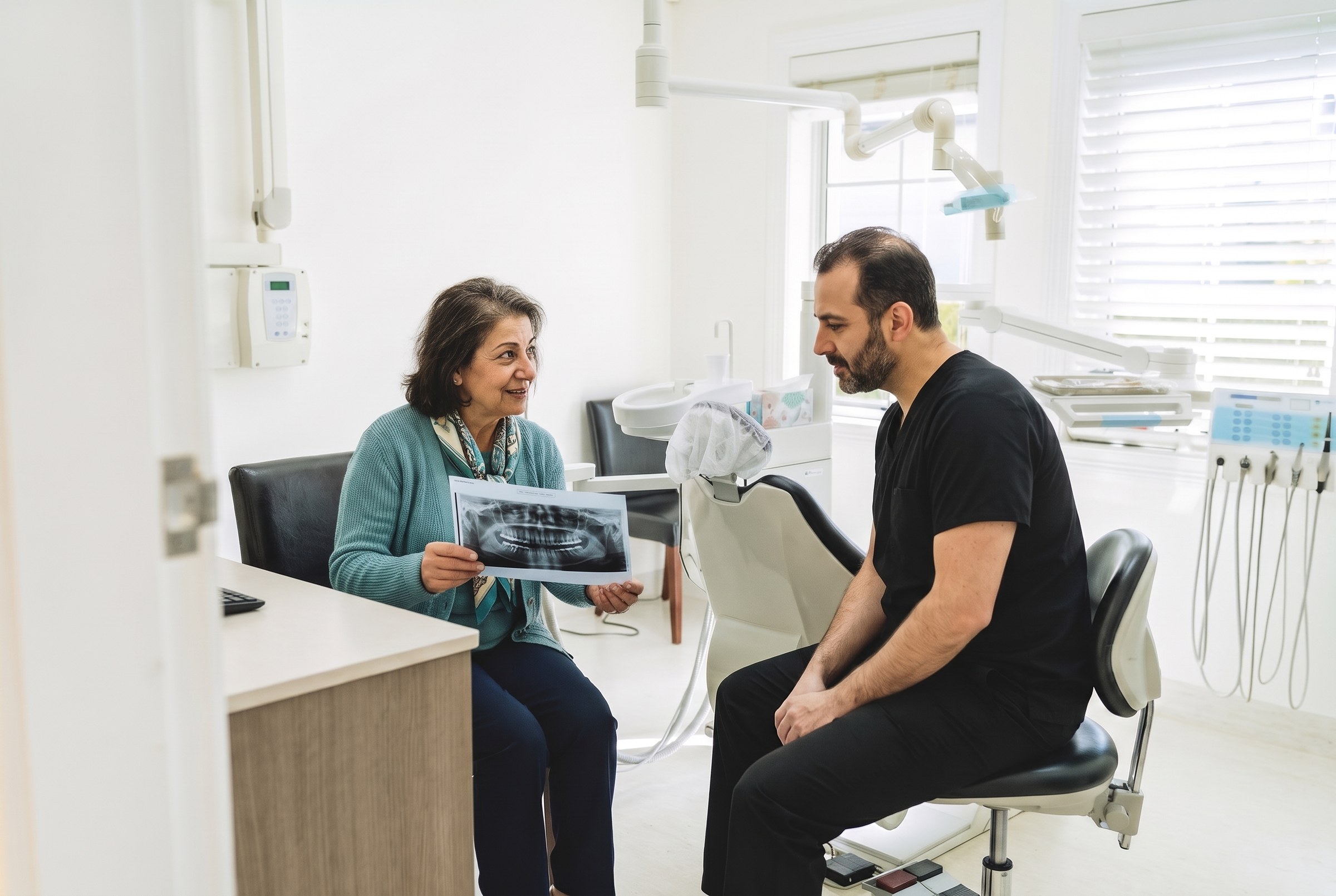
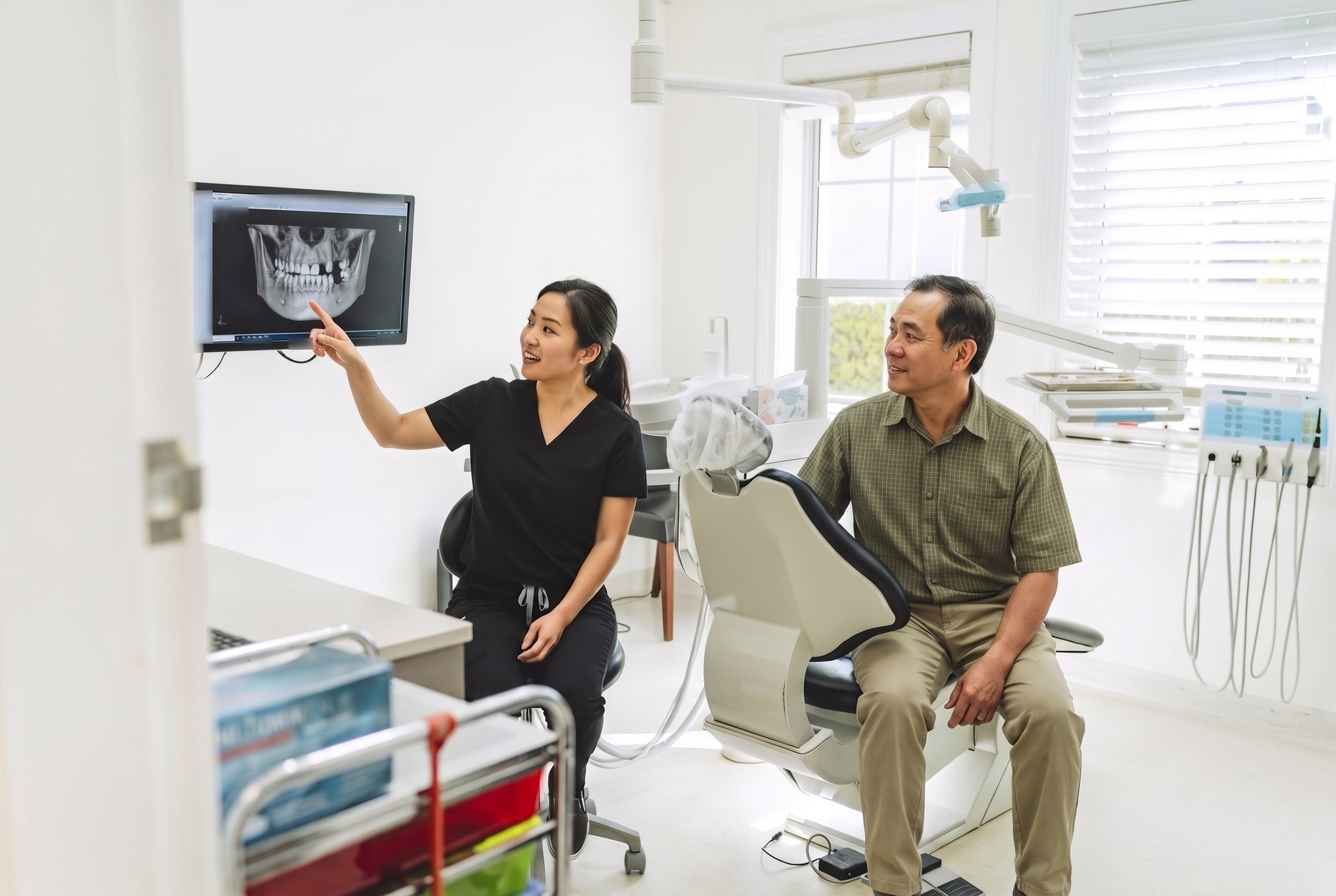
A woman in her sixties holding her panoramic X-ray while she talks with a dentist about whether implants suit her

Is it right for you?

Am I a candidate for dental implants?

Most adults who have lost a tooth can at least be considered. What we look for is healthy gums, enough bone to hold the implant, and general health that allows normal healing. Gum disease is treated first, and smokers are asked to stop around the surgery because smoking slows healing.

Implants may suit you if a tooth is missing or has to come out, if a bridge has failed, or if a denture rubs, slips or makes eating a chore. Long-standing gaps sometimes have less bone, which does not rule you out; it may simply mean a graft or a different approach. If you are planning an extraction now, our tooth extraction to implant timeline explains how the two fit together.

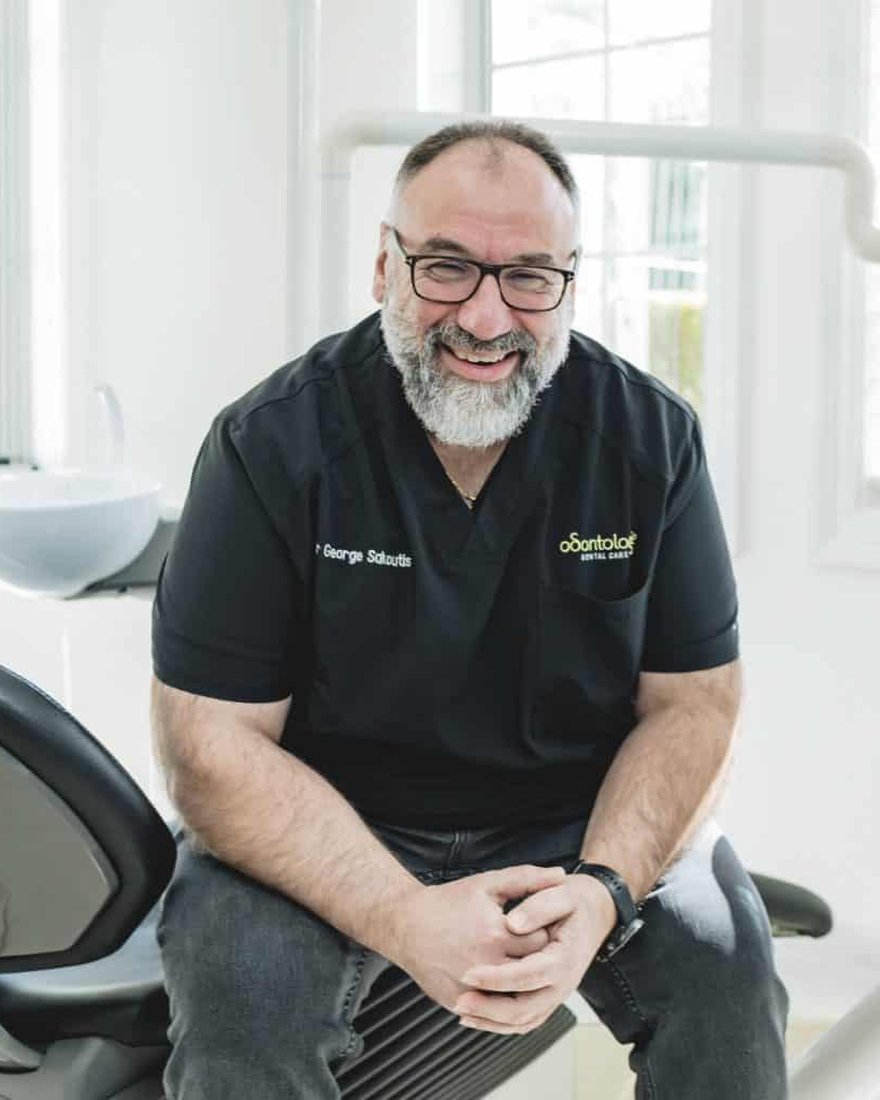
Dr George Sakoutis, Odontologie Dental Care

Meet your implant dentist

Dr George Sakoutis

Principal Dentist · BDS (Syd)

Dr George Sakoutis earned his Bachelor of Dental Science at the University of Sydney and has practised in Lansvale since 1988, with a focus on family, cosmetic and implant dentistry.

Book a Free Consultation

Related care

Which kind of implant treatment fits your mouth?

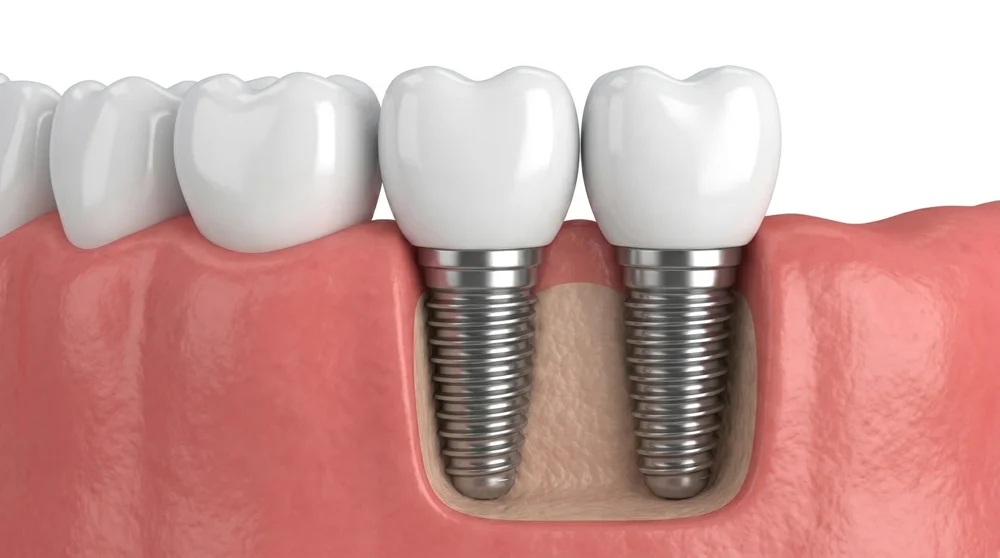
How many teeth are missing, and where, decides the shape of your treatment. Each option below has its own page with the detail. If you are still comparing implants with bridges and dentures, our guide to options to replace teeth sets them side by side.

Single tooth implants

Single tooth implants

from $3,999

One implant and one crown for one gap. The teeth on either side stay as they are, with nothing ground down to hold a bridge.

  • Price includes the implant, abutment and crown
  • Crown shaded to sit in line with your own teeth
  • A good fit for a lost molar or a front tooth
  • Usually several months from start to finish
Learn more
Multiple teeth implants

Multiple teeth implants

from $5,000

Two or more teeth gone, side by side or in different spots. Implants can replace them without a removable partial plate.

  • Separate implants or a bridge on implants
  • Often fewer implants than teeth replaced
  • Fixed in place and cleaned like natural teeth
  • Price shown is for a two-tooth implant bridge
Learn more
All-On-4 dental implants
Full jaw

All-On-4 dental implants

from $19,000 per jaw

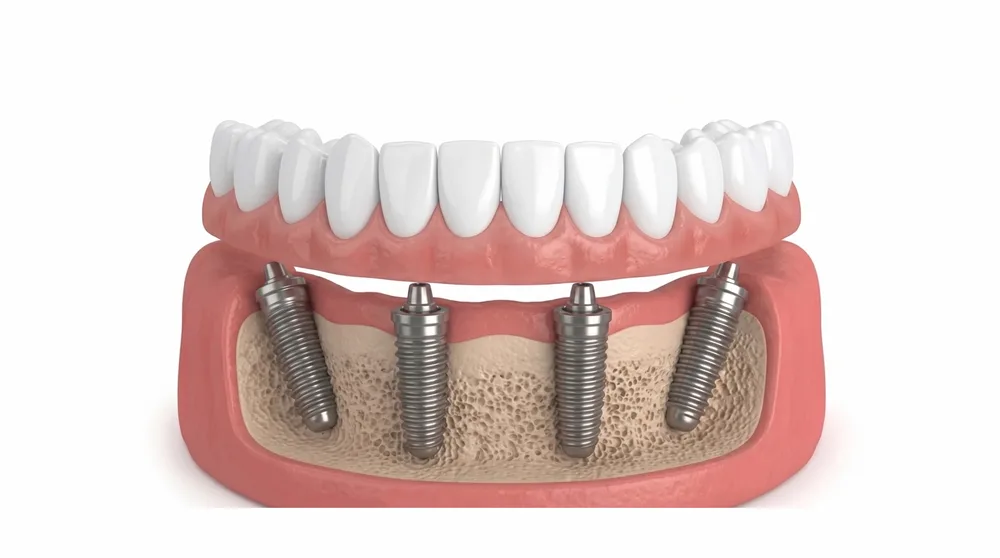
A complete fixed set of upper or lower teeth carried on four implants, for people who have lost, or are about to lose, most of their teeth.

  • Four implants hold a full bridge of teeth
  • Temporary teeth fitted while the implants heal
  • The angled back implants can work around some bone loss
  • Zirconia bridge available, from $25,000 per jaw
Learn more
Implant-supported dentures

Implant-supported dentures

from $15,000 per jaw

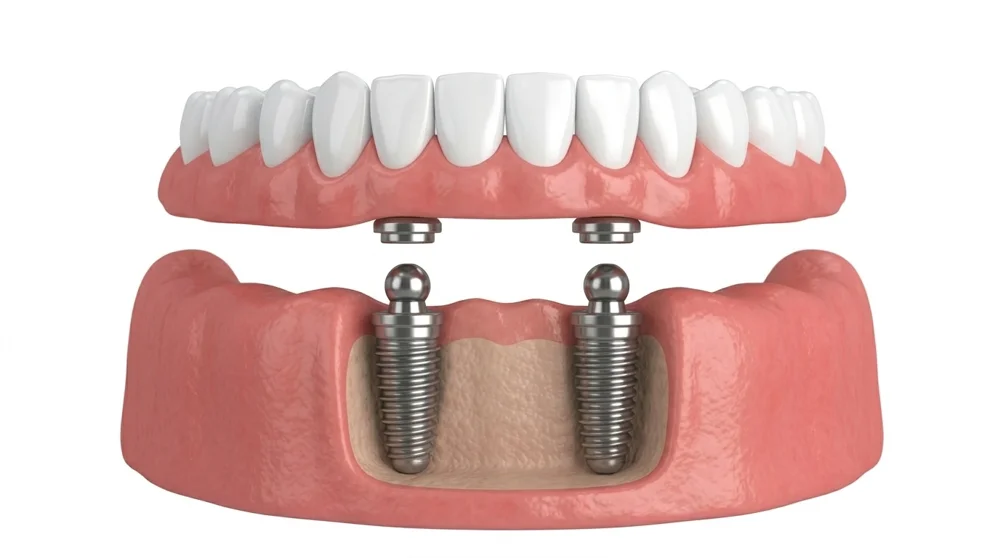
A denture that clicks onto implants, so it holds firm when you chew and talk and comes out at night to clean.

  • Commonly two to four implants per jaw
  • No denture adhesive needed
  • Partial version available, from $9,000
  • A step up for people with a loose lower denture
Learn more
Implant-supported bridges

Implant-supported bridges

from $5,000

A row of replacement teeth fixed to implants at each end, for a longer gap where your own teeth cannot carry a bridge.

  • From $5,000 for two teeth, from $9,000 for three
  • No crowns needed on healthy neighbouring teeth
  • Shape and shade matched to your smile
  • Screwed or cemented in, not taken out at home
Learn more

Not sure which of these is you?

Most people are not, and that is what the free consultation is for. We look at your teeth, gums and bone, tell you which options are realistic, what each would cost and how long it would take, and you leave with the plan in writing.

Book a Free Consultation

Good to know

Dental Implants - frequently asked

How much are dental implants in Australia?

Prices vary between practices and with the work involved, but a single implant with its crown commonly costs several thousand dollars, and a full jaw costs considerably more. At Odontologie a single tooth implant with abutment and crown starts from $3,999, and All-On-4 starts from $19,000 per jaw. Your own fee is set out in writing after your free consultation. Our dental implant cost guide explains the factors in more depth.

What is a dental implant?

It is a small titanium post placed in the jawbone to replace the root of a missing tooth. Once the bone has bonded to it, it holds a crown, a bridge or a denture. We use Swiss-made Straumann implants.

How long do dental implants last?

The implant is designed to stay in the bone for many years, and with good care many people keep theirs for decades. The crown or bridge it carries takes the daily wear of chewing and may need replacing at some point. Brushing, cleaning between the teeth and regular check-ups are what keep the gum and bone around an implant healthy.

Am I a candidate for implants?

You may be if you have one or more missing teeth, healthy gums, enough jawbone and general health that allows normal healing. Thin bone can often be built up with a graft. Some medical conditions and smoking affect healing, so we go through your health history. Suitability is confirmed at your free consultation.

Can I be sedated for implant surgery?

Yes. Implant surgery is done with local anaesthetic, and if you are anxious or the surgery is longer, IV sedation can be arranged with an anaesthetist. You stay breathing on your own but feel relaxed and drowsy, and most people remember little of the procedure. You will need someone to drive you home. Read more about intravenous sedation.

How long does the implant process take?

For a typical single implant, allow several months from the first visit to the final crown. The surgery is one appointment, and most of the time is healing while the bone bonds to the implant. Extractions or grafting can add time. Your written plan gives the timeline for your case.

Does getting an implant hurt?

The area is numbed, so most people describe pressure rather than pain during placement. Afterwards some tenderness and swelling for a few days is normal, and it is usually managed with over-the-counter pain relief and soft food. Sedation is available if you are nervous.

Is an implant better than a bridge?

They suit different situations. A conventional bridge needs crowns on the teeth either side of the gap, while an implant stands alone and leaves those teeth untouched. An implant also keeps the bone under the gap working. A bridge is quicker and costs less to begin with. We compare both for your mouth at the consultation.

Can I get an implant years after losing a tooth?

Often, yes. The question is how much bone is left, because the jaw slowly shrinks once a tooth has gone. Your X-ray and, if needed, a CBCT scan show this, and a bone graft can rebuild the area where required.

Can implants help if my denture is loose?

Yes. A small number of implants can hold a denture that clicks into place, and four implants per jaw can replace a denture with a fixed All-On-4 bridge. See implant-supported dentures and All-On-4 for how each works.

What are the risks of dental implants?

As with any surgery there are risks, including infection, swelling and bruising, irritation of a nearby nerve, sinus problems for upper back implants, and an implant that does not bond with the bone. We explain these in detail and how they apply to you before you agree to treatment. We give every patient the same advice: "Any surgical or invasive procedure carries risks. Before proceeding, you should seek a second opinion from an appropriately qualified health practitioner." Your written plan is yours to take to another practitioner for exactly that purpose.

Does health insurance cover dental implants?

It depends on your fund and level of extras cover. Some policies contribute to parts of treatment, such as the crown or an extraction, and others contribute little. We give you an itemised plan with item numbers so you can check your cover with your fund before you commit. See our health funds page.

Can I spread the cost of implants?

Yes. We offer humm and Afterpay, subject to approval. The options are explained at your consultation and on our payment options page.

How do I look after an implant?

Much like a natural tooth. Brush twice a day with a soft brush, clean around the implant with floss, interdental brushes or a water flosser, and keep your regular check-up and clean. Not smoking helps protect the gum and bone that hold it. If anything feels loose or sore, call us; our article on bad dental implants lists the signs worth checking.

Do you see patients from Liverpool and Fairfield?

Yes. The practice is on the Hume Highway in Lansvale, with parking at the front and back, and we regularly see implant patients from Liverpool, Fairfield, Cabramatta, Canley Vale, Chipping Norton, Wetherill Park and further across south-west Sydney.

Still have questions?

Ready to take the next step?

Booking online takes under a minute, or give our friendly team a call - new patients are always welcome.

  • Photographs and OPG X-ray included
  • A written plan with fees and timeline
  • Payment options explained
  • No obligation to go ahead
We accept all major health funds
MedibankBupaHCF
Odontologie Dental Care is part of the My Implant Dentist Group